적요
-
This study was conducted to evaluate forage yield and quality for the accessions derived from inter-specific cross between wild and cultivated soybeans. First of all, three soybean lines (W02, W09 and W11) derived from PI483463 (Glycine soja) x Hutcheson (G. max) and three cultivated soybeans (Daewon, Pungsannamul and Bosug) were evaluated to determine forage yield and quality at the R2 (full bloom stage), R4 (full pod stage) and R6 (full seed stage) stages of development. Based on forage yield and quality, R6 was determined the optimal harvest stage to provide forage of high quality and adequate quantity for animals in both lines derived from G. soja × G. max and cultivated soybean.
Second, 25 selected lines from PI483463 × Hutcheson or S-100 (G. max) × PI483463 and four common seed-type cultivars (Bosug, Pungsannamul, Taekwang and Hutcheson) were evaluated to determine forage yield and quality at stage R6 in 2010. Hutcheson had the highest forage yield with 24.7 t/ha in fresh weight (FW) and 6.6 t/ha in dry matter (DM) among cultivated grain soybeans. A selected line W11 had highest FW (25.7 t/ha) and DM (6.2 t/ha) among G. max × G. soja selections. Five selected lines (W02, W06, W11, W13 and W18) had similar forage yield compared to Hutcheson. Generally the 25 selected lines derived from G. soja × G. max had thinner main stems and branches which lead to get more edible forage than cultivated soybeans. When selected lines were evaluated for their feed quality as per forage grade by American Forage and Grassland Council, 23 lines had a crude protein with more than 19%; 9 lines had a neutral detergent fiber below 40%; 23 lines had an acid detergent fiber below 31%; 24 lines had a digestible dry matter of more than 65%; 13 lines had a dry matter intake of more than 3.0%, and 17 lines had an relative feed value higher than 151 or were equivalent to prime grade. And all of 25 inbred lines were equivalent to Grade 1. Therefore, inter-specific cross between G. max and G. soja will be an excellent way to develop forage soybean with good yield and quality.
서 언
콩[
Glycine max (L.) Merr.]은 대표적인 두과 작물로서, 기 원지는 한국, 중국 등 동북아시아 지역이며 우리나라에서는 기원전 2000년경 전부터 재배된 것으로 추정된다. 콩은 양질 의 식물성 단백질을 함유하고 있어, 식품뿐만 아니라 사료로 서의 가치도 크다. 특히 콩은 종실뿐만 아니라 건초 상태에서 도 단백질함량이 높아 단백질이 부족한 조사료의 보완작물로 이용하고 있다(
Albro et al. 1993).
미국의 경우 19세기 중반에 콩이 도입된 후(
Arny 1926), 사료작물로서 오랫동안 재배되어 왔고(
Smith & Huyser 1987), 20세기 전후부터는 종실만을 이용한 배합사료의 원료 가 아닌 청예나 건초용 사료를 평가하는 연구들이 지속적으 로 이루어져 왔다. Hackleman (
1924)은 콩이 두과작물 중 질 소성분이 가장 풍부한 종실과 건초를 생산할 수 있는 일년생 작물이라고 보고했다. 그 후 사료용 품종개발 및 다양한 사료 가치평가에 대한 연구가 진행되고 있다. ‘Derry’, ‘Dongal’, ‘Tyrone’과 같은 사료용 콩 품종이 개발되었으며, 이들 콩 품 종의 평균 건초수량은 7.6~9.8 t/ha로 수량적인 면에서도 경 쟁력이 있음이 보고되었다(
Devine & Hatley 1998,
Devine et al. 1998a,
1998b). 또한 콩의 생식생장 단계 중 성숙초기 에(R7) 수확한 경우 개화시에 수확한 알팔파와 거의 같은 품 질을 보유하고 있다고 하였다(
Hintz et al. 1992). 국내는 Kim et al. (
1982)에 의해 재배콩의 콩짚에 대한 사료가치가 제시되었고, 이후에 재배콩에 대한 사료가치 평가 연구들이 이루어지고 있다. 제주지역에서 국내 육성된 재배콩 품종에 대해 사료가치평가를 실시하여 단백질 함량이 19% 이상이고, 건초수량이 7 t/ha 이상으로, 높은 영양가를 보유하면서 수량 성이 우수했던 남해콩, 단파흑두, 백운콩 품종을 선발하여 청 예용 사료로서의 가능성이 있음을 보고하였다(
Cho et al. 2003). 또한 넝쿨성의 재래콩 유전자원 중 옥수수와의 혼작시 수량 및 사료적 가치가 높은 3계통을 선발하였다(
Shin 2008).
근래에 야생콩(
Glycine soja Sieb. and Zucc.)에 대한 사료 가치 평가도 이루어지고 있는데, 야생콩은 재배콩의 식물학적 선조식물로 중국, 일본, 한국 등 동아시아 전역에 분포하고 있 다(
Hymowitz & Bernard 1991,
Hymowitz & Singh 1987). 일명 돌콩이라 불리며 재배콩과 자유로운 교배가 가능하고 (
Hymowitz 1970), 우리나라에 널리 분포되어 있으며 척박한 토양과 건조한 환경에도 비교적 생육이 왕성하고 적응성이 강하다. Zhai et al. (
2008)에 의하면 야생콩의 사료 건물중은 수확시기별 2.3~6.5 t/ha이었고, 조단백질은 19.1%, NDF는 35.5%, ADF는 25.4%로 사료작물로서 손색이 없는 영양성 분을 가지고 있다고 평가하였다.
지금까지 국내외 연구들을 살펴보면 사료수량 및 영양적인 측면에서 콩이 사료작물로서 가치가 충분하다는 보고가 있었 다. 그러나 재배콩의 경우 숙기가 진행될수록 주경 및 분지의 목질화로 인해 가축이 섭취하기에 어려운 단점이 있다. 야생 콩 또한 영양적인 측면에서 사료작물로서의 가치뿐만 아니라, 주경이 재배콩 보다 훨씬 가늘고 부드러워 가축이 뿌리를 제 외하고 모든 부위를 먹을 수 있는 장점이 있으나, 초형이 포 복형이고 경실종자 비율이 높으며 성숙기 탈립이 발생하는 등 조사료 생산과 종자생산에 불리한 특성이 있다. 재배콩과 야생콩의 사료가치 및 수량에 대한 평가는 몇몇 연구자들에 의해 이루어 졌으나, 두 종간의 교잡종을 이용하여 사료용 콩 품종육성을 위해 잡종후대 계통에 대한 평가는 거의 이루어 져 있지 않았다. 따라서 본 연구는 야생콩과 재배콩의 교잡집 단에서 사료영양가치 및 사료 수량을 평가하여, 사료용 콩 품 종 개발의 가능성을 검토하였다.
재료 및 방법
시험 재료
본 연구에 사용된 콩 계통은 PI483463 (
G. soja) × Hutcheson (
G. max,
Buss et al. 1988) (
Lee et al. 2009) 유래 239개의 F7 자식계통과 S-100 (
G. max) × PI483463 유래 232개의 F7 자식계통을 1차 평가하여 선발된 25계통이며 몇 가지 농 업적 특성은 Table
1과 같다. 1차 선발은 2010년 경상북도 군위군 효령면 소재, 경북대학교 실습농장에서 실시하였다. 1 차 선발을 위한 평가항목은 경실종자의 비율, 탈립정도, 불마 름병 저항성 정도, 외관상 초형 등 이었으며, 경실종자 비율은 20% 미만, 탈립정도(1-무탈립, 3-50% 탈립, 5-100% 탈립)는 2이하, 달관조사에 의해 불마름에 저항성이거나 부분적인 저항 성을 보인 계통을 선발하였다. 모본으로 사용된 야생콩은 포장 상태에서 불마름병에 이병성을 보였고, 부본인 Hutcheson의 경우는 저항성(
Narvel 2001) 유전자를 가지고 있어 이병성을 보이지 않았다. 초형 또한 외관상 달관 조사를 통해 선발하였 다(1-야생형, 3-중간형, 5-재배형).
1차 선발된 계통중 W02, W09, 및 W11계통(Table
1)과 국내에서 육성된 종실용 재배콩인 대원콩(
Kim et al. 1998), 풍산나물콩(
Suh et al. 1997), 보석콩(
Oh et al. 2005)을 대조 품종으로 하여 2011년 5월 20일과 6월 20일 2회 파종 하였 다. 조사료 수량(생체중, 건물중) 및 사료영양가치 평가는 콩 의 생식생장기 중 R2 (full bloom stage), R4 (full pod stage), R6 (full seed stage)시기에 수확하여 실시하였다.
Table 1Agronomic characteristics of selected 25 lines derived from wild and cultivated soybean crossing used in this study
Table 1
|
Code |
Name |
Pedigree |
Hardseed rate |
100-seed weight |
Shatteringz
|
Growth habity
|
|
(%) |
(g) |
(1-5) |
(1~5) |
|
|
W01 |
RIL71 |
PI483463 × Hutcheson |
0 |
3.2 |
1 |
1 |
|
W02 |
RIL86 |
PI483463 × Hutcheson |
0 |
5.3 |
1 |
2 |
|
W03 |
RIL94 |
PI483463 × Hutcheson |
15 |
4.1 |
1 |
1 |
|
W04 |
RIL141 |
PI483463 × Hutcheson |
0 |
10.7 |
3 |
3 |
|
W05 |
RIL113 |
PI483463 × Hutcheson |
5 |
3.3 |
1 |
1 |
|
W06 |
RIL83 |
PI483463 × Hutcheson |
0 |
10.6 |
2 |
4 |
|
W07 |
RIL9 |
PI483463 × Hutcheson |
0 |
4.0 |
2 |
1 |
|
W08 |
RIL286 |
PI483463 × Hutcheson |
0 |
4.0 |
1 |
2 |
|
W09 |
RIL267 |
PI483463 × Hutcheson |
20 |
8.5 |
1 |
3 |
|
W10 |
RIL163 |
PI483463 × Hutcheson |
0 |
6.0 |
2 |
2 |
|
W11 |
RIL122 |
PI483463 × Hutcheson |
0 |
9.9 |
1 |
4 |
|
W12 |
RIL36 |
PI483463 × Hutcheson |
5 |
5.3 |
3 |
2 |
|
W13 |
RIL87 |
PI483463 × Hutcheson |
0 |
6.8 |
1 |
2 |
|
W14 |
RIL241 |
PI483463 × Hutcheson |
0 |
4.8 |
1 |
2 |
|
W15 |
RIL130 |
S-100 × PI483463 |
10 |
8.2 |
1 |
2 |
|
W16 |
RIL144 |
S-100 × PI483463 |
5 |
4.8 |
2 |
2 |
|
W17 |
RIL63 |
PI483463 × Hutcheson |
5 |
5.0 |
1 |
2 |
|
W18 |
RIL5 |
PI483463 × Hutcheson |
0 |
7.0 |
2 |
2 |
|
W19 |
RIL216 |
PI483463 × Hutcheson |
10 |
7.3 |
2 |
2 |
|
W20 |
RIL177 |
PI483463 × Hutcheson |
0 |
6.7 |
1 |
3 |
|
W21 |
RIL286 |
PI483463 × Hutcheson |
0 |
3.1 |
1 |
2 |
|
W22 |
RIL139 |
PI483463 × Hutcheson |
0 |
4.9 |
1 |
1 |
|
W23 |
RIL227 |
PI483463 × Hutcheson |
15 |
4.2 |
1 |
2 |
|
W24 |
RIL242 |
PI483463 × Hutcheson |
0 |
4.6 |
1 |
1 |
|
W25 |
RIL256 |
PI483463 × Hutcheson |
0 |
5.1 |
1 |
1 |
재배콩과 야생콩 교잡 계통의 사료 수량 및 품질
선발된 계통의 사료수량 및 품질평가를 위하여, 선발된 25 계통과 4개의 대조품종, 보석콩, 풍산나물콩, 태광콩, Hutcheson (
Buss et al. 1988)을 2011년 6월 22일, 2012년 5월 18일 대 구광역시 북구 소재 경상북도농업기술원 시험포장과 2011년 6월 2일 경북대학교 상주캠퍼스 실습포장에 파종하였다. 조 사항목 중 수량관련 형질은 경상북도농업기술원 시험포장에 서 2년(2011, 2012)간 조사하였고, 사료 품질 평가는 2011년 경상북도농업기술원과 경북대학교 상주 캠퍼스에서 생산된 재료를 사용하였다. 수확은 콩의 생식생장기 중 R6 (full seed stage) 시기에 실시하였으며, 조사료의 수량관련 형질(초장, 생체중, 건물중, 조사료의 가식부위 비율, 잎•줄기•꼬투리 비 율)과 사료가치를 평가하였다.
재배콩과 야생콩 교잡계통의 생육단계별 조사료 특성분석 과 선발된 25계통의 사료수량 및 품질평가를 위한 재배시험 에서 재식밀도는 60 × 15 cm, 1주 1본, 구당면적은 4.8 m2 (= 2.4 m × 2 m), 포장배치는 난괴법 3반복으로 실시하였고, 시비량은 N-P2O5-K2O=80-80-90 kg/ha로 전량 기비처리 하 였다. 초장은 수확 전 평균적인 개체를 반복당 10개체씩 선택 하여 입식상태로 측정하였으며, 생체중은 수확한 전량의 무게 를 측정하여 구하였다. 건물중은 65°C 순환식 송풍건조기(dry oven)에서 무게변화가 없을 때까지 건조시켜 건물중을 구하 였다. 조사료 가식부위 비율은 형태별로 서로 다른 10품종/계 통를 선택해 뿌리를 제외하고 균일하게 혼합하여 생초 상태 로 4 kg을 12~14월령 된 3마리의 소에 급여하여 섭취하지 못하고 뱉어내는 줄기의 평균 직경 값을 구한 후, 이 직경 값 을 기준으로 전체 줄기의 함유량 중 비가식부위의 평균 직경 값(7.58 mm) 보다 작은 부위의 생체중을 전체 생체중에 대한 비율로 환산하여 구하였다. 잎•줄기•꼬투리 비율은 반복당 5 개체에 대해 각 부위별로 생체중과 건물중을 측정하여 조사 하였다. 잎은 엽병(petiole)을 제외한 소엽(leaflets)부위 만을 포함시켰으며, 줄기는 상배축 이상 부위를 잘라서 실험에 이 용하였으며 엽병을 포함한 값이다.
사료품질 분석
사료품질 평가를 위해 조지방(CF: crude fat), 조단백(CP: crude protein), 산성세제 불용성 섬유(ADF: acid detergent fiber), 중성세제 불용성 섬유(NDF: neutral detergent fiber), 가소화건물(DDM: digestible dry matter), 건물섭취량(DMI: dry matter intake), 상대사료가치(RFV: relative feed value) 값을 분석하였다. 건조된 시료를 20 mesh wiley mill 로 분쇄 하여 분석에 이용하였으며, 수분함량은 수분측정장치(Moisture meter MA35, Satorius, Germany)를 이용하여 측정하였다. 조단백질 함량은 AOAC (
2011)법에 의거한 Dumas법에 의 해 원소분석기(Vario Max CNS, Elementar, Germany)를 이 용하여 시료(200 mg)에 1,200°C의 온도를 가해 연소시켜 발 생하는 질소 gas를 측정하여 질소함량을 구한 후 조단백질 함량 (% CP = % N × 6.25)을 산출하였다. 조지방 함량은 AOAC (
2011)법에 준하여 지방자동추출장치(Soxtherm, Gerhardt, Germany)를 이용하여 추출하였으며, 추출 용매는 petroleum ether를 사용하였다. ADF와 NDF 함량은 Goering & Van Soest (
1970)법과 Van Soest & Robertson (
1980)법에 의거 해 자동섬유분석기(ANKOM
2000 Fiber Analyzer, Ankom Technology, Macedon NY)로 추출하여 분석하였다. 시료는 0.5 g 을 분석에 이용하였으며, ADF 분석시 acid detergent solution (FAD20C, ANKOM Tech.) 을 사용하였고, NDF 분석에는 neutral detergent solution (FND20C, ANKOM Tech.), sodium sulfate, 열에 안정적인 alpha-amylase 가 사 용되었다. 가소화건물함량(DDM)은 DDM = 88.9- (0.779 × ADF), 건물섭취량(DMI)은 DMI = 120/NDF, 상대사료가치 (RFV)는 섭취율과 소화율을 나타내는 지표값으로 RFV = (DDM × DMI)/1.29 의 계산식으로 산출하였으며, 100을 기 준으로 RFV 값이 클수록 사료가치가 높음을 의미한다 (
Holland et al. 1990).
본 실험의 모든 결과들은 SAS (version 9.2, by SAS Institute, Inc., Cary, N.C, USA)의 GLM (General Linear Model) procedure를 이용하여 분산분석을 실시하였으며, 각 요인의 유의성 검정 및 처리 평균간 비교는 유의수준 0.05에 서 최소유의차(LSD) 검정과 t-test를 이용하였다.
결과 및 고찰
재배콩과 야생콩 교잡 계통의 수확시기별 조사료 특성
야생콩 교잡종(이하 교잡종)의 수확시기별 조사료의 특성 을 재배콩과 비교한 시험의 분산분석 결과는 Table
2와 같다. 재배콩과 선발계통의 생체중, 건물중, 조지방, NDF, ADF, RFV 값 대부분이 재배환경(E) (
P<0.0001), 품종(G) (
P< 0.0001), 수확시기(H) (
P<0.0001) 및 이들의 상호작용과 고 도로 유의한 상관관계가 인정되었다. 그러나 조단백질 함량의 경우 E × G, E × H에서, 건물중의 경우 E × G × H에서 유 의한 상관관계가 인정되지 않았다.
Table 2Analysis of variance for fresh weight (FW), dry matter (DM), crude fat (CF), crude protein (CP), neutral detergent fiber (NDF), acid detergent fiber (ADF), and relative feed value (RFV) in soybean over two environments
x for six accessions (three
G. max and three selected lines)
z, and three harvest stages
y
Table 2
|
source |
df |
F-value
|
|
FW |
DM |
CF |
CP |
NDF |
ADF |
RFV§ |
|
|
Environments (E) |
1 |
331.13**
|
257.13**
|
13.56*
|
211.20**
|
299.34**
|
102.89**
|
190.55**
|
|
Replication (E) |
4 |
1.39ns
|
1.28ns
|
1.12ns
|
1.00ns
|
0.50ns
|
1.59ns
|
0.80ns
|
|
Genotype (G) |
5 |
28.54**
|
11.96**
|
6.90**
|
36.02**
|
20.49**
|
51.78**
|
26.44**
|
|
Harvest stage (H) |
2 |
504.80**
|
409.99**
|
801.94**
|
65.50**
|
19.77**
|
81.99**
|
17.82**
|
|
E × G |
5 |
5.48**
|
4.66**
|
7.74**
|
2.07ns
|
7.31**
|
5.60**
|
7.21**
|
|
E × H |
2 |
18.35**
|
20.80**
|
12.74**
|
0.69ns
|
10.72**
|
14.04**
|
7.88**
|
|
G × H |
10 |
3.89**
|
2.37*
|
6.53**
|
4.72**
|
4.47**
|
8.09**
|
4.43**
|
|
E × G × H |
10 |
2.52*
|
1.90ns
|
5.93**
|
2.30*
|
6.35**
|
6.65**
|
6.61**
|
|
|
Total |
107 |
|
|
|
|
|
|
|
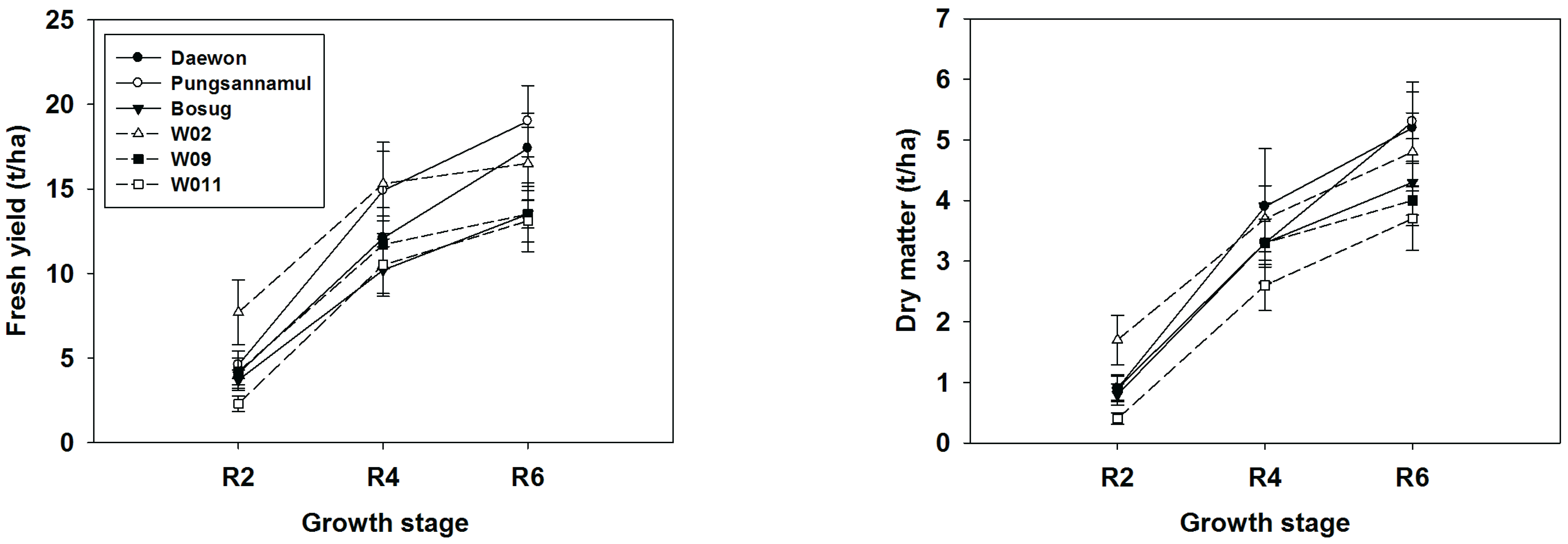
수확시기별 생체중 및 건물중은 Fig.
1과 같이 재배콩과 교 잡종 모두 수확시기가 늦어짐에 따라 증가하였다. 재배콩의 경우 평균 생체중은 4.1 t/ha (R2), 12.4 t/ha (R4), 16.6 t/ha (R6), 건물중은 0.9 t/ha (R2), 3.6 t/ha (R4), 4.9 t/ha (R6)로 R2에서 R6까지 유의한 차이(
P<0.05)를 보이며 증가하였다. 교잡종의 경우 평균 생체중은 R2 (4.7 t/ha)에서 R4 (12.5 t/ha)까지는 유의한 차이를 보이며 급격하게 증가하였고, R6 (14.4 t/ha) 시기에 가장 높게 나타났으나 R4시기와 통계적으 로 유의한 차이가 없는 것으로 평가되었다. 건물중의 경우는 1.0 t/ha (R2), 3.2 t/ha (R4), 4.1 t/ha (R6)로 전 시기 유의한 차이를 보이며 증가하였다. 본 연구의 결과를 선행 연구들과 비교해 보면, Rao et al. (
2005)은 건물중의 경우 수확시기가 늦어질수록 증가하며, 후기성숙기에 가장 높은 수량을 보인다 고 하였고, Sheaffer et al. (
2001)에 의하면 R4에서 R6까지 수량이 20% 이상 증가한다고 하였으며, Hintz et al. (
1992) 에 의하면 수량의 경우 수확기가 진행됨에 따라 R7시기에 가 장 높게 나타난다고 하여, 본 실험과 유사한 결과를 보였다. 또한, 야생콩을 이용한 Zhai et al. (
2008) 실험의 경우 4월 29일 파종하여 7월 19일 첫 수확을 시작으로 10월 7일까지 20일 간격으로 5회 수확하였는데, 이 연구에 의하면 수량은 3번째 수확기까지는 증가하나 그 이후로 유의적 차이를 보이 지 않았다고 하여, 본 실험의 교잡종의 생체중 변화와 유사한 결과를 보였다.
Fig. 1.Forage yield (fresh weight and dry matter) for six soybeans as growth stages (R2 : full bloom stage, R4 : full pod stage, R6 : full seed stage) averaged over two environments (planted at 20 May 2011, and 20 June 2011). Solid lines are for G. max and dashed lines are for selected lines derived from PI483463 x Hutcheson. Bar means standard error.
조지방, 조단백질, NDF, ADF, RFV 값은 Fig.
2와 같이 나타났다. 재배콩과 교잡종의 조지방 함량 변화는 R2에서 R4 로 생육이 진전되었을 때 약간 감소하였으나 유의적인 차이 가 없었고, R4에서 R6까지는 유의적인 차이를 보이며 급격히 증가하였다. 재배콩과 교잡종의 평균 조지방 함량은 각각 R2 에서 1.6%, 1.7%, R4에서 1.5%, 1.4%, R6에서는 5.4%, 4.5%이었다. 재배콩인 대원콩, 풍산나물콩, 보석콩의 R6에서 조지방 함량은 각각 6.0%, 5.1%, 5.3%이었고, 교잡종인 W02, W09, W11은 5.2%, 4.5%, 3.8%이었다.
Fig. 2.Forage quality at different growth stages (R2 : full bloom stage, R4 : full pod stage, R6 : full seed stage) for six soybeans averaged over two environments (planted at 20 May 2011 and 20 June 2011). Solid lines are G. max, dashed lines are for selected lines derived from PI483463 x Hutcheson. Bar means standard error.
조단백질의 경우 재배콩인 풍산나물콩, 보석콩은 R2에서 R4까지 거의 일정한 값을 유지하였고, R4에서 R6까지는 유 의한 차이를 보이며 증가하였다. 풍산나물콩과 보석콩의 조단 백질 함량은 각각 R2에서 20.0%, 14.4%, R4에서 19.9%, 15.0%, R6에서 22.6%, 19.5%이었다. 대원콩은 R2에서 13.5% 를 보였으며, R4 (17.5%), R6 (21.0%)로 갈수록 증가하는 경향을 보였다. 교잡종인 W02, W09, W11은 R2에서 R6까 지 지속적으로 증가하는 경향을 보이나 유의한 차이는 없었 다. W02, W09, W11의 R6에서 조단백질의 함량은 각각 18.2, 17.1, 17.3%이었다. Hintz et al. (
1992)에 의하면 조단 백질의 경우 R1에서 R3까지는 감소하고 R3에서 R5까지 일 정하게 유지되다 R5에서 R7까지는 증가하는 경향을 보인다 고 하였고, Seiter et al. (
2004)에 의하면 조단백질 경우 R3에 서 R5.5까지 증가한다고 하여, 본 실험과 유사한 경향을 보였 다. Munoz et al. (
1983)에 의하면 조단백질의 경우 R5까지 유의적으로 증가한다고 하였고, Zhai et al. (
2008)의 경우 조 단백질 함량은 전시기 감소한다고 보고하였다.
NDF의 경우 재배콩의 평균 값은 R2에서 40.7%에서 R4 41.7%, R6 42.7%로 전시기 유의한 차이를 보이며 증가하였 고, 교잡종의 평균 값은 R2 (42.8%)에서 R4 (46.3%)까지는 유의한 차이를 보이며 증가하나 이후 감소하는 경향을 보여 R6에는 44.1% 이었으나 유의한 차이는 없었다. 각 수확시기 별 재배콩과 교잡종의 NDF 값은 유의차가 없었으나 교잡종 의 값이 재배콩에 비해 높게 나타나는 경향을 보였다. ADF의 경우 재배콩의 평균값은 R2 (29.3%)에서 R4 (30.3%)까지는 증가하나 유의적인 차이는 없었고, R4에서 R6 (27.5%)까지 는 유의적인 차이를 보이며 감소하였다. 교잡종의 경우는 전 시기 유의한 차이를 보이며 R2 (31.9%)에서 R4 (34.4%)까지 증가하였고, 이후 감소하여 R6에서 30.2%를 보였다. ADF값 역시 NDF와 마찬가지로 교잡종의 값이 재배콩에 비해 높게 나타나는 경향이었다.
NDF와 ADF 함량은 재배콩, 교잡종 모두 R4시기에 가장 높은 값을 보이며, R4 이후 낮아져 Hintz et al. (
1992) 및 Zhai et al. (2008)의 결과와 유사한 경향을 보였다. R6시기 에 재배콩은 평균 NDF 42.7%, ADF 27.5%, 교잡종은 NDF 44.1%, ADF 30.2%로 America Forage and Grassland Council (AFGC)의 사료품질등급 기준(
Rohweder et al. 1987)을 적용했을 때 1등급에 해당하는 것으로 평가되었다.
Holland et al. (
1990)에 의하면 너무 높은 NDF와 ADF 값은 건물섭취량을 저해하고, 소화율을 방해하는 요인으로 작 용한다고 보고하였다. NDF와 ADF에 대한 선행연구들을 살 펴보면, Hintz et al. (
1992)에 의하면 NDF와 ADF의 경우 R1에서 R5까지 증가하고 R5에서 R7까지 감소한다고 하였 고, Seiter et al. (
2004)에 의하면 NDF와 ADF의 경우 R3에 서 R5.5까지 증가한다고 하였으며, Zhai et al. (
2008)의 경우 는 NDF 함량은 4번째 수확기까지 증가하다 그 이후로 감소 하였으나 유의적 차이는 없었으며, ADF 함량은 3번째 수확 기까지 증가하다 그이후로 감소한다고 하였다.
RFV의 경우 풍산나물콩만 R2에서 R4까지 증가하다 그 이후 감소하는 경향을 보였고, 나머지 재배콩과 교잡종 모두 R2에서 R4까지 감소하다 그 이후 증가하는 경향을 보였다. 재배콩의 평균 RFV 값은 R2에 151, R4에 146 및 R6에 147 로 시기별 유의한 차이를 보이지 않았으나, 교잡종의 평균값 은 R2 (140)에서 R4 (126)까지 유의한 차이를 보이며 감소하 였고, R4에서 R6 (139)까지는 다시 유의한 차이를 보이며 증 가하였다.
선행연구에 의해 보고된 여러 연구들 간의 사료품질에 대 한 평가의 차이는 실험에 사용한 품종 및 수확시기의 차이라 고 판단된다. Hintz et al. (
1992)의 경우는 재배콩 3품종만을 실험에 이용하였고, 수확기를 R1•R3•R5•R7로 삼은 반면, Seiter et al. (
2004)은 사료용콩 1품종만을 사용하였고, 수확 기를 R3•R4•R5.5로 하였다. Zhai et al. (
2008)은 야생콩 3 계통을 사용하였고, 파종 후 80일 이후부터 20일 간격으로 5 회 수확하였으며, Munoz et al. (
1983)은 재배콩 만을 실험에 사용하였다. Hintz et al. (
1992)에 의하면 품종들 간의 수량 과 사료품질의 차이는 각 품종들의 성숙기와 관련 있다고 하 였고, Sheaffer et al. (
2001)도 사료품질의 차이는 각 품종의 성숙기와 관련이 있다고 하였다.
2010년도에 1차 선발된 25계통(Table
1)과 대조품종인 재 배콩 4품종(보석콩, 풍산나물콩, 태광콩, Hutcheson)의 R6시 기 조사료 수량 관련 형질에 대한 분산분석의 결과는 Table
3과 같다. 이들 수량 관련 형질들은 재배환경, 품종, 재배환경 × 품종의 상호작용에 고도로 유의한 상관관계가 있는 것으로 나타났다(
P<0.001).
Table 3Analysis of variance for forage yield and forage related traits collected at R6 stage (full seed stage) in soybean over 29 accessions
z
Table 3
|
Source of variation |
df |
F-value
|
|
Fresh weight |
Dry matter |
Edibley part weight |
Plant height |
Rate of soybean part (fresh weight basis)
|
Rate of soybean part (dry weight basis)
|
|
Leaf |
Stem |
Pod |
Leaf |
Stem |
Pod |
|
|
Environments (E) |
1 |
197.27**
|
389.11**
|
|
161.10**
|
36.55**
|
209.38**
|
1134.40**
|
52.44**
|
325.24**
|
834.91**
|
|
Replication |
4 |
2.02ns
|
0.96ns
|
0.18ns
|
8.26**
|
5.27**
|
2.07ns
|
0.75ns
|
4.80**
|
1.60ns
|
1.17ns
|
|
Genotypes (G) |
28 |
8.04**
|
6.33**
|
4.92**
|
7.41**
|
5.91**
|
4.60**
|
6.36**
|
8.43**
|
5.85**
|
8.58**
|
|
E × G |
28 |
2.65**
|
2.83**
|
|
4.13**
|
4.93**
|
2.40**
|
3.80**
|
4.53**
|
2.15**
|
3.98**
|
|
|
Total |
174 |
|
|
|
|
|
|
|
|
|
|
교잡종 및 대조품종에 대한 수량 관련 형질들을 조사한 결 과는 Table
4와 같다. 교잡종 중 수량이 가장 높았던 계통은 W11 (생체중 29.9 t/ha, 건물중 9.3 t/ha)이었으며, 대조품종 중 가장 수량이 많았던 Hutcheson (생체중 32.6 t/ha, 건물중 8.8 t/ha)과 비교했을 때 유의적인 차이가 없었던 계통은 W06 (생체중 29.1 t/ha, 건물중 8.7 t/ha)과 W11 이었다 (
P<0.05). 시험에 사용된 계통중 4개 대조품종의 평균값(생 체중 26.1 t/h, 건물중 7.5 t/ha)과 수량에서 유의적인 차이가 없는 W02 등 13계통을 선발 할 수 있었다. 12-14월령 소가 생체로 먹을 수 있는 가식부위 비율은 대조품종인 재배콩과 교잡종간에 큰 차이가 있었다. 재배콩의 평균 가식부위 비율 은 생체중의 72%이었다. 재배콩 중 가장 가식부위 비율이 높 았던 보석콩은 89%이었으며, 가장 낮았던 태광콩은 54%이 었다. 이에 반해 야생콩과 재배콩 교잡계통의 경우 W01등 17 계통은 가식부위 비율이 100%이었으며, W20은 가식부위 비 율이 83%로 가장 낮았다.
Table 4Forage yield and yield related traits of selected lines from PI483463 x Hutcheson or S-100 x PI483463 at R6 stage (full seed stage)
Table 4
|
Code |
Fresh weight (t/ha) |
Dry matter (t/ha) |
Rate of edible partz (%) |
Plant height (cm) |
Rate of soybean part |
Rate of soybean part |
(fresh weight, %)
|
(dry weight, %)
|
|
Leaf |
Stem |
Pod |
Leaf |
Stem |
Pod |
|
|
W01 |
21.6 |
5.5 |
100 |
91 |
25.2 |
34.0 |
40.9 |
23.6 |
32.0 |
44.4 |
|
W02 |
22.4 |
6.2 |
100 |
137 |
21.2 |
30.0 |
48.9 |
19.1 |
28.2 |
52.8 |
|
W03 |
21.2 |
5.1 |
100 |
218 |
21.8 |
45.7 |
32.6 |
21.4 |
45.9 |
32.8 |
|
W04 |
23.3 |
6.8 |
100 |
113 |
25.8 |
30.3 |
44.0 |
23.9 |
29.3 |
46.8 |
|
W05 |
19.8 |
5.9 |
100 |
114 |
22.2 |
30.1 |
47.7 |
22.0 |
27.6 |
50.4 |
|
W06 |
29.1 |
8.7 |
86 |
133 |
32.3 |
36.9 |
30.7 |
34.1 |
38.8 |
27.1 |
|
W07 |
17.6 |
5.2 |
100 |
104 |
25.7 |
34.5 |
39.8 |
24.3 |
34.5 |
41.2 |
|
W08 |
22.7 |
6.2 |
100 |
105 |
24.5 |
32.0 |
43.6 |
24.5 |
31.5 |
43.9 |
|
W09 |
22.8 |
7.8 |
93 |
133 |
26.6 |
34.6 |
38.8 |
27.2 |
35.0 |
37.8 |
|
W10 |
22.7 |
7.0 |
100 |
141 |
23.7 |
30.5 |
45.8 |
22.0 |
29.0 |
49.1 |
|
W11 |
29.9 |
9.3 |
86 |
118 |
27.5 |
32.4 |
40.2 |
25.8 |
32.5 |
41.7 |
|
W12 |
17.3 |
5.4 |
100 |
129 |
29.6 |
25.1 |
45.4 |
27.1 |
25.2 |
47.7 |
|
W13 |
25.2 |
7.7 |
97 |
112 |
24.2 |
28.1 |
47.8 |
23.0 |
25.6 |
51.4 |
|
W14 |
22.4 |
6.3 |
91 |
102 |
28.3 |
36.6 |
35.1 |
27.6 |
35.9 |
36.6 |
|
W15 |
24.8 |
8.2 |
89 |
134 |
28.6 |
35.6 |
35.8 |
27.6 |
37.0 |
35.4 |
|
W16 |
19.3 |
5.4 |
97 |
121 |
16.8 |
32.9 |
50.3 |
14.7 |
31.2 |
54.1 |
|
W17 |
22.2 |
5.7 |
100 |
116 |
22.1 |
34.8 |
43.1 |
20.6 |
34.3 |
45.1 |
|
W18 |
24.1 |
6.8 |
93 |
134 |
24.3 |
31.7 |
44.0 |
23.9 |
30.9 |
45.2 |
|
W19 |
23.5 |
6.8 |
100 |
124 |
26.6 |
28.0 |
45.4 |
26.2 |
24.7 |
49.1 |
|
W20 |
19.3 |
5.2 |
83 |
104 |
27.7 |
26.3 |
46.0 |
28.9 |
24.8 |
46.3 |
|
W21 |
21.2 |
5.7 |
100 |
99 |
26.4 |
27.9 |
45.8 |
26.4 |
26.7 |
46.9 |
|
W22 |
23.0 |
5.8 |
100 |
141 |
20.5 |
32.9 |
46.7 |
19.6 |
31.0 |
49.4 |
|
W23 |
23.7 |
6.8 |
100 |
116 |
25.8 |
37.1 |
37.1 |
24.6 |
37.0 |
38.4 |
|
W24 |
18.0 |
5.4 |
100 |
132 |
20.2 |
31.9 |
48.0 |
17.3 |
32.3 |
50.5 |
|
W25 |
18.7 |
5.2 |
100 |
93 |
23.4 |
37.1 |
39.5 |
22.1 |
35.4 |
42.5 |
|
Pungsannamul |
26.1 |
6.7 |
77 |
100 |
27.1 |
27.0 |
45.9 |
28.2 |
23.9 |
47.9 |
|
Hutcheson |
32.6 |
8.7 |
67 |
106 |
29.6 |
31.8 |
38.6 |
31.7 |
29.3 |
39.0 |
|
Taekwang |
23.3 |
7.3 |
54 |
92 |
32.3 |
34.3 |
33.4 |
35.7 |
33.0 |
31.4 |
|
Bosug |
22.5 |
7.5 |
89 |
99 |
30.2 |
32.3 |
37.5 |
30.7 |
30.5 |
38.8 |
|
|
Mean |
22.8 |
6.5 |
|
116 |
25.5 |
32.5 |
42.0 |
25.0 |
31.5 |
43.6 |
|
LSD (5%) |
4.0 |
1.5 |
|
20 |
5.6 |
6.2 |
7.4 |
5.9 |
6.3 |
8.2 |
교잡종중 잎/줄기의 생체중 비율이 대비품종 보다 높은 계 통은 W12 등 2계통이었으며, 잎+꼬투리/줄기의 생체중 비율 이 대비품종 보다 높은 계통은 W02 등 9계통이었다.콩의 한 개체 내에 잎, 줄기, 꼬투리가 차지하는 비율에 따라 사료품질 에 영향을 준다고 보고되었는데, Sheaffer et al. (
2001)에 의 하면 줄기는 잎이나 꼬투리 보다 더 낮은 조단백질 함량과 높 은 ADF, NDF 값을 가지고 있어 사료 영양가치를 떨어뜨린 다고 하였고, Rao et al. (
2005)에 의하면 줄기에 들어있는 질 소 함량이 실험에 사용된 모든 품종에서 잎에 들어 있는 함량 보다 낮은 값을 가진다고 하였다. 또한 Darmosarkoro et al. (
2001)에 의하면 잎/줄기 비율이 사료영양가치와 정의 상관관 계에 있다고 하였으며, Albro et al. (
1993)은 잎+꼬투리/줄기 비율이 높은 것은 에너지가 풍부한 먹이라고 하였다.
선발된 교잡종 25계통(Table
1)과 대조품종인 재배콩 4품 종(보석콩, 풍산나물콩, 태광콩, Hutcheson)의 R6시기 사료 품질에 대한 분산분석결과는 Table
5와 같다. ADF, DDM 값은 재배지역 간 고도로 유의한 차이를 보였고(
P<0.001), CF는 유의한 차이를 보였으나(
P<0.05), 나머지 사료품질 관 련형질은 재배지역 간 차이가 없는 것으로 나타났다. 또한 이 들 사료품질 관련 형질들은 품종간에 고도로 유의한 차이가 인정되었고(
P<0.001), 재배지역 × 품종과의 상호작용도 인정 이 되었다(
P<0.01).
Table 5Analysis of variance for crude fat (CF), crude protein (CP), neutral detergent fiber (NDF), acid detergent fiber (ADF), digestible dry matter (DDM), dry matter intake (DMI) and relative feed value (RFV) in soybean over two locations
z and 29 accessions
y
Table 5
|
Source |
df |
F-value
|
|
CF |
CP |
NDF |
ADF |
DDM |
DMI |
RFV |
|
|
Location (L) |
1 |
13.60*
|
3.60ns
|
0.03ns
|
50.42**
|
51.57**
|
0.08ns
|
4.08ns
|
|
Replication (L) |
4 |
4.43**
|
1.20ns
|
0.68ns
|
1.13ns
|
1.10ns
|
0.97ns
|
0.55ns
|
|
Genotypes (G) |
28 |
19.60**
|
6.41**
|
7.38**
|
11.36**
|
11.32**
|
7.49**
|
8.59**
|
|
L × G |
28 |
3.78**
|
2.06**
|
2.60**
|
2.12**
|
2.13**
|
3.01**
|
2.53**
|
|
|
Total |
169 |
|
|
|
|
|
|
|
교잡종 및 대조품종에 대한 사료품질 평가 결과는 Table
6 과 같다. 조지방의 경우 교잡 계통 중 W11이 6.4% 로 가장 높았고, 3계통(W04, W11, W13)이 대조품종의 평균(6.4%) 과 유의한 차이가 없었으며(
P<0.05), 이들은 수량 면에서도 대조품종과 유의한 차이가 없는 계통들이었다(Table
5).
Table 6Variation of forage quality related traits among selected lines from PI483463 x Hutcheson or S-100 x PI483463 compared with cultivated soybean at R6 stage (full seed stage)
Table 6
|
Code |
Crude fat |
Crude protein |
NDFz
|
ADFz
|
DDMz
|
DMIz
|
RFVz
|
|
(%) |
(%) |
(%) |
(%) |
(%) |
(%) |
|
|
W01 |
3.3 |
20.4 |
41.6 |
29.6 |
65.9 |
2.9 |
148 |
|
W02 |
5.3 |
19.9 |
39.8 |
28.5 |
66.7 |
3.0 |
156 |
|
W03 |
2.6 |
18.2 |
41.1 |
29.0 |
66.3 |
2.9 |
153 |
|
W04 |
5.6 |
18.7 |
40.2 |
29.1 |
66.2 |
3.0 |
153 |
|
W05 |
4.8 |
19.9 |
42.2 |
29.1 |
66.2 |
2.8 |
146 |
|
W06 |
3.8 |
19.3 |
39.4 |
27.6 |
67.4 |
3.1 |
159 |
|
W07 |
3.5 |
19.6 |
41.3 |
28.3 |
66.9 |
2.9 |
151 |
|
W08 |
2.9 |
20.4 |
39.8 |
27.9 |
67.2 |
3.0 |
158 |
|
W09 |
5.3 |
20.3 |
41.6 |
29.1 |
66.3 |
2.9 |
149 |
|
W10 |
4.7 |
19.8 |
42.7 |
28.8 |
66.4 |
2.8 |
145 |
|
W11 |
6.4 |
20.0 |
41.9 |
30.5 |
65.1 |
2.9 |
145 |
|
W12 |
5.2 |
23.2 |
38.2 |
25.6 |
69.0 |
3.1 |
168 |
|
W13 |
5.7 |
19.0 |
41.6 |
28.5 |
66.7 |
2.9 |
150 |
|
W14 |
4.2 |
20.0 |
39.7 |
28.7 |
66.5 |
3.0 |
156 |
|
W15 |
4.6 |
19.5 |
41.4 |
29.6 |
65.9 |
2.9 |
148 |
|
W16 |
5.0 |
20.1 |
41.1 |
28.1 |
67.0 |
2.9 |
152 |
|
W17 |
4.3 |
20.9 |
38.6 |
27.2 |
67.7 |
3.1 |
163 |
|
W18 |
4.7 |
20.3 |
40.3 |
28.2 |
66.9 |
3.0 |
155 |
|
W19 |
4.7 |
19.7 |
41.4 |
28.9 |
66.4 |
2.9 |
149 |
|
W20 |
4.5 |
20.9 |
39.6 |
25.7 |
68.8 |
3.0 |
162 |
|
W21 |
4.3 |
21.0 |
38.7 |
25.8 |
68.8 |
3.1 |
165 |
|
W22 |
3.4 |
19.8 |
40.3 |
28.4 |
66.8 |
3.0 |
154 |
|
W23 |
3.4 |
20.0 |
40.5 |
28.5 |
66.7 |
3.0 |
156 |
|
W24 |
3.3 |
18.1 |
44.2 |
31.2 |
64.6 |
2.7 |
136 |
|
W25 |
4.8 |
20.7 |
37.5 |
26.1 |
68.5 |
3.2 |
170 |
|
Pungsannamul |
7.1 |
22.5 |
38.9 |
24.3 |
70.0 |
3.1 |
169 |
|
Hutcheson |
5.6 |
20.0 |
37.5 |
26.4 |
68.3 |
3.2 |
171 |
|
Taekwang |
6.2 |
20.3 |
36.4 |
24.5 |
69.8 |
3.3 |
179 |
|
Bosug |
6.7 |
22.6 |
37.1 |
25.6 |
69.0 |
3.2 |
173 |
|
|
Mean |
4.7 |
20.2 |
40.1 |
27.9 |
67.2 |
3.0 |
157 |
|
LSD (5%) |
0.8 |
1.3 |
1.9 |
1.5 |
1.2 |
0.1 |
10 |
조단백질의 경우 W12가 23.2% 로 가장 높았고, W01 등 10계통이 대조품종의 평균값(21.3%)과 유의한 차이가 없었 으며, 이 중 4계통(W08, W09, W12, W18)이 수량 면에서도 대조품종과 유의차가 없는 계통들이었다(Table
5). RFV 값 은 W25가 170으로 가장 높았고, 4계통(W12, W17, W21, W25)이 대조품종의 평균값(173)과 유의한 차이가 없었다. 교 잡종 중 AFGC의 두과 건초 품질 등급기준(
Rohweder et al. 1987)에 따라 나누었을 때, 특등급의 조건인 조단백질 함량 19% 이상, NDF 함량 40% 미만, ADF 함량 31% 미만, DDM 65% 이상, DMI 3.0% 이상, RFV 151 이상을 모두 충 족시키는 계통은 9계통(W02, W06, W08, W12, W14, W17, W20, W21, W25)이었으며, 이 중 4계통(W02, W06, W08, W14)의 경우는 수량 면에서도 대조품종과 유의차가 없었던 계통으로 사료수량 및 품질이 모두 우수했다. 25 교잡종 모두 AFGC의 품질 등급기준(
Rohweder et al. 1987)에 따라 나누 면 1등급에 해당되었다.
Hintz et al. (
1992)에 의하면 재배콩 3품종(Corsoy 79, Pella, Williams 82)은 평균 18.3%의 조단백질과 42.0%의 NDF, 30.8%의 ADF를 함유하고 있는 것으로 보고 하였고, Sheaffer et al. (
2001)은 사료용 콩 품종인 Derry의 경우 평 균 조단백질 15.2%, NDF 48.4%, ADF 41.3%를 함유하고 있고, Tyrone의 경우 평균 조단백질 13.1%, NDF 51.7%, ADF 44.2%를 함유하고 있다고 하였다. Seiter et al. (
2004) 은 Donegal의 경우 평균 조단백질 15.5%, NDF 46.9%, ADF 36.2%를 함유한다고 하였으며, Carr et al. (
2004)에 의 하면 사료용 보리의 경우 평균 조단백질 8.8%, NDF 59.9%, ADF 36.4% 라고 하였고, 사료용 귀리의 경우 평균 조단백질 5.7%, NDF 62.9%, ADF 40.0%를 함유하고 있다고 보고하 였다. 이들의 연구 결과를 AFGC의 사료 등급기준(
Rohweder et al. 1987)에 적용시켜 보았을 때 Hintz et al. (
1992)에 의 해 실험되었던 재배콩만이 RFV 값이 143으로 1등급에 속하 며, 다른 연구결과의 값은 2~4등급 사이에 속하게 되었다. 이와 같이 선행연구를 통해 개발된 사료용 콩이나 다른 사료 작물과 비교했을 때에도 교잡종의 사료영양가치가 매우 높게 평가되었다.
야생콩과 재배콩 교잡후대 계통의 수량 및 사료품질 평가 결과 교잡종 중 대비품종과 비교해 수량 및 사료품질에서 유 의한 차이를 보이지 않는 계통들을 선발할 수 있었다. 또한 교잡종들은 대비품종에 비해 가식부위 함유율이 높은 것으로 평가되었다(Table
4). 이상의 결과를 보면 야생콩과 재배콩의 교잡집단도 사료가치나 수량면에서 재배콩에 뒤지지 않는 것 으로 평가되며, 국내환경에 적응성이 높은 재배콩 품종과 사 료수량 및 영양가치가 높은 야생콩을 선발하여 육종의 소재 로 활용한다면 그 후대 교잡집단에서 사료수량과 사료품질이 우수한 사료용 콩 품종을 개발할 수 있을 것으로 기대된다.
적 요
본 연구는 야생콩과 재배콩의 교잡 후대 집단에서 25계통 을 선발하여 사료 수량 및 품질을 평가하여 사료용 콩 품종육 성 가능성을 검토하였으며, 그 결과를 요약하면 다음과 같다. 먼저, 야생콩과 재배콩 교잡종의 조사료 수확시기별 수량 및 품질 검정에서 교잡종을 대조품종인 재배콩과 비교하여 보았 을 때 사료의 수량이나 품질을 고려하면 협비대기인 R6에 가 장 우수한 것으로 평가가 되었다.
야생콩과 재배콩의 교잡후대 계통에 대한 사료 수량 및 품 질평가에서 대조품종과 비슷하거나 유의적인 차이가 없는 수 량이 높은 계통을 선발할 수 있었으며, 가식부위 생체중은 대 조품종인 재배콩 보다 교잡종이 상대적으로 높은 것으로 평 가가 되었다. 교잡종에 대한 사료품질을 평가한 결과 AFGC 의 두과 건초 품질 등급기준에 따라 나누었을 때, 특등급의 조건인 조단백질 함량 19% 이상, NDF 함량 40% 미만, ADF 함량 31% 미만, DDM 65% 이상, DMI 3.0% 이상, RFV 151 이상을 모두 충족시키는 계통을 선발할 수 있었고, 이들 중 몇몇 계통은 수량도 우수한 것으로 평가가 되었다. 따라서, 재배콩과 야생콩의 교잡을 통해 사료 수량 및 품질이 우수한 사료용 콩을 개발할 수 있을 것으로 판단된다.
사 사
본 연구는 농림축산식품부 생명산업기술개발 사업(110018-4) 에 의해 이루어진 것임.
References
- 1. Albro JD, Weber DW, Delcurto T. Consumption of whole, raw soybean, extruded soybean, or soybean meal and barley on digestion characteristic and performances of weaned beef steers consuming mature grass hay. J. Anim. Sci 1993. 71: 26-32.
- 2. Arny AC. The influence of time of cutting on the quality of crops. Agron. J 1926. 18: 684-703.
- 3. Association of Official and Analytical ChemistsOfficial methods of analysis 2011. 18th (ed). AOAC. revision, 2005.
- 4. Buss GR, Camper HM Jr., Roane CW. Registration of ‘Hutcheson’ soybean. Crop Sci 1988. 28: 1024.
- 5. Carr PM, Horsley RD, Poland WW. Forage (barley, oat and cereal-pea mixtures as dryland forage in the Northern Great Plains.). Agron. J 2004. 96: 677-684.
- 6. Cho NK, Yun ST, Kang HS, Cho YI. Selection of forage soybean cultivars in Jeju region. J. Kor. Grassl. Sci 2003. 23: 299-306.
- 7. Darmosarkoro W, Harbur MM, Buxton DR, Moore KJ, Devine TE, Anderson IC. Growth, development and yield of soybean lines developed for forage. Agron. J 2001. 93: 1028-1034.
- 8. Devine TE & Hatley EORegistration of ‘Donegal’ forage soybean. Crop Sci 1998. 38: 1719-1720.
- 9. Devine TE, Hatley EO, Starner DE. Registration of ‘Derry’ forage soybean. Crop Sci 1998a. 38: 1719-1720.
- 10. Devine TE, Hatley EO, Starner DE. Registration of ‘Tyrone’ forage soybean. Crop Sci 1998b. 38: 1720.
- 11. Goering HK, Van Soest PJ. Forage fiber analysis (apparatus, reagents, procedures, and some applications). Agric. Handb. 379. USDA-ARS 1970. Washington, DC, U.S. Gov. Print. Office.
- 12. Hackleman JC. The future of the soybean as a forage crop. Agron. J 1924. 16: 228-236.
- 13. Hintz RW, Albrecht KA, Oplinger ES. Yield and quality of soybean forage as affected by cultivar and management practices. Agron. J 1992. 84: 795-798.
- 14. Holland C, Kezar W, Kautz WP, Lazowski EJ, Mahanna WC, Reinhart R. The pioneer forage manual. A nutritional guide 1990. Des Moines, LA, Pioneer Hi-Bred int. Inc.
- 15. Hymowitz T. On the domestication of the soybean. Econ. Bot 1970. 24: 408-421.
- 16. Hymowitz T, Singh RJ. Wilcox JR. Taxonomy and speciation. Soybeans: Improvement, production, and uses. Agronomy Monograph no. 16 1987. 2nd ed. Madison, WI, ASA and CSSA. 23-48.
- 17. Hymowitz T, Bernard RL. Origin of soybean and germplasm introduction and development in North America. Use of plant introductions in cultivar development. Part 1. CSSA Special Publication 17 1991. Madison, WI, CSSA. 147-164.
- 18. Lee JD, Shannon JG, Vuong TD, Nguyen HT. Inheritance of salt tolerance in wild soybean (Glycine soja Sieb and Zucc) accession PI483463. J. Hered 2009. 100: 798-801.
- 19. Kim SD, Park KY, Kim YH, Yun HT, Lee YH, Lee SH, Seung YK, Park EH, Hwang YH, Ryu YH, Hwang CJ, Kim YS. A new soybean variety for soypaste with large seed and disease resistant “Daewonkong”. RDA. J. Crop Sci 1998. 40: 107-111.
- 20. Kim YS, Myung KH, Na JS. Nutritive values of soybean straws of the different varieties. Kor. J. Anim. Sci 1982. 24: 422-426.
- 21. Munoz AE, Holt EC, Weaver RW. Yield and quality of soybean hay as influenced by stage of growth and plant density. Agron. J 1983. 75: 147-148.
- 22. Narvel JM, Jakkula LR, Phillips DV, Wang T, Lee SH, Boerma HR. Molecular mapping of Rxp conditioning reaction to bacterial pustule in soybean. J. Hered 2001. 92: 267-270.
- 23. Oh YJ, Kim KH, Suh SK, Park HK, Lee MJ, Kim HS, Kim YJ, Kim SD, Lee SH. A new soybean variety for sprout with small seed size resistance and high yielding “Bosug”. Korean J. Breed. Sci 2005. 37: 109-110.
- 24. Rao SC, Mayeux HS, Northup BK. Performance of forage soybean in the southern great plains. Crop Sci 2005. 45: 1973-1977.
- 25. Rohweder DA, Barnes RF, Jorgensen N. Proposed hay grading standards based on laboratory analyses for evaluating quality. J. Anim. Sci 1987. 47: 747-759.
- 26. Seiter S, Altemose CE, Davis MH. Forage soybean yield and quality responses to plant density and row distance. Agron. J 2004. 96: 966-970.
- 27. Sheaffer CC, Orf JH, Devine TE, Jewett JG. Yield and quality of forage soybean. Agron. J 2001. 93: 99-106.
- 28. Shin HY. Screening of soybean genetic resources for forage production. The paper for the degree of master of Gyeongsang National University 2008.
- 29. Smith KJ, Huyser W. Wilcox JR. World distribution and significance of soybean. Soybeans: Improvement, production, and uses 1987. Madison, WI, ASA. 3-22.
- 30. Suh SK, Kim HS, Oh YJ, Kim KH, Cho SK, Kim YJ, Kim SD, Park HK, Park MS, Cho SY. A new soybean variety for sprout with small seed and high yielding “Pungsan-namulkong”. Korean J. Breed. Sci 1997. 29: 503.
- 31. Van Soest PJ, Robertson JB. In : Pigden WJ, . Systems of analysis for evaluating fibrous feeds 1980. In: Proc. Int. Workshop on Standardization Anal. Meth. Feeds; 12-14 Mar. 1979; Ottawa, Canada. 49-60. Unipub., New York:
- 32. Willard CJ. The time of harvesting soybeans for hay and seed. Agron. J 1925. 17: 157-168.
- 33. Zhai G, Shen Y, Zhai Y, Liu X, Jiang H. Forage yield performance and nutritive value of selected wild soybean ecotypes. Can. J. Plant Sci 2008. 88: 465-472.