적요
-
보리는 베타글루칸 함량이 높은 대표적인 기능성 잡곡으로 알려져 있다. 기존 베타글루칸 고함유 품종인 ‘베타원’이 개발되었으나, 늦은 숙기와 재배 안정성 등의 한계로 재배 및 보급 확대에 어려움이 있었다. 이에 본 연구에서는 높은 베타글루칸 함량을 유지하면서도 쓰러짐에 강하고 재배 안정성이 우수한 기능성 겉보리 품종을 육성하고자 하였다. 그 결과, 기존 품종보다 베타글루칸 함량이 높고, 농업적 형질을 개선한 신품종 ‘베타헬스’를 육성하였으며, 주요 특성은 다음과 같다.
• 고유형질 및 생육특성: 파성은 Ⅳ로 추파형이며, 이삭 조성은 6조이고 밀도는 중간형이다. 적응지역에서 출수기는 4월 22일로 표준품종 ‘혜양’보다 3일 늦고, 성숙기는 5월 28일로 ‘혜양’보다 6일 늦었다.
• 농업형질: 간장은 79 cm로 ‘혜양’(78 cm)과 비슷하며, 수장은 5.8 cm로 다소 길다. m2당 수수는 578개, 1수립수는 57립이며, 천립중은 32.3 g으로 대립종 특성을 나타낸다.
• 병해 및 재해저항성: 보리누른모자이크병(BaYMV)에는 저항성을 나타내었으나 흰가루병에는 감수성이었다. 쓰러짐에는 강하나, 내한성은 ‘혜양’보다 약한 특성을 보였다.
• 원맥 품질 및 기능성: 아밀로스 함량 3.2%의 찰성 보리로, 베타글루칸 함량은 14.2%로 ‘혜양’(5.2%) 및 ‘베타원’(12.4%)보다 높았다. 전분 함량은 41.2%로 낮았으며, 수분흡수율(236%)과 퍼짐성(396%)이 우수하여 취반특성이 양호하였다. 또한 예상혈당지수(eGI)는 100% 보리 및 20% 혼반 조건에서 각각 41.90 및 42.92로 가장 낮아 기능성 보리로서의 활용 가능성을 확인하였다.
• 수량성: 3년간 5개 지역 지역적응시험 결과 전체 평균 수량은 517 kg/10a였으며, 적응지역에서의 평균 수량은 511 kg/10a로 ‘혜양’과 통계적으로 유의한 차이가 없었다.
• 재배상 유의점: 내한성이 다소 약하므로 1월 최저 평균기온이 -6℃ 이상인 평야 지역에서 안전 재배가 가능하며, 적정 질소질 비료 시용 및 흰가루병에 약해 상습 발생지 재배는 권장하지 않는다.
Abstract
‘Betahealth,’ a new high β-glucan covered barley cultivar, was developed from a cross between ‘Betaone’ and ‘Dahyang’ at the National Institute of Crop and Food Science, Rural Development Administration, Korea, in 2023. ‘Betahealth’ was bred to enhance the cultivation stability of the high β-glucan cultivar ‘Betaone’ while maintaining its functional properties. Regional yield trials were conducted at five locations between 2021 and 2023. ‘Betahealth’ is a six-rowed winter barley cultivar with a vernalization type IV growth habit. In the adapted regions, the average heading and maturity dates were April 22 and May 28, respectively. The culm length was 79 cm and the 1,000-grain weight was 32.3 g. ‘Betahealth’ exhibited resistance to Barley yellow mosaic virus and strong lodging tolerance. However, it was susceptible to powdery mildew and cold. Grain quality demonstrated that ‘Betahealth’ had a waxy endosperm with a low amylose content (3.2%) and a high β-glucan content (14.2%), which was higher than those of ‘Hyeyang’ (5.2%) and ‘Betaone’ (12.4%). Additionally, it revealed superior cooking quality with higher water absorption and expansion rates than those of the other cultivars. The estimated glycemic index values of 100% barley and a 20% barley-rice mixture were 41.90 and 42.92, respectively, which were the lowest among the tested cultivars. The average grain yield in the adapted region was 511 kg/10a, which was not significantly different from that of ‘Hyeyang’. Thus, ‘Betahealth’ is expected to be a useful functional barley cultivar due to its high β-glucan content, favorable cooking quality, and stable agronomic performance (Registration No. 10754).
-
Key words: covered barley, β-glucan, ‘Betahealth’, lodging tolerance
서언
보리(
Hordeum vulgare L.)는 기원전 7,000년 전 중동 지역에서 기원한 인류의 가장 오래된 재배 작물 중 하나로 알려져 있다(
Kumbhar et al. 2025,
Pourkheirandish et al. 2015). 야생종에서 재배종으로 순화되는 과정에서 이삭이 쉽게 부러지지 않는 비탈립성(non-brittle rachis) 유전자를 획득하는 등 주요 농업 형질이 변화되었고, 이후 세계 각지로 확산되어 재배되었다(
Guo et al. 2025,
Poets et al. 2015,
Pourkheirandish et al. 2015). 현재 보리는 밀, 벼, 옥수수와 함께 세계 4대 곡물 중 하나로 중요한 위치를 차지하고 있으며(
Kumbhar et al. 2025,
Yu et al. 2022), 국내에서도 식량 자급률 향상과 농가 소득 증대를 위한 주요 작물로 평가받고 있다(
Park et al. 2023,
Yu et al. 2022). 전 세계 생산량의 상당 부분은 가축 사료와 맥주 제조용 맥아로 이용되고 있으나, 최근 식량 안보에 대한 관심 증가와 건강 지향적 소비 트렌드 확산에 따라 식용 보리의 시장 가치가 꾸준히 높아지고 있다(
Geng et al. 2022,
Meints et al. 2021,
Schlörmann & Glei 2017,
Tekin-Cakmak et al. 2023).
이처럼 베타글루칸의 기능적 가치가 널리 알려지면서 해외에서는 고기능성 보리 품종 개발이 지속적으로 이루어지고 있다. 대표적으로 호주의 CSIRO (Commonwealth Scientific and Industrial Research Organization)에서는 일반 보리보다 높은 수준의 베타글루칸과 함께 저항전분 및 프룩탄 등 다양한 식이섬유를 함유한 ‘BARLEYmax®’를 개발하여 기능성 원료곡 시장을 확대하고 있다(Aoe et al. 2019). 일본에서는 세계 최초로 wax 유전자와 amo1 유전자를 결합하여 베타글루칸 함량을 약 13.2%까지 향상시킨 ‘Fukumi Fiber’를 육성하였으며(
Takahashi et al. 2025), 찰성 쌀보리를 중심으로 한 기능성 보리 시장 확대를 위해 육종 효율을 높일 수 있는 분자표지 개발 연구도 함께 추진하고 있다(
Bayer et al. 2017,
Shimizu et al. 2025,
Yanagisawa et al. 2011). 또한 북미와 유럽을 중심으로는 유전체 편집 기술을 활용하여 비탈립성 및 고기능성 형질을 안정적으로 고정하기 위한 연구도 활발하게 보고되고 있다(
Gerasimova et al. 2020,
Poets et al. 2015).
국내에서도 베타글루칸 함량이 높은 쌀보리 품종인 ‘베타원’이 개발되어 기능성 식품 소재로 활용되어 왔으며, 골다공증 억제 등 다양한 건강 기능성이 보고된 바 있다(
Islam et al. 2021,
Lee et al. 2025,
Park et al. 2025). 그러나 ‘베타원’은 간장이 길어 재배 기간 동안 쓰러짐이 자주 발생하여 안정적인 원료곡 생산과 종실 품질 확보에 어려움이 있었다. 또한 숙기가 늦어 이모작 작부 체계 적용에도 어려움이 있다(
Park et al. 2025). 이에 기존 기능성 보리인 ‘베타원’의 단점을 개선한 신품종 ‘베타헬스’의 육성 경위와 주요 특성에 대해 소개하고자 한다.
재료 및 방법
시험방법
‘베타헬스’ 겉보리 품종 육성을 위한 지역적응시험은 표준품종인 ‘혜양’과 비교하여 농촌진흥청 보리 표준재배법에 준하여 수행하였다. 전작 재배는 수원, 청주, 춘천에서 답리작 재배는 전주, 대구에서 수행하였다. 시험구 면적은 전작 0.4 m×4 m×6열, 답리작 1.5 m×5 m×1열로 하였고, 난괴법 3반복으로 배치하였다. 파종 시기는 2021년 수원 10월 14일, 청주 10월 20일, 춘천 10월 16일, 전주 10월 24일, 대구 10월 27일이었고, 2022년 수원 10월 20일, 청주 10월 26일, 춘천 10월 21일, 전주 10월 24일, 대구 10월 25일이었으며, 2023년 수원 10월 25일, 청주 10월 26일, 춘천 10월 21일, 전주 10월 25일, 대구 10월 24일이었다. 10 a당 파종량은 전작 조건에서 14 kg, 답리작 조건에서 17 kg으로 재배하였다.
농업형질 및 수량성 조사
‘베타헬스’의 농업형질 특성은 2021년에서 2023년까지 3년 동안 전작(수원, 청주, 춘천) 및 답리작(전주, 대구) 5개 지역에서 조사하였다. 품종 개발을 위한 생육 및 수량특성, 내병성, 재해저항성은 3년 동안 겉보리 표준품종인 ‘혜양’과 비교하여 농업과학기술 연구조사 분석기준(
RDA 2012)에 따라 조사하였다. 먼저, 생육 특성은 간장, 수장, 출수기 등을 조사하였고, 수량구성요소는 종실 수분 함량을 14%로 보정하여 천립중, 리터중 등을 조사하였다. 천립중과 리터중은 2.0 mm 체를 통과한 종실, 즉 설립을 제거한 종실에서 1,000개의 종실 및 1 L의 무게를 측정하였으며, 수량은 설립을 제외한 종실을 10 a당 조곡 수량으로 환산하였다.
기능성 보리 품종인 ‘베타원’ 대비 개선된 농업형질 평가를 위해 ‘베타헬스’와 ‘베타원’을 2024년 국립식량과학원(전주) 전작 포장에서 재배하였다. 생육특성은 농업과학기술 연구조사 분석기준에 따라 간장, 수장, 출수기, 성숙기, 1수립수, 쓰러짐 정도를 조사하였다.
‘베타헬스’의 내병성은 보리누른모자이크바이러스병(Barley yellow mosaic virus, BaYMV)과 흰가루병(Powdery mildew, PM)을 토대로 조사하였다. 바이러스병 특성 검정을 위한 이병 정도는 무발병(0), 10% 미만(1), 11~30% (3), 31~50% (5), 51~70% (7), 71% 이상(9) 기준으로 나타냈으며, 3월 하순과 4월 상순 사이에 지역별 상습발병포장 나주(strain Ⅰ), 익산(strain Ⅲ), 진주(strain Ⅳ)에서 조사하였다. ‘베타헬스’의 흰가루병 발병 여부를 확인하기 위해 하우스 내 자연 감염을 유도하여 성체 검정하였고, 발병 심도를 무발병(0), 괴사반점 형성(1), 초장 1/3정도 이하 약한 발병(3), 하위엽은 심한 발병, 중간엽까지 발병(5), 하위엽 및 중간엽 심한 발병, 지엽 및 차위엽까지 심한 발병(7), 주 전체에 심한 발병(9)로 분류하여 평가하였다.
재해저항성 중 내한성 검정은 경기 연천 시험지에서 10월 상순에 파종하고, 이듬해 3월 월동 후 고사주율(%)을 조사하였다. 파성 검정은 4℃에서 3주 동안 저온처리와 무처리 조건으로 실시하였고, 파성별 표준품종과 함께 온실에 파종(무처리), 이식(저온처리)하여 수행하였다. 실내 온도는 주간 20℃, 야간 15℃로 24시간 동안 광 처리하였고, 주경의 엽수와 지엽 전개 일수를 기준으로 파성 정도(Ⅰ, 춘파형~Ⅴ, 추파형)를 판정하였다.
원맥 품질 및 예상 혈당 지수 분석
원맥은 조곡과 정곡으로 나누어 시료를 준비하였으며, 도정하지 않은 조곡에서 전분, 단백질 함량을 분석하였다. 도정한 정곡에서는 아밀로스 및 베타글루칸 함량, 백도, 취반특성(수분흡수율, 퍼짐성), 보리쌀 색도를 확인하였다. 베타글루칸 함량 및 취반특성은 기존 베타글루칸 함량이 많다고 알려진 쌀보리 기능성 품종 ‘베타원’을 추가적으로 대비품종으로 설정하여 비교 분석하였다. 먼저, 정곡 시료 200 g은 Satake 시험도정기(TM05C, SATAKE Co., Japan)로 도정률 67%로 정맥하였다. 조곡 및 정곡 시료는 0.5 mm 체가 장착된 실험용밀(ZM-100, Retsch, Germany)로 분쇄하여 준비하였다. 단백질 함량 분석은 원소분석기(US/Variomax, USA)를 이용하였고, 분석한 총 질소 함량에 켈달장치를 이용 분석한 값과 비교하여 얻어진 보정계수(conversion factor)를 곱하여 환산하였다. 전분과 베타글루칸 함량은 Megazyme 사의 Total starch assay kit 및
β-glucan assay kit (Mixed linkage)로 UV spectrophotometer (U-2800, Hitachi, Japan)을 이용하여 흡광도(510 nm) 분석하였다. 보리쌀 백도는 Kett (C300-3, Kett Electric Laboratory, Japan)으로 3회 측정하였다. 보리쌀 정곡의 색차는 색차계(CR-410, Konica Minolta, Japan)를 이용하여 명도(L*), 황색도(b*, yellowness)를 분석하였다. 취반특성은
Shinjiro et al. (1965)의 방법으로 도정한 보리쌀 5 g을 20 mL D.W (Distilled water)가 들어 있는 메스실린더에 넣은 후 부피(a)를 읽은 후 시료를 평량한 알루미늄망(자체제작)에 넣어 증류수를 제거하였다. 이후 망을 100 mL 비커에 넣고 끓는 물 80 mL를 넣어 알루미늄 호일로 덮은 후 150℃ 건조기에서 40분간 취반하였다. 취반된 시료를 꺼내 물기를 10회 정도 제거한 다음 기울어진 비커에 넣어 10분 후 무게(b)를 측정한 후 이 시료를 20 mL D.W가 들어 있는 메스실린더에 옮기고 부피(c)를 측정하였다. 100 mL 비커가 남아 있는 고형물을 건조기(75~80℃)에 넣어 16시간 건조시킨 후 꺼내어 데시케이터에 넣고 30분 후 무게를 재었다. 최종적으로 흡수율 및 퍼짐성은 다음과 같은 식으로 계산하였다.
In vitro 전분 소화율은
Englyst et al. (1992)의 방법을 변형하여 분석하였다. Porcine pancreatic
α-amylase (Sigma) 0.45 g을 증류수 4 mL에 분산시키고 원심분리(1,500×g, 12분)한 후 2.7 mL의 상등액을 분리하고 0.3 mL amyloglucosidase (Sigma)를 첨가하여 혼합효소를 제조하였다. 각 전분 시료 100 mg에 4 mL sodium acetate buffer (pH 5.2)를 혼합한 후 미리 제조한 혼합효소 1 mL와 유리구슬(직경 4 mm) 15개를 첨가하여 170 rpm으로 교반하였다. 시료는 90분 동안 반응시킨 후 0.1 mL를 취하여 80% 에탄올과 혼합하였으며, glucose assay kit (Megazyme)를 이용하여 glucose 함량을 측정하였다. 측정된 glucose 함량을 바탕으로 전분 가수분해율을 산출하였으며,
Goñi et al. (1997)의 방법에 따라 예상 혈당 지수(expected glycemic index, eGI)를 계산하였다. eGI는 가수분해지수(Hydrolysis Index, HI)를 이용하여 eGI = 39.71 + 0.549×HI 식으로 산출하였다.
도정률별 취반 특성 및 취반 전⋅후 베타글루칸 함량 변화
산업체에서 활용 가능한 ‘베타헬스’ 보리쌀 적정 도정 수준을 설정하기 위하여 2025년산 원맥을 도정 수준별로 가공하여 베타글루칸 함량을 분석하였다. 원맥은 시험도정기(TM05C, Satake Co., Japan)를 이용하여 원맥 중량 대비 20%, 30%, 40%를 제거하는 조건으로 도정하였으며, 각 도정 처리구에서 얻어진 정곡을 분쇄한 후에 베타글루칸 분석 시료로 사용하였다.
또한 취반특성은 도정률별 정곡 시료를 이용하였고, 취반 후 베타글루칸 함량 변화를 평가하기 위하여 동일한 도정 처리구의 정곡을 취반한 후 건조 분쇄하여 시료로 조제하여 분석하였다. 베타글루칸 함량은 β-glucan assay kit (Megazyme, Ireland)를 이용하여 제조사의 매뉴얼에 따라 측정하였다.
통계 분석
‘베타헬스’와 표준품종 ‘혜양’, 대비품종 ‘베타원’ 간의 농업적 형질 및 원맥 품질 특성 데이터는 평균치를 산출하였다. 두 집단 및 세 집단 간 통계적 유의성 검정은 5% 유의수준(p<0.05) 하에서 각각 t-test와 덩컨의 다중검정(Duncan’ s multiple Range Test, DMRT)을 이용해 R 소프트웨어(R Foundation for Statistical Computing, Vienna, Austria)로 분석하였다.
결과 및 고찰
육성 경위
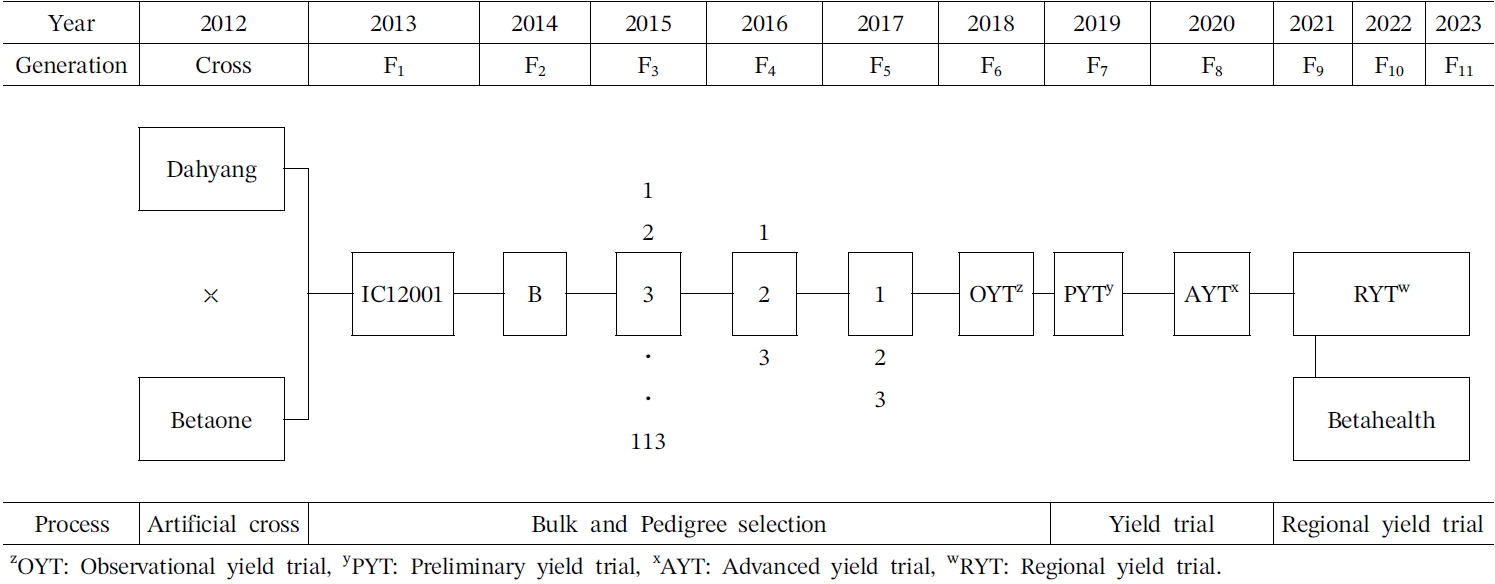
2012년 베타글루칸 함량이 많은 쌀보리 품종 ‘베타원’과 쓰러짐에 강한 겉보리 ‘다향’을 인공교배하였다. 2013년에 F
1을 양성한 후 2014년에 집단으로 F
2를 전개하였다, 2015년부터 2017년까지 F
3-F
5 계통에서 쓰러짐에 강하면서 식물체 초형이 우수한 계통을 선발하였다. 선발된 우량계통을 2018년에는 예비관찰시험(OYT)로 시험 후 특성이 우수한 IC12001-B-3-2-1 계통을 선발하였다. 선발된 이 계통을 2년간 생산력검정시험(2019~2020) 후 우수성이 인정되어 ‘전주528호’로 계통명을 부여하였다. 이후 2021년부터 2023년까지 3년간 답리작(논) 재배로 전주 및 대구 2개 지역, 전작(밭) 재배로 수원, 춘천, 청주 3개 지역에서 지역적응시험을 수행하였다(
RDA 2021,
2022,
2023). 그 결과, ‘전주528호’는 2023년 직무육성 신품종선정심의회 심의를 거쳐 베타글루칸 함량이 많고 쓰러짐에 강한 ‘베타헬스’로 명명하였다. 그 후 국립종자원의 재배심사를 거쳐 2025년 식물신품종보호법 제54조에 따라 품종보호등록원부에 등록(품종보호 제10754호)되었다. 육성 경위를 도식화하면
Fig. 1과 같다.
겉보리 ‘베타헬스’는
Table 1에서 보는 바와 같이 초엽은 병성으로 ‘혜양’과 같았다. 이삭 조성은 6조이며, 이삭 밀도는 중간형으로 표준품종인 ‘혜양’의 밀수형과는 다른 특성을 보였다. 파성은 Ⅳ로 추파형이며, ‘혜양’(파성 Ⅰ, 춘파형)과는 차이가 있었다. ‘베타헬스’와 ‘혜양’은 모두 병성으로 잎의 색 및 폭은 각각 녹색과 중간 정도이었으며, 줄기 길이와 굵기도 중간 정도이었다. 두 품종 모두 까락이 긴 장망형으로 탈망성은 보통이었다.
‘베타헬스’의 출수기는 답리작과 전작에서 각각 4월 23일과 4월 30일이었으며, ‘혜양’보다 답리작은 5일, 전작은 6일 늦었다. 성숙기는 답리작과 전작에서 각각 6월 1일과 6월 8일로 답리작과 전작 모두 5일 늦었다(
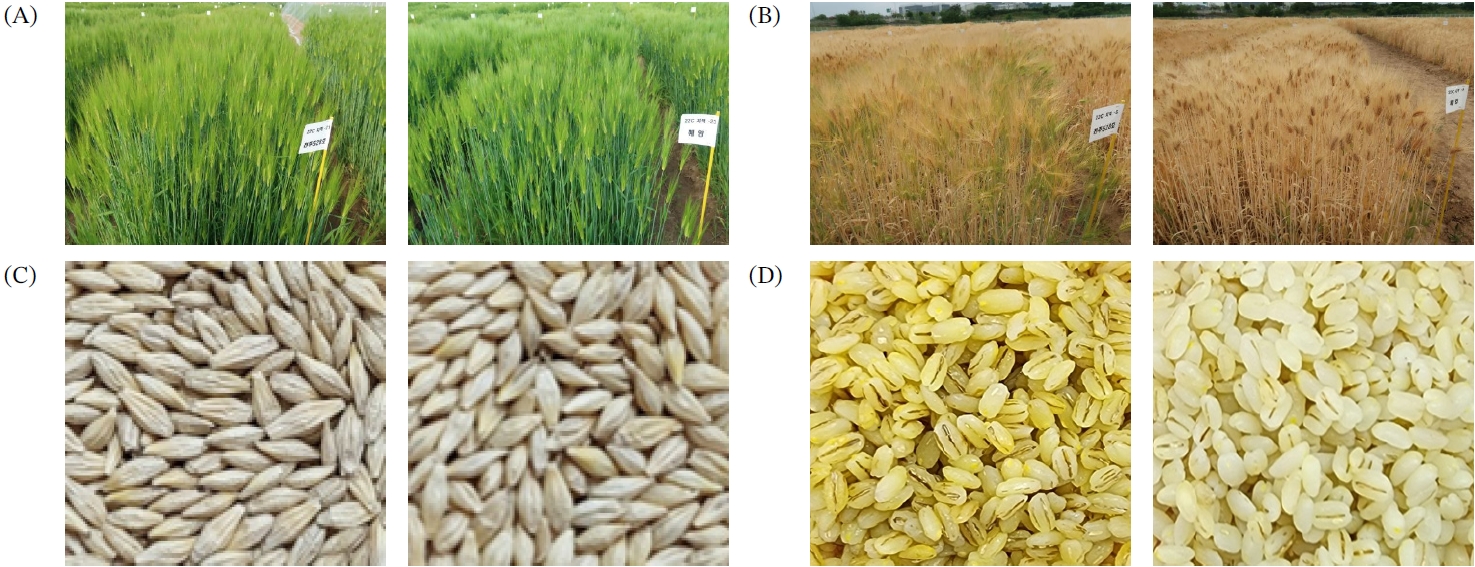
Table 2). ‘베타헬스’와 ‘혜양’의 출수기 식물체 사진은
Fig. 2와 같다.
‘베타헬스’의 생육 및 수량구성요소는
Table 3과 같다. ‘베타헬스’ 식물체의 간장은 79 cm로, 표준품종인 ‘혜양’(78 cm)과 비슷하였으며, 수장은 5.8 cm로 ‘혜양’(4.7 cm)보다 긴 편이었다. ‘베타헬스’의 m
2당 수수와 1수립수는 각각 578개, 57개로 ‘혜양’(662개, 55개)과 비슷하였다. ‘베타헬스’의 천립중은 32.3 g으로 ‘혜양’(31.4 g)과 비슷한 대립종이었으며, 리터중은 649 g으로 ‘혜양’(686 g)과 비슷하였다(
Fig. 2C).
내병성 및 재해 저항성 특성검정 시험 결과를
Table 4에 나타냈다. 보리 주요 바이러스병인 누른모자이크병(BaYMV)은
Polymyxa graminis라는 진균에 의해 매개되어 감염 초기 잎의 변색 및 황화가 진행되며, 식물체 전반적인 성장이 지연되어 분얼기까지 지속되어 수량 감소에 큰 영향을 미친다고 알려져 있다(
Zhang et al. 2023). 국내에서도 1980년대 이후 지속적으로 발생하고 있으며(
Lee 1981), 주로 남부지역의 보리 재배단지에서 발생율이 높았다(
Park et al. 2005). 지역별 상습발병 포장에서 이병 정도를 조사한 결과, 익산(strain Ⅲ)에서는 ‘혜양’(2)과 같은 저항성이었으며, 기타 나주(strain Ⅰ), 진주(strain Ⅳ)에서는 모두 0이었다. 흰가루병(PM)은 절대 활물 기생균인
Blumeria graminis f. sp. hordei에 의해 감염되는 병으로 기온 12~20℃의 온화하고 다습한 기후에서 급격히 발생하며, 공기를 통한 포자의 비산으로 병이 확산되며(
Tratwal & Bocianowski 2014), 감염 시 광합성 효율 저하 및 동화산물 축적을 저해하기 때문에 최대 30%의 수량 감소를 야기한다(
Novakazi et al. 2020,
Park et al. 2026). 흰가루병 검정을 위해 하우스 내 자연 감염을 유도하여 이병 정도를 확인한 결과, ‘베타헬스’와 ‘혜양’ 모두 발병되어 감수성임을 확인하였다.
재해 저항성 중 경기 연천시험지에서 수행한 내한성 특성검정은 ‘베타헬스’ 59.2%, ‘혜양’ 2.4%로 ‘베타헬스’가 더 추위에 약한 것으로 나타났다. 쓰러짐은 지역별 시험 포장의 평균 발생 정도를 확인하였는데, ‘베타헬스’가 0으로 ‘혜양’(1)과 같이 쓰러짐에 강한 것으로 나타났다.
‘베타헬스’와 ‘베타원’의 생육특성을 비교한 결과(
Table 5), 출수기는 각각 4월 21일과 4월 27일로 ‘베타헬스’가 6일 정도 빨랐으며, 성숙기도 6월 1일로 ‘베타원’ 대비 5일 빨랐다. 간장은 ‘베타헬스’가 86 cm로 ‘베타원’(95 cm) 대비 짧았으며, 수장은 각각 6.0 cm와 6.5 cm로 비슷하였다. 1수립수는 ‘베타헬스’ 64개, ‘베타원’ 65개로 비슷하였으며, 쓰러짐 정도는 ‘베타헬스’가 1로 ‘베타원’(7) 대비 매우 강한 특성을 보였다. 이러한 결과는 ‘베타헬스’가 기존 기능성 보리 품종인 ‘베타원’보다 식물체 키가 짧아 쓰러짐에 강한 특성을 보였고, 숙기가 빨라 이모작 작부체계 적용에도 유리할 것으로 판단되었다.
‘베타헬스’의 원맥 품질은 2023년산 수확한 종자를 이용하여 분석하였다(
Table 6). ‘베타헬스’의 전분 특성은 아밀로스 함량이 3.2%로 아밀로펙틴 함량이 많은 찰성 보리였으며, 표준품종인 ‘혜양’은 아밀로스 함량이 19.2%로 높아 찰성 보리보다 아밀로펙틴 함량이 상대적으로 적은 메성 보리의 특성을 보였다. 이러한 결과는 일반적으로 베타글루칸 함량이 높은 품종이 찰성의 전분 특성을 보이는 다른 연구 결과와 비슷하였다(
Meints et al. 2021,
Yoon et al. 2024). 전분 함량은 ‘베타헬스’ 41.2%로 ‘혜양’(56.1%)보다 낮았으며, 베타글루칸 함량은 ‘베타헬스’ 14.2%, ‘혜양’ 5.2%, ‘베타원’ 12.4%로 분석되어 일반 보리 대비 2배 이상 높고, 기존 베타글루칸 고함유 품종보다는 1% 이상 더 증진되었다.
Jayarathna et al. (2023) 연구에서도 베타글루칸 함량이 높은 보리 계통에서 전분 함량이 감소하는 경향을 보고하였으며, 본 연구에서도 유사한 결과가 확인되었다. 단백질 함량은 ‘베타헬스’ 15.9%로 ‘혜양’(14.1%)보다 더 높았으며, 백도는 ‘베타헬스’ 35.0%로 ‘혜양’(35.8%)과 비슷하였다. 취반특성 중 수분흡수율 및 퍼짐성은 ‘베타헬스’ 236%, 396%였으며, ‘혜양’(203%, 358%), ‘베타원’(204%, 359%)보다 더 우수한 혼반 특성을 보였다. 정곡 보리쌀 색도의 경우에는 ‘베타헬스’가 54.2로 ‘혜양’(52.8)보다 L값이 더 높아 밝은 특성을 보였으며, 황색도(b)도 ‘베타헬스’ 18.3으로 ‘혜양’(16.2)보다 더 높아 진한 황색 호분층 특성을 나타내었다. 이에따라, 취반 후 보리밥에서도 ‘베타헬스’는 ‘혜양’보다 더 진한 황색의 외관을 나타내는 경향을 보였다(
Fig. 2D).
보리 품종별 예상혈당지수(eGI)를 분석한 결과, 100% 보리 조건에서는 ‘베타헬스’가 41.90으로 가장 낮았으며, ‘혜양’(42.14) 및 ‘베타원’(42.66)보다 유의적으로 낮았다. 또한 20% 보리와 80% 쌀 혼반 조건에서도 ‘베타헬스’는 42.92로 가장 낮은 eGI를 나타내었고, ‘혜양’(43.19) 및 ‘베타원’(43.84)보다 유의적으로 낮았다. 이러한 결과는 ‘베타헬스’의 높은 베타글루칸 함량이 전분의 소화 및 포도당 흡수를 지연시켜 혈당 상승을 억제하는 데 기여한 것으로 판단된다.
수량성
2021년부터 2023년까지 3년간 답리작 2개 지역(전주, 대구)과 전작 3개 지역(수원, 청주, 춘천) 등 총 5개 지역에서 실시한 ‘베타헬스’의 지역적응시험 수량성 결과는
Table 7과 같다(
RDA 2021,
2022,
2023). 2023년에는 전국적인 한파로 인해 수원, 청주 및 춘천 지역의 생육이 매우 불량하여 정확한 수량성 평가가 어려웠으므로 해당 자료를 제외하였다. 수량은 지역과 연차에 따라 큰 변이를 나타냈다. 답리작에서 ‘베타헬스’와 ‘혜양’의 평균 수량은 각각 465 및 510 kg/10a였고, 전작에서는 각각 551 및 578 kg/10a였다. 전체 시험지역의 평균 수량은 ‘베타헬스’가 517 kg/10a로 ‘혜양’의 551 kg/10a보다 6.2% 낮았으나, 답리작, 전작 및 전체 평균에서 품종 간 차이는 모두 통계적으로 유의하지 않았다. 한편, 적응지역인 전주에서의 3년 평균 수량은 ‘베타헬스’가 511 kg/10a, ‘혜양’이 493 kg/10a로 ‘베타헬스’가 수치적으로 높았으나, 품종 간 유의한 차이는 나타나지 않았다. 이상의 결과에서 시험지역과 연차에 따른 수량 변이가 크게 나타나 품종 간 수량 차이를 명확히 구분하기 어려웠으며, ‘베타헬스’의 수량성은 지역 및 연차의 영향을 크게 받는 것으로 판단되었다.
보리 베타글루칸은 주로 배유 세포벽에 존재하는 다당류의 일종으로 도정을 할수록 껍질이 제거되기 때문에 조곡 상태보다 정곡 상태에서 베타글루칸 함량이 높다고 알려져 있다(
Burton & Fincher 2014,
Mikkelsen et al. 2017). ‘베타헬스’ 원맥을 이용하여 산업체 적정 보리쌀 도정 정도를 제시하기 위해 20%, 30%, 40% 도정률별 베타글루칸 함량을 분석한 결과, 20% 도정은 12.16%, 30% 도정은 12.78%, 40% 도정은 13.87%로 도정 비율이 증가할수록 베타글루칸 함량도 증가하는 경향을 보였다.
‘베타헬스’ 원맥 도정률별 취반특성은 20% 도정 시 수분흡수율 및 퍼짐성이 178%, 325%, 30% 도정(217%, 368%), 40% 도정(237%, 396%)로 분석되었다. 일반적으로 도정 정도가 증가할수록 껍질(hull), 과피(pericarp), 종피(testa) 등의 외층 조직이 제거되어 곡립 내부로의 수분 침투가 용이해지고, 이에 따라 수분 흡수 속도가 증가한다(
Klamczynski et al. 1998). 본 연구에서도 도정률이 증가할수록 수분흡수율과 퍼짐성이 증가하는 경향을 나타내어 선행연구 결과와 유사한 경향을 보였다.
이외에도 취반 후 보리쌀의 베타글루칸 함량을 분석하였다. 그 결과, 20% 도정구에서는 13.08%, 30% 도정구에서는 13.65%, 40% 도정구에서는 14.28%로 나타났으며, 도정률이 증가할수록 베타글루칸 함량이 유의적으로 증가하였다. 특히 취반 후에도 모든 처리구에서 13% 이상의 높은 베타글루칸 함량을 나타내어, 베타헬스의 우수한 베타글루칸 함량이 취반 이후에도 유지되는 것으로 확인되었다. 이러한 결과는 베타글루칸의 높은 열 안정성과 관련이 있는 것으로 판단된다.
Ren et al. (2018)은 보리 베타글루칸 추출물을 100~220℃에서 처리한 결과 98% 이상의 잔존율을 나타내어 우수한 열 안정성을 보고한 바 있으며, 본 연구에서도 취반 후 베타글루칸 함량이 높은 수준으로 유지되어 선행연구 결과와 유사한 경향을 나타내었다(
Table 8).
다만, 각 도정 수준에서 취반 후 베타글루칸 함량이 취반 전에 비해 증가하였는데 이는 열수처리 후 보리의 베타글루칸 함량이 유의하게 증가하였다고 보고한 선행연구 결과와 유사하였다.
Xu et al. (2023)은 열수처리에 의해 보리 세포벽 구조가 파괴되어 베타글루칸의 추출성과 분석 회수율이 향상된 것으로 설명하였다. 따라서, 취반 후 베타글루칸 함량 증가는 베타글루칸 자체의 절대량 증가보다는 열수처리에 따른 세포벽 구조 변화로 추출성과 분석 회수율이 향상된 결과로 판단된다.
이상의 결과를 종합하면 20% 도정은 일부 외층이 잔존하였고, 취반 전⋅후 베타글루칸 함량도 가장 낮았다. 반면 40% 도정은 취반특성과 취반 전⋅후 베타글루칸 함량이 가장 높았으나, 도정 과정에서 제거되는 원료의 비율이 증가하여 원료 손실이 가장 큰 단점이 있었다. 이에 비해 30% 도정은 20% 도정에 비해 취반특성과 취반 전⋅후 베타글루칸 함량이 향상되었으며, 40% 도정과 비교하여 품질 저하는 크지 않으면서도 원료 손실을 줄일 수 있었다. 따라서, 품질 특성과 산업체 원료 손실률을 종합적으로 고려할 때, 30% 도정이 산업체 적용을 위한 최적 도정률로 판단되었다.
Notes
-
사사
본 연구는 농촌진흥청 국립식량과학원의 농업과학기술 연구개발사업(과제명: 식가공 맥류 용도별 신품종 개발 및 유전체 육종 기반 구축(4단계), 과제번호: PJ01767401)의 지원에 의해 수행되었습니다.
Fig. 1.Pedigree of the covered barley cultivar, ‘Betahealth’.
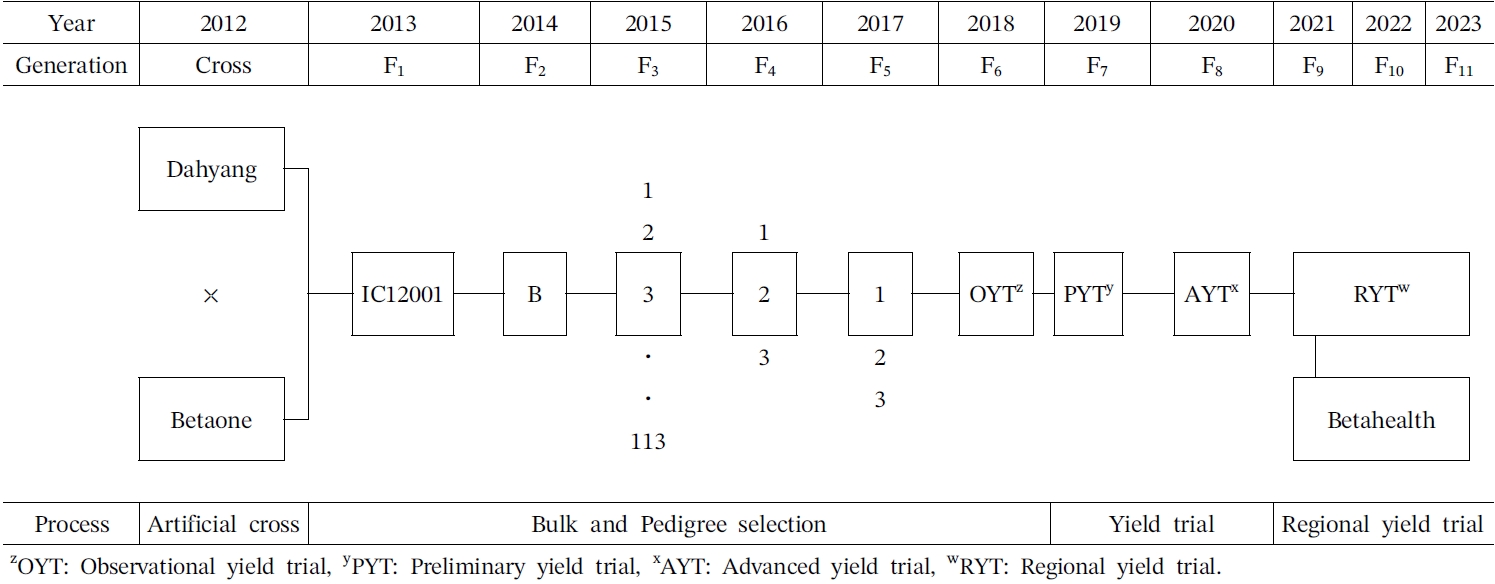
Fig. 2.Comparison of some traits in ‘Betahealth’ (Left) and ‘Hyeyang (Right). A: Plant heading, B: Plant maturity, C: Grain, D: Cooking property.
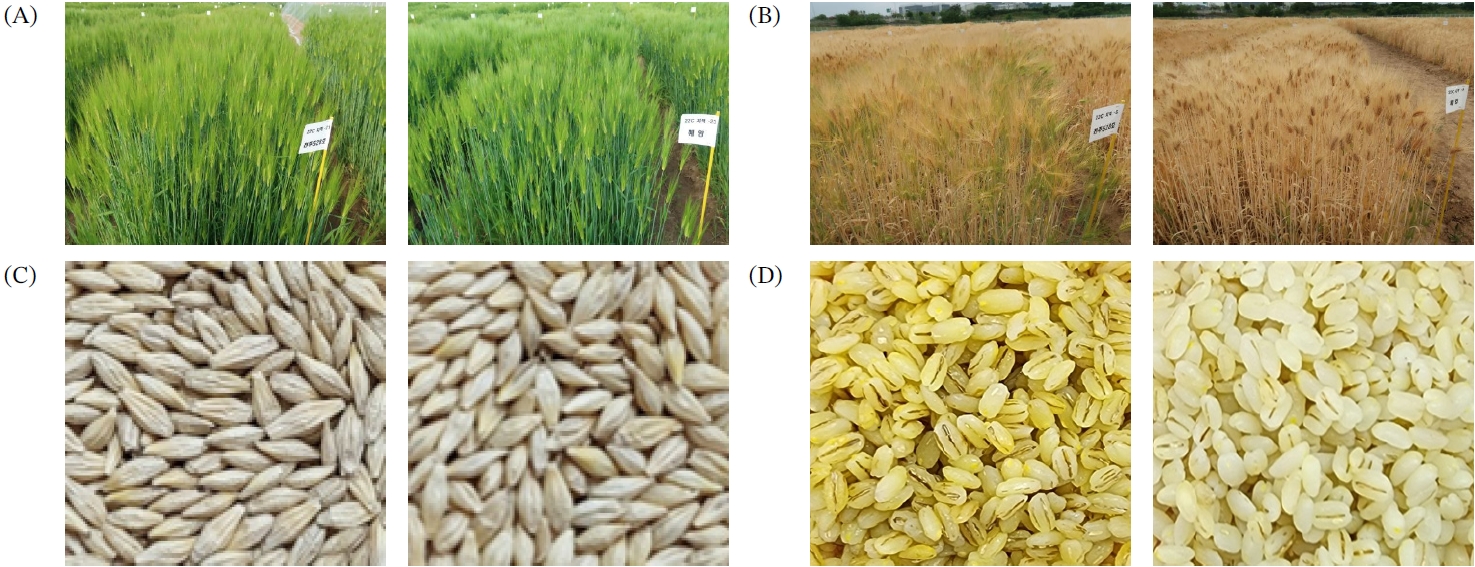
Table 1.Vernalization and morphological characteristics of ‘Betahealth’.
Table 1.
|
Cultivar |
Vernalizationz
|
Seedling growth habit |
Leaf
|
Culm
|
Spike
|
Awn length
|
|
Color |
Width |
Length |
Diameter |
Type |
Density |
Length |
Brittless |
|
Betahealth |
Ⅳ |
Erect |
Green |
Medium |
Medium |
Medium |
6-rowed |
Medium |
Long |
Moderate |
|
Hyeyang |
Ⅰ |
Erect |
Green |
Medium |
Medium |
Medium |
6-rowed |
Compact |
Long |
Moderate |
Table 2.Heading and maturity dates of ‘Betahealth’ from 2021 to 2023.
Table 2.
|
Field condition |
Location |
Heading date
|
Maturity date
|
|
Betahealth |
Hyeyang |
Betahealth |
Hyeyang |
|
Paddy |
Jeonju |
April. 22 |
April. 19 |
May. 28 |
May. 22 |
|
Daegu |
April. 24 |
April. 16 |
June. 4 |
May. 31 |
|
Mean |
April. 23 |
April. 18 |
June. 1 |
May. 27 |
|
Upland |
Suwon |
April. 26 |
April. 22 |
June. 7 |
June. 3 |
|
Cheongju |
April. 24 |
April. 20 |
May. 27 |
May. 22 |
|
Chuncheon |
May. 10 |
April. 29 |
June. 21 |
June. 15 |
|
Mean |
April. 30 |
April. 24 |
June. 8 |
June. 3 |
|
Overall Mean |
April. 27 |
April. 21 |
June. 5 |
May. 31 |
|
Adapted region Meanz
|
April. 22 |
April. 19 |
May. 28 |
May. 22 |
Table 3.Agronomic characteristics of ‘Betahealth’ from 2021 to 2023.
Table 3.
|
Cultivar |
Culm length (cm) |
Spike length (cm) |
No. of spike per m2
|
No. of grains per spike |
Test weight (g/L) |
1,000 grain weight (g) |
|
Betahealth |
79ns
|
5.8*
|
578ns
|
57ns
|
649ns
|
32.3ns
|
|
Hyeyang |
78 |
4.7 |
662 |
55 |
686 |
31.4 |
Table 4.Resistance to Barley yellow mosaic virus, powdery mildew, winter hardiness and lodging tolerance.
Table 4.
|
Cultivar |
BaYMV (0~9)z
|
Powdery mildewy (0~9) |
Winter hardinessx (%) |
Lodging tolerancew (0~9) |
|
Naju (Ⅰ) |
Iksan (Ⅲ) |
Jinju (Ⅳ) |
|
Betahealth |
0 |
2 |
0 |
Susceptible |
59.2 |
0 |
|
Hyeyang |
0 |
2 |
0 |
Susceptible |
2.4 |
1 |
Table 5.Agronomic characteristics of ‘Betahealth’ and ‘Betaone’ in 2024.
Table 5.
|
Cultivar |
Heading date (mm. dd) |
Maturity date (mm. dd) |
Culm length (cm) |
Spike length (cm) |
No. of grains per spike |
Lodging tolerancez (0~9) |
|
Betahealth |
April. 21 |
June. 1 |
86*
|
6.0ns
|
64ns
|
1 |
|
Betaone |
April. 27 |
June. 6 |
95 |
6.5 |
65 |
7 |
Table 6.Comparison of grain quality among ‘Betahealth’, ‘Hyeyang’ and ‘Betaone’.
Table 6.
|
Cultivar |
Protein (%) |
Starch (%) |
β-glucan (%) |
Amylose (%) |
Whiteness (%) |
Cooking quality (%)
|
Color differencey
|
eGIx
|
|
Water absorption rate |
Expansion rate |
L* |
b* |
100% |
20% |
|
Betahealth |
15.9*
|
41.2*
|
14.2a
|
3.2*
|
35.0ns
|
236a
|
396a
|
54.2*
|
18.3*
|
41.90c
|
42.92c
|
|
Hyeyang |
14.1 |
56.1 |
5.2c
|
19.2 |
35.8 |
203b
|
358b
|
52.8 |
16.2 |
42.14b
|
43.19b
|
|
Betaonez
|
- |
- |
12.4b
|
- |
- |
204b
|
359b
|
- |
- |
42.66a
|
43.84a
|
Table 7.Yield of ‘Betahealth’ in the regional yield trials from 2021 to 2023.
Table 7.
|
Field condition |
Location |
Betahealth (kg/10a)
|
Hyeyang (kg/10a)
|
|
2021 |
2022 |
2023 |
Mean |
2021 |
2022 |
2023 |
Mean |
|
Paddy |
Jeonju |
489 |
560 |
483 |
511 |
428 |
600 |
451 |
493 |
|
Daegu |
426 |
478 |
356 |
420 |
464 |
532 |
584 |
527 |
|
Mean |
458 |
519 |
420 |
465ns
|
446 |
566 |
518 |
510 |
|
Upland |
Suwon |
660 |
548 |
- |
604 |
716 |
652 |
- |
684 |
|
Cheongju |
629 |
521 |
- |
575 |
488 |
525 |
- |
507 |
|
Chuncheon |
576 |
374 |
- |
475 |
516 |
570 |
- |
543 |
|
Mean |
622 |
481 |
- |
551ns
|
573 |
582 |
- |
578 |
|
Overall Mean |
556 |
496 |
420 |
517ns
|
522 |
576 |
518 |
551 |
|
Adapted regions Meanz
|
- |
- |
- |
511ns
|
- |
- |
- |
493 |
Table 8.Changes in cooking properties and β-glucan content before and after cooking at different pearling rates of ‘Betahealth’.
Table 8.
|
Cultivar |
Pearling rate (%) |
Pre-cooking β-glucan (%) |
Cooking quality (%)
|
Post-cooking β-glucan (%) |
|
Water absorption rate |
Expansion rate |
|
Betahealth |
20 |
12.16c
|
178c
|
325c
|
13.08c
|
|
30 |
12.78b
|
217b
|
368b
|
13.65b
|
|
40 |
13.87a
|
237a
|
396a
|
14.28a
|
References
- 1. Abumweis S, Thandapilly SJ, Storsley J, Ames N. 2016. Effect of barley β-glucan on postprandial glycaemic response in the healthy human population: A meta-analysis of randomized controlled trials. J Funct Foods 27: 329-342.
- 2. Aoe S, Yamanaka C, Fuwa M, Tamiya T, Nakayama Y, Miyoshi T, Kitazono E. 2019. Effects of BARLEYmax and high-β-glucan barley line on short-chain fatty acids production and microbiota from the cecum to the distal colon in rats. PLoS One 14: e0218118.
- 3. Bayer MM, Rapazote-Flores P, Ganal M, Hedley PE, Macaulay M, Plieske J, Ramsay L, Russell J, Shaw PD, Thomas W, Waugh R. 2017. Development and evaluation of a barley 50k iSelect SNP array. Front Plant Sci 8: 1792.
- 4. Burton RA, Fincher GB. 2014. Evolution and development of cell walls in cereal grains. Front Plant Sci 5: 456.
- 5. Englyst HN, Kingman SM, Cummings JH. 1992. Classification and measurement of nutritionally important starch fractions. Eur J Clin Nutr 46(Suppl 2):S33-50.
- 6. Geng L, Li M, Zhang G, Ye L. 2022. Barley: A potential cereal for producing healthy and functional foods. Food Qual Saf 6: 1-13.
- 7. Gerasimova SV, Hertig C, Korotkova AM, Kolosovskaya EV, Otto I, Hiekel S, Kochetov AV, Khlestkina EK, Kumlehn J. 2020. Conversion of hulled into naked barley by Cas endonuclease-mediated knockout of the NUD gene. BMC Plant Biol 20(Suppl 1):255.
- 8. Goñi I, Garcia-Alonso A, Saura-Calixto F. 1997. A starch hydrolysis procedure to estimate glycemic index. Nutr Res 17: 427-437.
- 9. Guo Y, Jayakodi M, Himmelbach A, Ben-Yosef E, Davidovich U, David M, Hartmann-Shenkman A, Kislev M, Fahima T, Schuenemann VJ, Reiter E, Krause J, Steffenson BJ, Stein N, Weiss E, Mascher M. 2025. A haplotype-based evolutionary history of barley domestication. Nature 647: 680-690.
- 10. Islam MZ, An HG, Kang SJ, Lee YT. 2021. Physicochemical and bioactive properties of a high β-glucan barley variety ‘Betaone’ affected by germination processing. Int J Biol Macromol 177: 129-134.
- 11. Jayarathna S, Jin Y, Dotsenko G, Fei M, Andersson M, Andersson AAM, Sun C, Andersson R. 2023. High fructan barley lines produced by selective breeding may alter β-glucan and amylopectin molecular structure. Carbohydr Polym 316: 121030.
- 12. Khaleghdoust B, Esmaeilzadeh-Salestani K, Korge M, Alaru M, Mõll K, Värnik R, Koppel R, Tamm Ü, Kurg M, Altosaar I, Loit E. 2024. Barley and wheat beta-glucan content influenced by weather, fertilization, and genotype. Front Sustain Food Syst 7: 1326716.
- 13. Klamczynski A, Baik BK, Czuchajowska Z. 1998. Composition, microstructure, water imbibition, and thermal properties of abraded barley. Cereal Chem 75: 677-685.
- 14. Kumbhar RA, Yang K, Mari Baloch SN, Memon S, Liu Y, Zhao H, Feng Z. 2025. Exploring the significance of β-glucan in grains of hulless barley. Plant Mol Biol Rep 43: 954-966.
- 15. Lee SA. 1981. Studies on virus disease occurring in various crops in Korea. Res Report Office Rural Develop 23: 62-74.
- 16. Lee Y, Lee H, Kim KJ, Shin HB, Shin YA, Jin H, Ham JR, Choi SY, Lee MJ, Lee MK, Son YJ. 2025. “Betaone” barley water extract suppresses ovariectomy-induced osteoporosis in vivo and RANKL-induced osteoclast differentiation in vitro. PLoS One 20: e0325071.
- 17. Martínez M, Motilva MJ, López de las Hazas MC, Romero MP, Vaculova K, Ludwig IA. 2017. Phytochemical composition and β-glucan content of barley genotypes from two different geographic origins for human health food production. Food Chem 245: 61-70.
- 18. Meints B, Vallejos C, Hayes PM. 2021. Multi-use naked barley: A new frontier. J Cereal Sci 102: 103370.
- 19. Mikkelsen MS, Meier S, Jensen MG, Qin F, Stoica IM, Martens HJ, Blennow A, Jespersen BM. 2017. Barley genotypic β-glucan variation combined with enzymatic modifications direct its potential as a natural ingredient in a high fiber extract. J Cereal Sci 75: 97-106.
- 20. Mio K, Goto Y, Matsuoka T, Komatsu M, Ishii C, Yang J, Kobayashi T, Aoe S, Fukuda S. 2024. Barley β-glucan consumption improves glucose tolerance by increasing intestinal succinate concentrations. npj Sci Food 8: 69.
- 21. Novakazi F, Krusell L, Jensen JD, Orabi J, Jahoor A, Bengtsson T. 2020. You had me at “MAGIC”!: Four barley MAGIC populations reveal novel resistance QTL for powdery mildew. Genes 11: 1512.
- 22. Park JC, Jeong GA, Park SG, Yoon YM, Hur OS, Lee CJ. 2025. Physicochemical properties of starch isolated from Betahealth, a high β-glucan barley cultivar. Foods 14: 3226.
- 23. Park JC, Kim YK, Lee CH, Park SG, Hur OS, Kim KH, Kang CS, Park JH, Lee MJ, Yoon YM. 2023. A naked waxy barley cultivar, ‘Baeksoojeongchal’ with less browning as cooked barley. Korean J Breed Sci 55: 179-189.
- 24. Park JC, Seo JH, Kim YK, Kim JG. 2005. Occurrence of viral diseases in barley fields and responses of resistant genes to BaYMV-Ik and BaMMV. Korean J Crop Sci 50: 197-204.
- 25. Park JC, Yoon YM, Lee CH, Hur OS. 2026. Development and validation of KASP markers for powdery mildew resistance in Korean naked barley using QTL-seq. Mol Breed 46: 27.
- 26. Poets AM, Fang Z, Clegg MT, Morrell PL. 2015. Barley landraces are characterized by geographically heterogeneous genomic origins. Genome Biol 16: 173.
- 27. Pourkheirandish M, Hensel G, Kilian B, Senthil N, Chen G, Sameri M, Azhaguvel P, Sakuma S, Dhanagond S, Sharma R, Mascher M, Himmelbach A, Gottwald S, Nair SK, Tagiri A, Yukuhiro F, Nagamura Y, Kanamori H, Matsumoto T, Willcox G, Middleton CP, Wicker T, Walther A, Waugh R, Fincher GB, Stein N, Kumlehn J, Sato K, Komatsuda T. 2015. Evolution of the grain dispersal system in barley. Cell 162: 527-539.
- 28. Ren Y, Xie H, Liu L, Jia D, Yao K, Chi Y. 2018. Processing and prebiotics characteristics of β-glucan extract from highland barley. Appl Sci 8: 1481.
- 29. Rural Development Administration (RDA). 2012. Agriculture experiment investigation standard.
- 30. Rural Development Administration (RDA). 2021. Report of development new variety of winter crops.
- 31. Rural Development Administration (RDA). 2022. Report of development new variety of winter crops.
- 32. Rural Development Administration (RDA). 2023. Report of development new variety of winter crops.
- 33. Schlörmann W, Glei M. 2017. Potential health benefits of β-glucan from barley and oat. Ernährungs Umschau 64: 148-156.
- 34. Shimizu H, Ishikawa G, Aoki H, Nakata M, Tanaka J. 2025. Development of a KASP marker set for high-throughput genotyping in Japanese barley breeding programs with various end-use purposes. Breed Sci 75: 37-55.
- 35. Shinjiro C, Endo I, Tani T. 1965. Qualities of rices by early seasonal cultivation or early sowing depend upon rice varieties and growing regions. Ⅱ. Cooking qualities of rice grain. Report of the Food Research Institute, p. 13.
- 36. Suriano S, Savino M, Codianni P, Iannucci A, Caternolo G, Russo M, Pecchioni N, Troccoli A. 2019. Anthocyanin profile and antioxidant capacity in coloured barley. Int J Food Sci Technol 54: 2627-2637.
- 37. Takahashi A, Yoshioka T, Yanagisawa T, Nagamine T, Sugita T. 2025. Breeding of Fukumi Fiber, a new six-rowed waxy hull-less barley cultivar containing high levels of β-glucan with a proanthocyanidin-free gene. Breed Sci 75: 56-69.
- 38. Tekin-Cakmak ZH, Ozer C, Ozkan K, Yildirim H, Sestili F, Jilal A, Sagdic O, Ozgolet M, Koksel H. 2023. High-beta-glucan and low-glycemic index functional bulgur produced from high-beta-glucan barley. J Funct Foods 112: 105939.
- 39. Tratwal A, Bocianowski J. 2014. Blumeria graminis f. sp. hordei virulence frequency and the powdery mildew incidence on spring barley in the Wielkopolska province. J Plant Prot Res 54: 28-35.
- 40. Wang Y, Ames NP, Tun HM, Tosh SM, Jones PJ, Khafipour E. 2016. High molecular weight barley β-glucan alters gut microbiota toward reduced cardiovascular disease risk. Front Microbiol 7: 129.
- 41. Xu J, Ai Y, Zhao Y. 2023. Understanding the nutritional, structural, and physicochemical properties and in vitro digestibility of thermally-treated whole grain highland barley. Research Square https://doi.org/10.21203/rs.3.rs-3120101/v1
- 42. Yanagisawa T, Nagamine T, Takahashi A, Takayama T, Doi Y, Matsunaka H, Fujita M. 2011. Breeding of Kirari-mochi: A new two-rowed waxy hull-less barley cultivar with superior quality characteristics. Breed Sci 61: 308-316.
- 43. Yoon YM, Jeong GA, Park SG, Park JC, Hur OS, Chae R, Lee CJ. 2024. Physicochemical properties of Betaone barley starch depending on starch isolation methods. Food Eng Prog 28: 333-341.
- 44. Yu DS, Shin MJ, Park JC, Kang M. 2022. A statistical analysis of phenotypic diversity based on genetic traits in barley germplasms. Plant Res 19: 131-142.
- 45. Zhang M, Hong Y, Zhu J, Pan Y, Zhou H, Lv C, Guo B, Wang F, Xu R. 2023. Molecular insights into the responses of barley to yellow mosaic disease through transcriptome analysis. BMC Plant Biol 23: 502.