적요
The goji berry (Lycium chinense Mill.) line CBP17749-20 was selected from F1 hybrids of ‘CBP02261-1’ and ‘CBP11542-206’ in 2017 to establish a cultivar suitable for shoot and leaf production. Preliminary and advanced yield trials were conducted in 2019 and 2020 to investigate yield characteristics, and the selected line was named ‘Gugisoon 2.’ After regional adaptability tests from 2021 to 2022, it was officially registered as the cultivar ‘Cheongsoon.’ The cultivar Unk ‘Cheongsoon’ is characterized by vigorous growth, strong sprouting ability, and an upright growth habit. Its leaves are broadly oval with a higher chlorophyll content than those of the control cultivar ‘Gugisoon 1’ and both leaves and stems are thicker and heavier. It also exhibits excellent resistance to gall mites (Eriophyes spp.), which cause purplish galls on leaf surfaces. Compared to ‘Gugisoon 1,’ ‘Cheongsoon’ has a higher rutin content and a lower quercetin content, and its shoot production index is 224% greater. This cultivar is highly suitable for shoot and leaf production and can be grown in open fields; however, greenhouse cultivation produces tender shoots (Registration No. 10170).
서언
구기자나무(
Lycium chinense Mill.)는 가지과에 속하는 낙엽성 소관목으로 한국, 중국, 일본, 몽골 등지에 분포하며 예로부터 재배되고 있는 전통 약용 작물 중의 하나로, 이용 부위에 따라 성숙한 열매를 구기자(
Lycii fructus), 뿌리의 껍질을 지골피(
Lycci cortex), 잎은 구기엽(
Lycii folium)이라 부르고 한방에서는 부위별로 각각의 효능을 달리하여 사용되고 있으며, 전초(全草)를 식용할 수 있는(
MFDS 2025) 작물이다.
구기자의 재배면적은 2023년 139 ha, 생산량은 464 M/T이었으며, 이중 충청남도가 재배면적은 99 ha, 생산량이 382 M/T으로(
MAFRA 2024) 최대 주산지다. 한편, 구기자는 대부분이 열매 위주의 건과 형태로 유통되고 있으므로 구기자 산업 발전을 위해서는 생과, 잎, 지골피 등 이용 부위의 확대와 이용 방법 그리고 재배 방법 및 품종 육성 등의 연구가 필요하다.
특히 구기자나무의 새순인 구기순은 ‘천정초(天精草)’로도 불리는데, 목질화가 되지 않은 어린잎과 연한 줄기 상태의 끝순을 채취하여 나물, 절임류 등의 식재료로 이용해 왔다. 구기순은 보통 농가에서 솎음작업 할 때 채취하며 시기는 4~5월경 지재부에서 다수의 새순이 자라는데 주지로 쓸 세력이 강한 1~2개를 제외하고 나머지는 제거하는 작업 과정과 1~3회의 적심 작업 중에 많이 이루어진다.
구기엽의 기능 성분인 rutin의 함량은 채취 시기에 따라 차이가 있는데 8월이 높고, 7월, 5월의 순으로 감소하였으며(GBRI 2013), 항산화활성은 86.1~89.2%의 범위로 불로 품종에서 가장 높다고 하였다(
Park et al. 2007). 또, 구기순에는 카로티노이드와 플라보노이드 등의 색소 물질이 많이 함유되어 있고(
Park et al. 1997), 생잎에는 총 폴리페놀 1,208 mg/mL과 비타민C 2.03%가 함유되어 있으며(
Kim et al. 2007), 무기성분으로 Ca, Mg, Fe, Mn, Cu의 순으로 함량이 높았는데, 이들 성분은 계통, 착생 위치 및 생육단계에 따라 차이가 있다고 하였다(
Lee 1983). 또 구기엽에는 체지방 및 혈장 내 leptin 증가 억제 효과(
Jung et al. 2011), 지방 축적 및 인슐린 저항성 억제와 혈당 강하 효과(
Hwang et al. 2009,
Kim & Kim 1994), 특발성 폐섬유화증을 개선하고 당뇨나 고혈압, 뇌출혈 예방에 효과가 있으며(
Kim et al. 2024), 미백활성도 우수하여 식품 및 화장품의 기능성 소재로도 이용 가능하다고 하였다(
Kim et al. 2011).
구기순 및 구기엽을 활용한 건강식품, 특화상품 개발 등에 대한 관심이 증가하고 있으나 이에 필요한 전문 재배는 활발히 이루어지지 못하는 실정이며, 구기순 전용 품종은 충청남도농업기술원 구기자연구소에서 육성한 구기순 1호가 있으나(
Chungnam ARES 2008), 잎 표면에 자색의 혹을 만들어 기생하면서 품질에 치명적인 피해를 주는 구기자혹응애에 약한 단점이 있다.
본 연구는 생육이 왕성한 4배체이며 혹응애저항성이 강하여 구기순과 잎 생산에 적합한 ‘청순(품종보호 제10170호, 2024.5.7.~2044.5.6.)’을 육성하였기에 보고하는 바이다.
재료 및 방법
재배방법
구기자 ‘청순’은 ‘구기순 1호’를 대비 품종으로 특성을 비교하였다.
생산력검정시험은 2019년 예비시험과 2020년 본시험으로 나누어 충청남도 청양군 구기자연구소에서 수행하였고, 지역적응시험은 2021년부터 2022년까지 2년간 청양군의 2개소, 즉 비봉면과 운곡면에 위치한 무가온 비닐하우스에서 각각 실시하였다.
정식 방법으로 생산력 검정과 지역적응시험의 1년 차에는 삽식 즉, 3월 하순에 60 cm 간격으로 이랑을 만들고 배색 비닐을 멀칭 한 후 약 15 cm 길이의 삽수를 20 cm 간격으로 삽목하였고, 지역적응시험의 2년차는 전년도 모주를 지면 높이에서 모두 전정한 후 그대로 사용하였다. 시험구 배치는 난괴법 3반복 처리하였고, 시비량은 10 a당 N-P2O5-K2O를 40-30-30 kg의 기준으로 하여 3월 상순에 기비로 질소와 칼리는 60%, 인산은 전량 시비하였고, 6월 하순에 1차 추비로 질소와 칼리를 20%씩, 8월 하순에 2차 추비로 나머지 질소와 칼리 20%씩을 시비하였다.
조사분석
구기순은 시험구의 60~70% 정도가 20 cm 이상으로 자라면 일시에 예취 작업하여 채취하였고 채취 횟수는 생산력검정시험은 5월부터 9월까지 총 5회, 지역적응시험은 5월에서 10월까지 총 7회 채취하여 각각 생육 특성 및 생산량을 조사하였다.
염색체의 배수성 검정은 배수체판정기(CyFlowTM Ploidy analyser, Sysmex Partec, Germany)로 검정하였다. Rutin과 Quercetin의 함량은 건조분말 시료에 메탄올 50%용액을 일정 비율로 가하여 30분 동안 초음파 추출한 후, 10,000 rpm에서 원심분리한 상등액을 0.2 μm 실린지필터로 여과하여 HPLC-DAD (Aglient 1260 system, Austria)로 분석하였다. 분석조건은
Table 1과 같으며, 함량 계산은 외부표준법에 의하여 정량하였다. 또 잎의 엽록소 측정은 Minolta SPAD-502 (-9.9~199), 색도는 Spectrophotometer (CM-3500d, Konica Minolta, Japan), 당도는 Refractometer (GMK-701AC, Giwon hi-tec, Korea), 산도는 전위차 측정기(GMK-835F, Giwon hi-tec, Korea)를 이용하여 조사하였으며 그 외의 조사 방법은 농촌진흥청 농업과학기술 연구조사분석기준(RDA 2012)에 준하였다.
모든 시료는 매회 3회씩 반복하여 측정한 결과를 R 프로그램(The R project for statistical computing)을 사용하여 통계처리하였으며 각각의 시료에 대해 평균±표준편차로 나타내었다. 각 시료군에 대한 유의차 검정은 분산분석을 한 후 p<0.05 수준에서 Duncan’s multiple test에 따라 분석하였다.
결과 및 고찰
육성경위
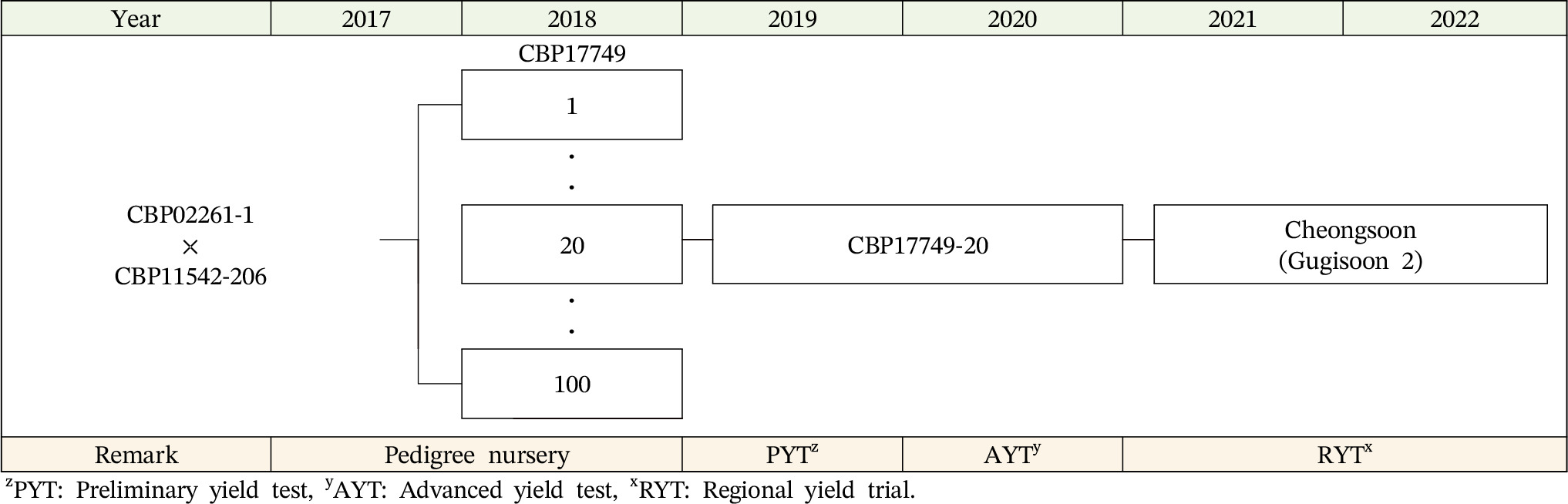
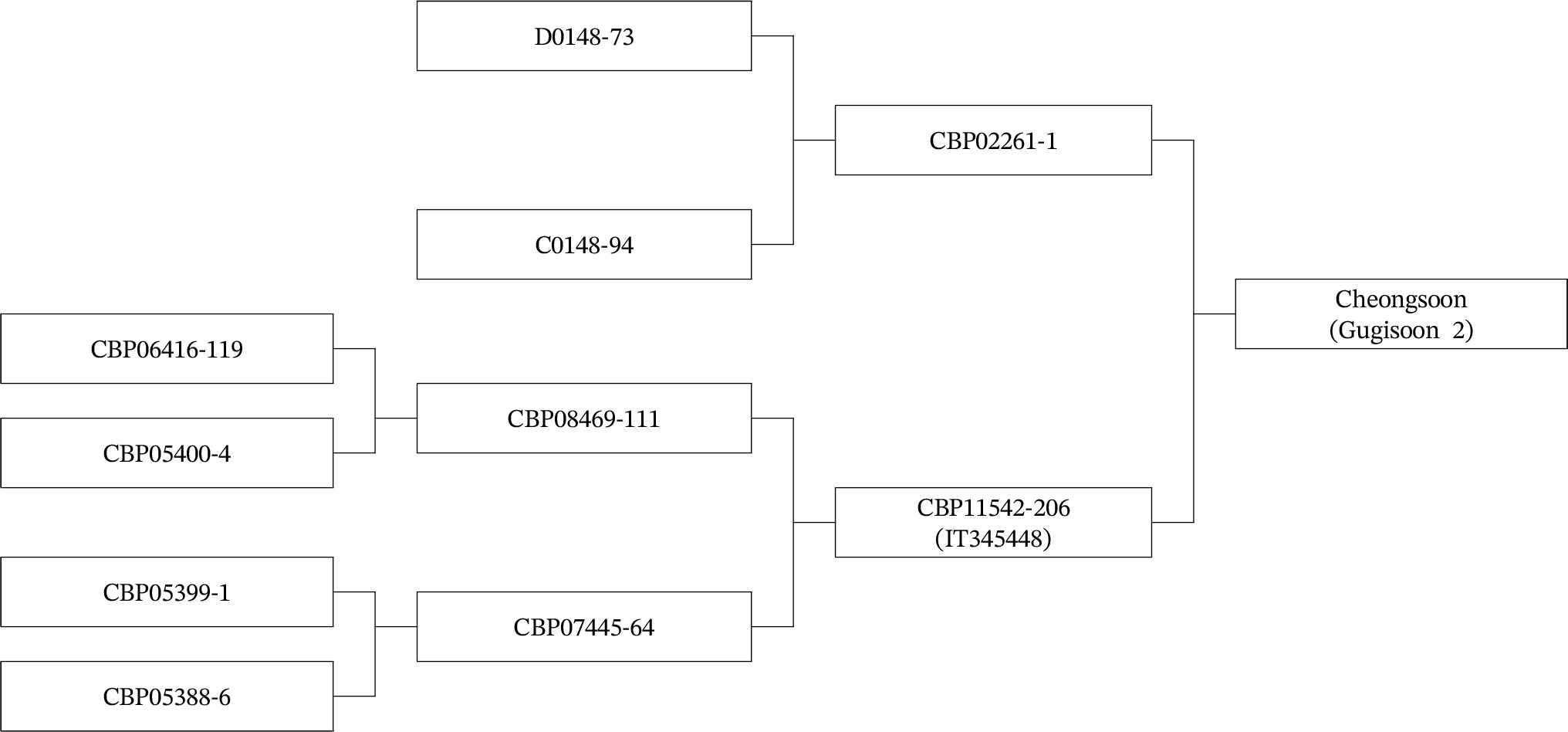
콜히친 돌연변이에 의하여 유기된 4배체 육성 계통인 ‘CBP02261-1’과 ‘CBP11542-206’를 모본과 부본으로 하여 2017년 인공교배를 실시하였다. 얻어진 종자는 2018년에 파종하여 100개체의 1차 특성을 조사하였고 우수한 특성을 가진 ‘CBP17749-20’을 선발하였다. 생산력검정 예비시험과 본시험을 거쳐 ‘구기순 2호’로 계통명을 부여한 후 지역적응시험을 실시한 결과, 구기자혹응애에 대한 저항성이 매우 강하고 생산량도 높으며, 이형주와 변이 발생이 없어 2022년 충청남도 종자위원회 심의를 통하여 구기자 ‘청순(淸荀, Cheongsoon)’으로 최종 선정되었다. ‘청순’의 일련의 선발 과정은
Fig. 1과 같으며 육성 계보도는
Fig. 2와 같다.
1. 형태적 특성
‘청순’의 형태적 특성을 보면(
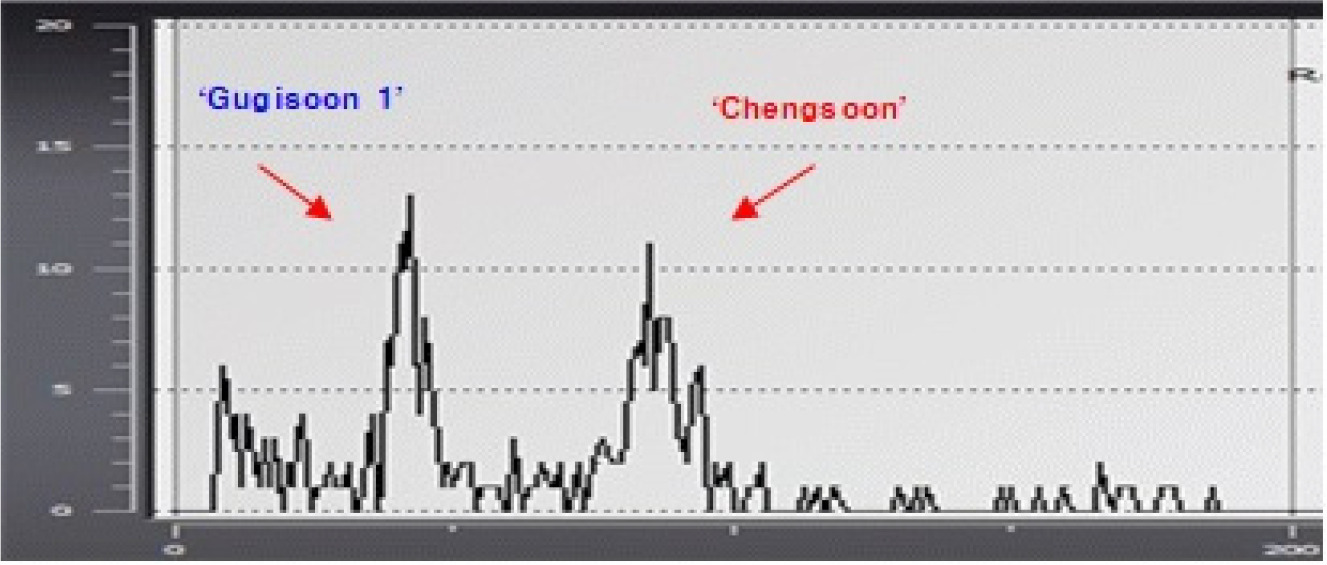
Table 2) 수형은 직립형이고, 잎은 대비 품종인 ‘구기순 1호’의 연녹색에 비해 녹색으로 더 진하며, 폭이 넓은 타원형이다. 맹아력은 대비 품종과 같이 강하며, 꽃은 대비 품종에 비하여 자색으로 진하고 크기도 크다. 열매 모양은 타원형으로 DNA 함량을 flow cytometry 검정으로 측정한 결과(
Fig. 3), 대비 품종은 2배체임에 반해 ‘청순’은 4배체, 즉 2n=4x=48로 판정되었다.
2. 잎 및 줄기 특성
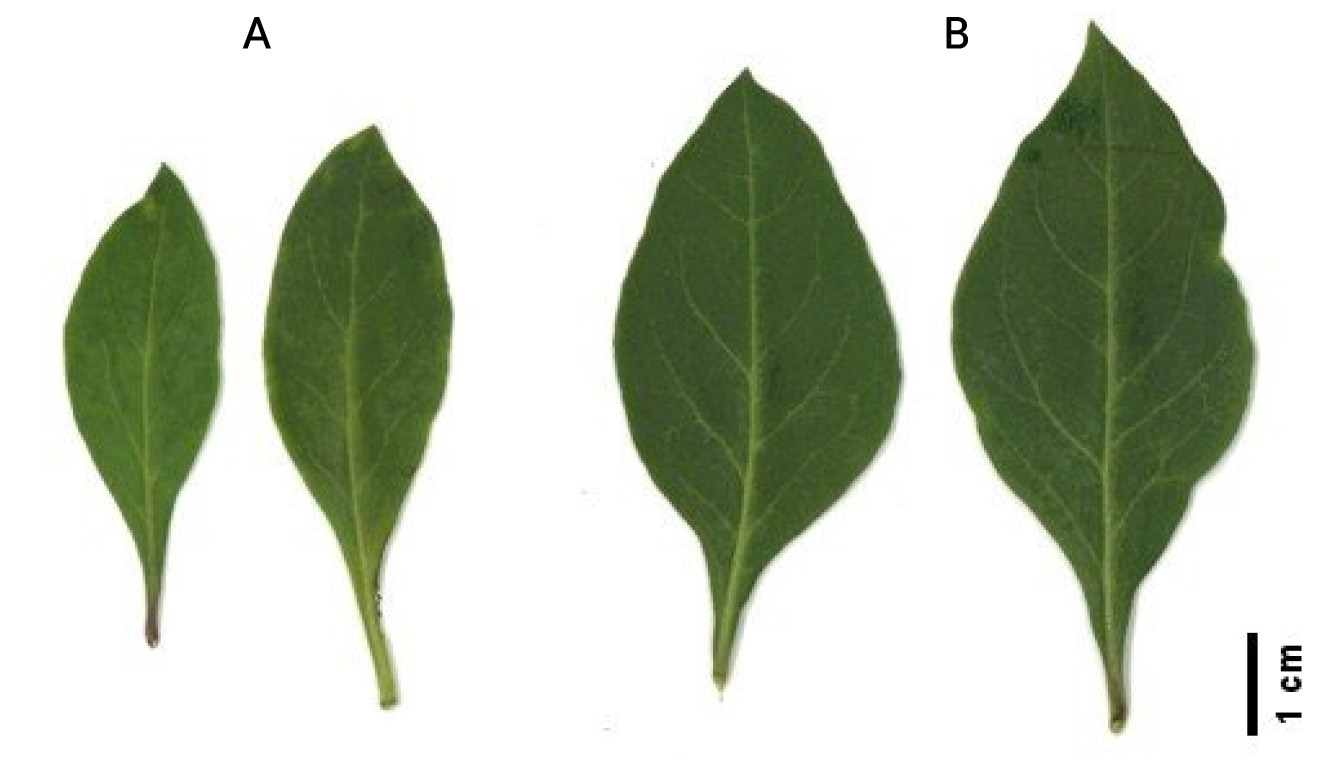
잎의 길이는 ‘청순’과 ‘구기순 1호’ 간 유의차 없었으나, 엽폭은 ‘청순’이 3.1 cm로 0.9 cm가 커서 장폭비도 큰 좀 더 둥근 잎 모양을 보였다(
Table 3,
Fig. 4). 또 ‘청순’은 ‘구기순 1호’보다 잎의 두께는 두껍고, 100개 잎의 무게도 무거웠으며, 엽록소 함량도 높았다.
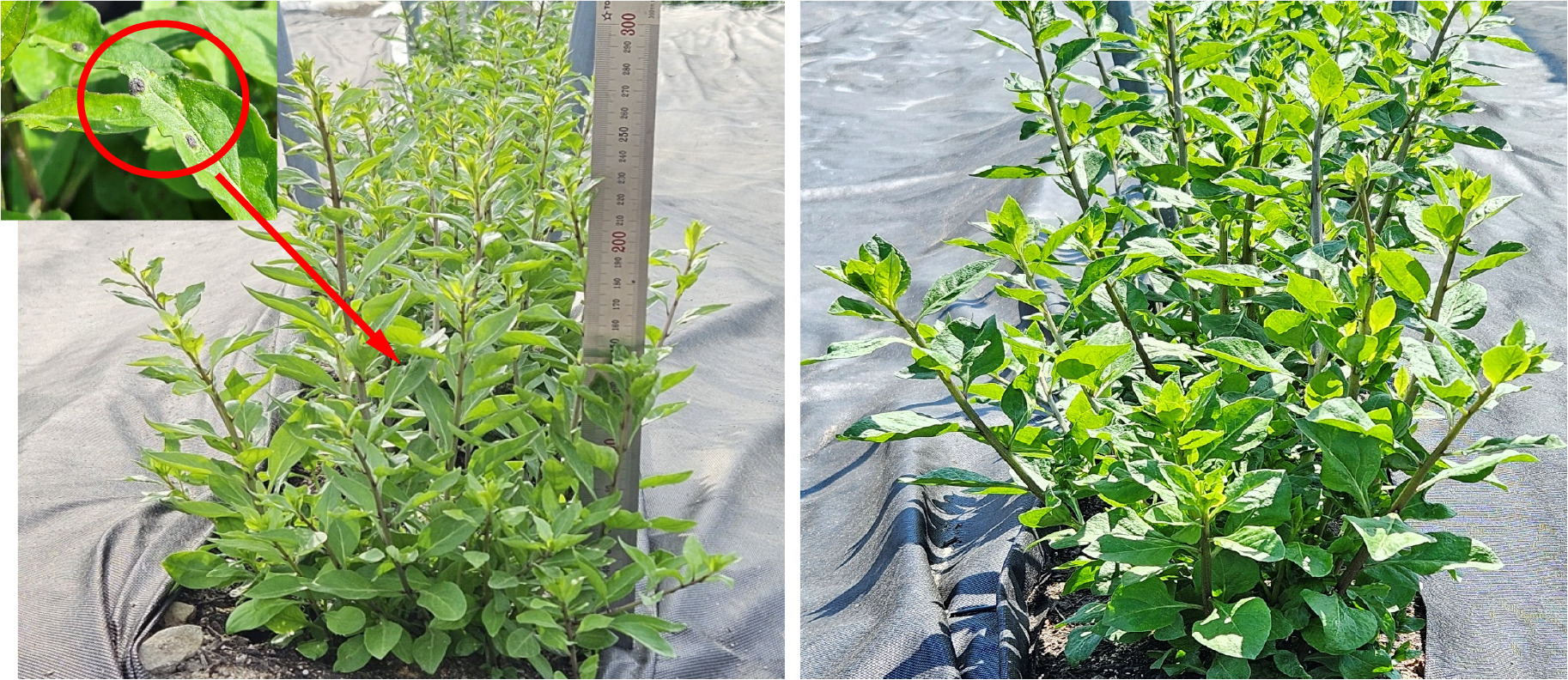
‘청순’과 ‘구기순 1호’의 포장 재배 시 생육 특성은
Fig. 5와 같다. 채취 후 줄기 특성을 조사한 결과 평균 길이는 높은 편차로 인해 ‘청순’과 ‘구기순 1호’간 유의차 없었으나 ‘청순’은 경경이 3.2 mm로 굵고, 한 주당 발생하는 줄기의 수는 ‘구기순 1호’의 14.9개에 비해 11.2개로 적었다(
Table 4). 그리고 줄기의 무게는 ‘청순’이 79.7 g으로 ‘구기순 1호’의 49.4 g에 비해 훨씬 무거운 특징을 보였다.
구기자 재배에 있어 병해충, 특히 잎에서는 혹응애가 수량 감소의 가장 큰 요인으로 작용하며(
Ju et al. 2015), 혹응애는 성충 상태로 충영 내에서 월동하여 년 6~7회 발생하며 생육기간이 길어질수록 피해가 크게 나타난다(
Kim 1968,
Choi & Park 2022). 따라서 구기자 잎 또는 나물용 품종 육종에 있어 혹응애 저항성은 매우 중요한 지표가 되므로 지역적응시험 포장에서 자연 발생 정도를 조사하였다(
Table 5). 혹응애의 피해 잎 비율은 ‘청순’은 1년차 2.0%, 2년차 2.5%로 평균 2.3%의 피해율로 대비 품종인 ‘구기순 1호’의 23.3%에 비해 아주 낮았으며, 혹응애 피해엽 당 충령수도 1.3 개로 적어서 혹응애의 저항성은 매우 강한 것으로 조사되었다.
1. 생산력검정
생산력검정을 위하여 2019년 예비시험과 2020년 본시험을 추진하였다(
Table 6). 10 a당 구기순 생산량을 비교해 보면 구기순 1호는 예비시험의 2,612 kg, 본시험의 2,340 kg에 비해 ‘청순’은 예비시험의 4,691 kg, 본시험의 5,872 kg으로 모두 월등히 높았다. ‘청순’은 평균 5,282 kg 생산되어 대비 품종인 ‘구기순 1호’의 평균 2,476 kg 대비 지수가 213%로 높았다.
2. 지역적응시험
2021년부터 2022년까지 지역적응성을 검정한 결과(
Table 7), 10 a당 구기순 생산량은 ‘구기순 1호’는 1년차 2,512 kg, 2년차 26,818 kg로 평균수량은 14,665 kg이었으며 ‘청순’은 1년차 4,560 kg, 2년차 37,533 kg로 평균 21,047 kg를 생산하여 ‘청순’이 대비 품종 대비 44%의 더 높은 수량성을 보였다. 구기순 채취는 시험구의 60-70% 정도가 20-30 cm 길이가 되었을 때 채취하였기 때문에 구기순의 하부는 대부분 속심이 발생하여 목질화가 진행되었으며 또 5월보다 6월, 7월로 시간이 경과될수록 구기순 하부의 목질화는 더 빠르게 진행되었다. 나물용 구기순은 전체 줄기에서 먹을 수 있는 연하고 부드러운 끝순 부분만 해당되므로 따로 손질하여 나물용 생산량을 조사하였다. ‘청순’은 평균 3,851 kg로 ‘구기순 1호’의 1,721 kg 대비 224%의 생산지수를 보였으며, 총 생산된 구기순에서 부드러운 나물용 구기순의 비율이 18.3%로 대비품종보다 6.6% 높았다.
Rutin은 황색 또는 담황색의 polyphenol 화합물인 flavonoid의 일종으로 quercetin에 rutinoside가 결합된 물질로 혈관의 지나친 투과성에 의해 발생되는 혈관계 질환의 치료와 모세혈관 강화, 항염증, 장출혈 및 망막출혈의 예방 등(
Choi et al. 1996)과 전 지방세포의 지방세포로의 분화와 증식을 억제(
Kim et al. 2013a)하며, Quercetin은 몸에 해로운 활성산소를 제거하는 항산화작용, 항염증, 항암(
Lee et al. 2003) 등의 효능이 있는 것으로 알려져 있다.
Rutin의 함량은 구기순 1호의 42.4 μg/g에 비해 ‘청순’이 107.1 μg/g으로 2.5배 이상 높았다. 그러나 quercetin의 함량은 rutin 함량과는 반대로 구기순 1호가 77.8 μg/g으로 ‘청순’에 비해 1.3배 높은 함량을 보였다(
Table 8).
구기자 ‘청순’은 4배체 품종으로 구기엽 및 구기순의 생육이 왕성한 반면 개화기가 늦고 열매의 착과 및 수량성이 낮은 특성이 있다. 그러므로 구기순과 구기엽의 재배에 적절하며 연중 7회 정도 수확 가능하다. 혹응애에 강한 품종으로 노지재배도 가능하나 시설하우스에서 품질 좋은 구기순을 생산할 수 있다. 습해에 다소 약하므로 높은 이랑으로 재배하고 과습되지 않도록 수분관리가 필요하다.
적요
구기순 및 구기엽 생산에 적합한 우수품종을 육성하기 위하여 2017년도에 4배체 육성 계통인 ‘CBP02261-1’과 ‘CBP11542-206’ 계통을 모본과 부본으로 인공교배를 실시하여 ‘CBP17749-20’를 선발하였다. 2019년부터 2020년까지 생산력 검정 예비시험과 본시험을 실시하여 ‘구기순 2호’로 계통명을 부여하였고, 2021년부터 2022년까지 지역적응시험을 거쳐 ‘청순’으로 품종등록하였다.
‘청순’의 구체적인 특징은 다음과 같다. 식물체는 4배체로 맹아력과 생육이 강하고 수형은 직립형이었다. 잎은 대비종인 ‘구기순1호’에 비해 더 둥근 타원형으로 엽록소 함량이 높고, 잎과 줄기도 두껍고 무거웠으며 혹응애 저항성이 매우 강하였다. ‘청순’은 대비종인 ‘구기순 1호’보다 rutin 함량은 높고, quercetin 함량은 낮았으며, 구기순의 총생산지수는 ‘구기순 1호’ 대비 224%로 높았다.
구기자 ‘청순’은 생육이 왕성하고, 잎 표면에 자색의 혹을 발생시키는 구기자혹응애에 대한 저항성이 매우 강하여 구기순과 잎 생산에 알맞은 품종으로, 노지재배도 가능하나 시설하우스에서 더 부드러운 순을 생산할 수 있다.
Fig. 1Pedigree diagram of goji berry cultivar ‘Cheongsoon’.
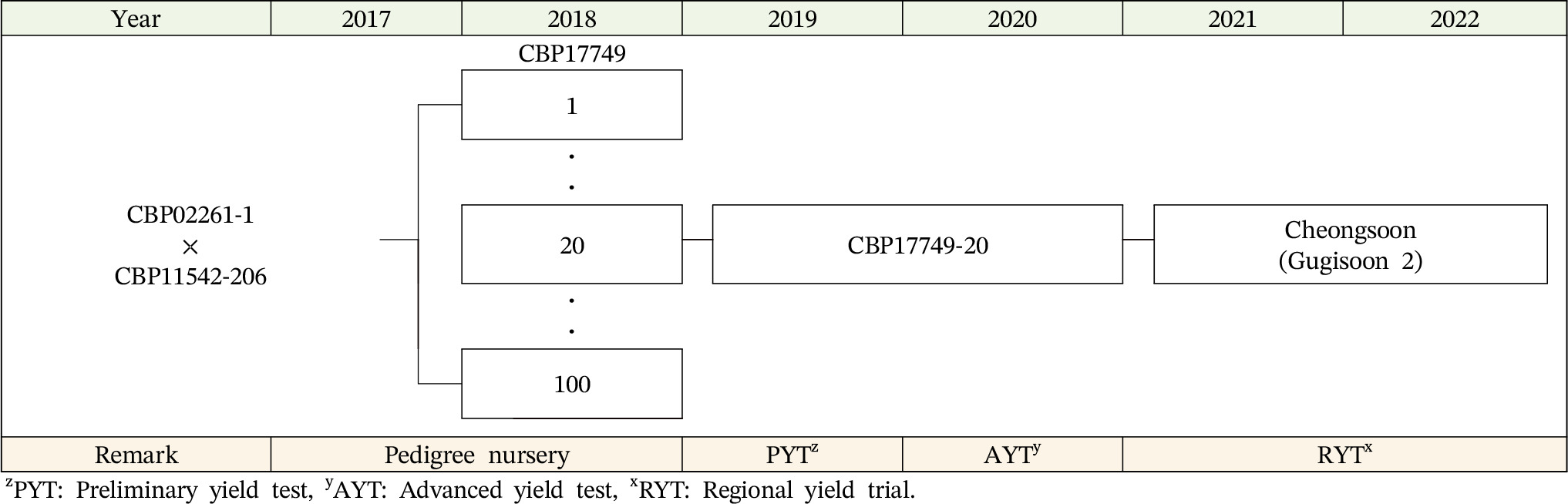
Fig. 2Genealogical diagram of goji berry cultivar ‘Cheongsoon’.
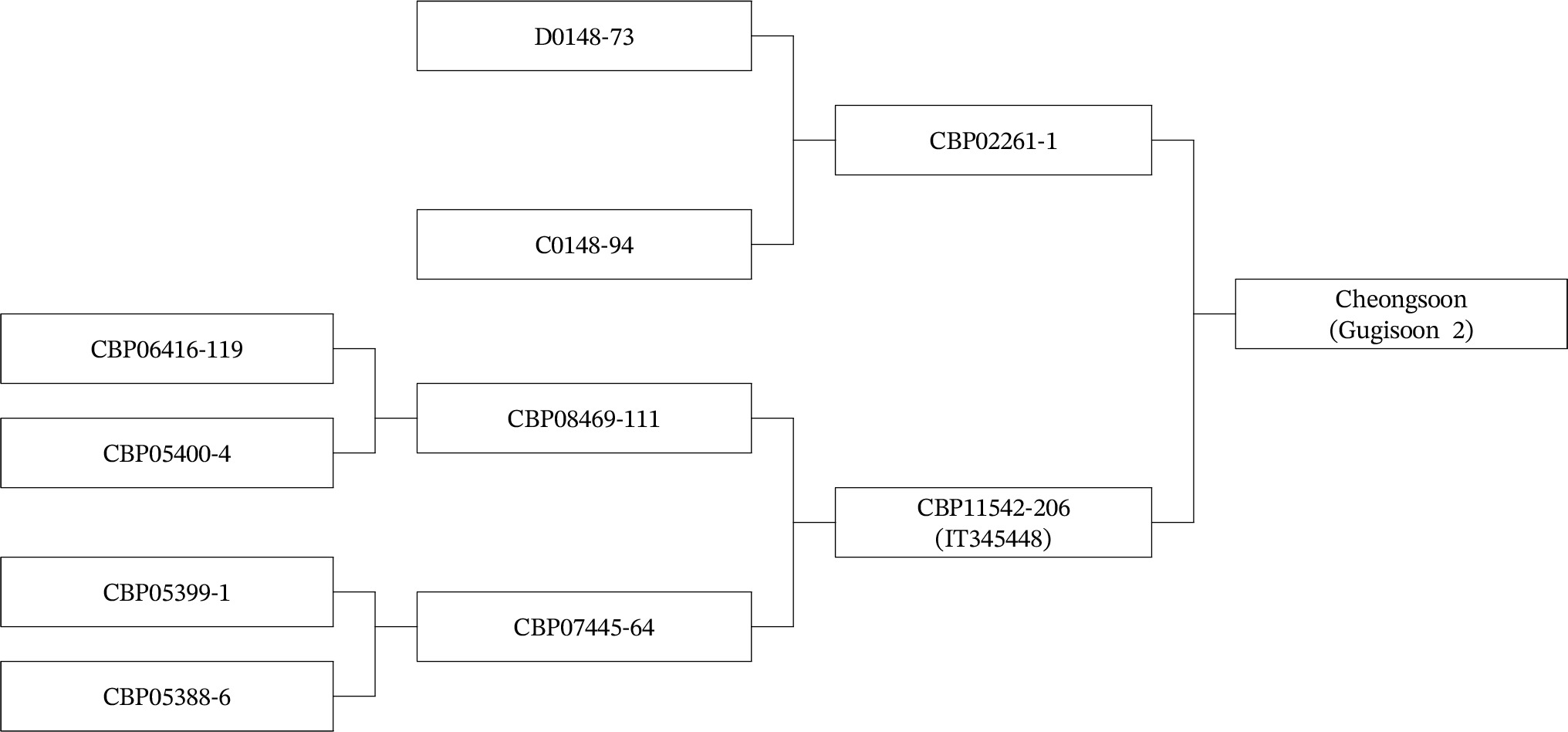
Fig. 3Flow cytometric analysis of DNA content in ‘Cheongsoon’ and the control variety ‘Gugisoon 1’.
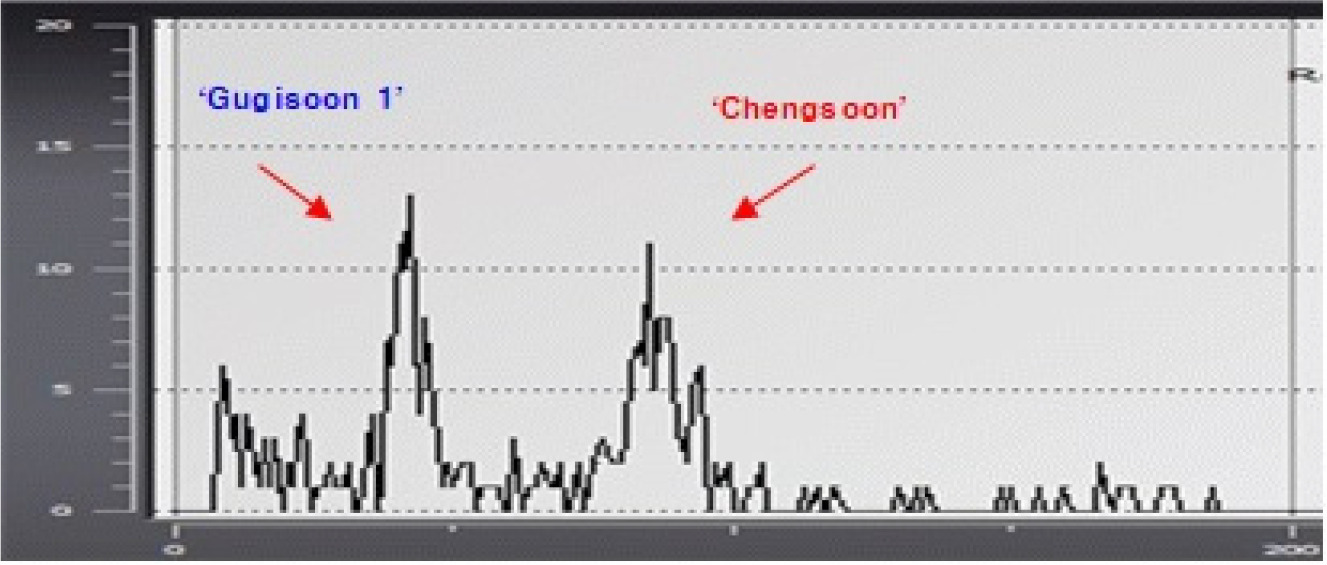
Fig. 4Leaf morphology of the two cultivars. A: ‘Gugisoon 1’, B: ‘Cheongsoon’.
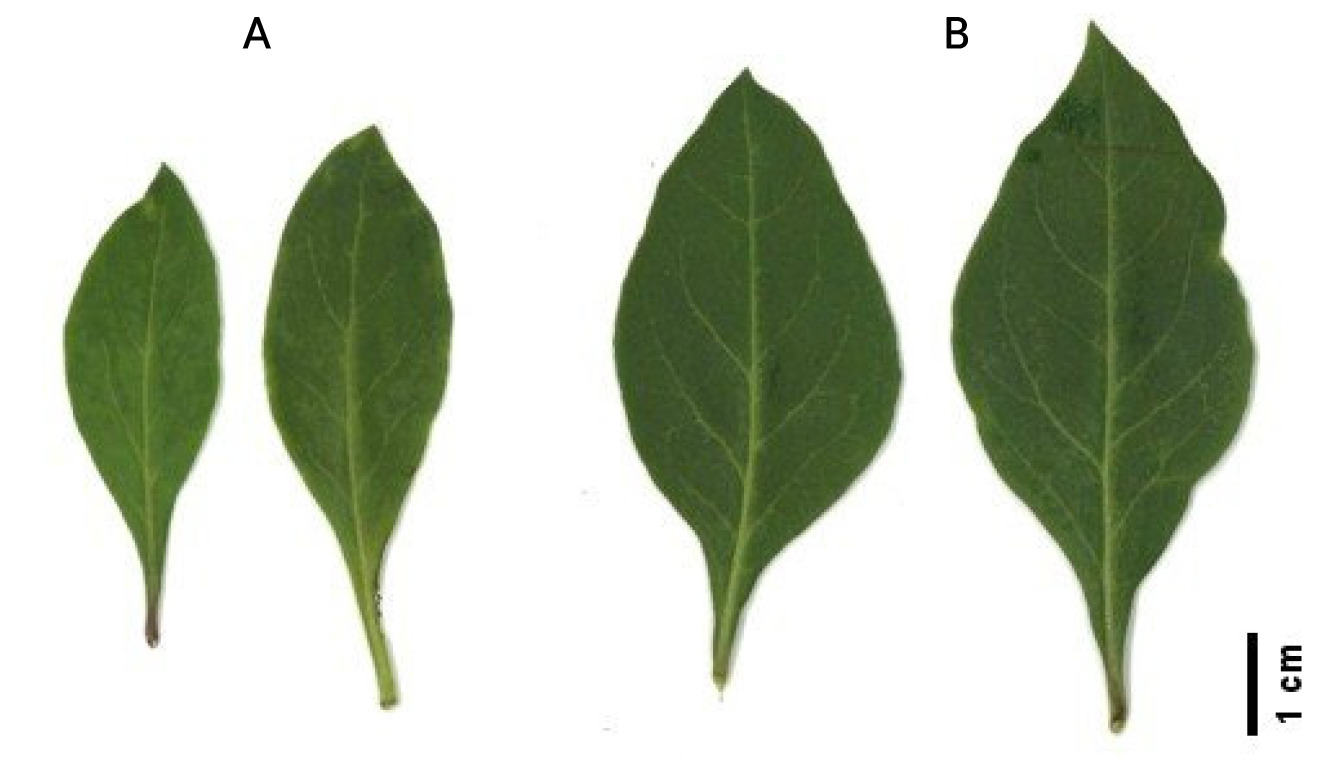
Fig. 5Field sprout shapes of ‘Gugisoon 1’ (left; leaves damaged by Eriophyes macronis) and ‘Cheongsoon’ (right).
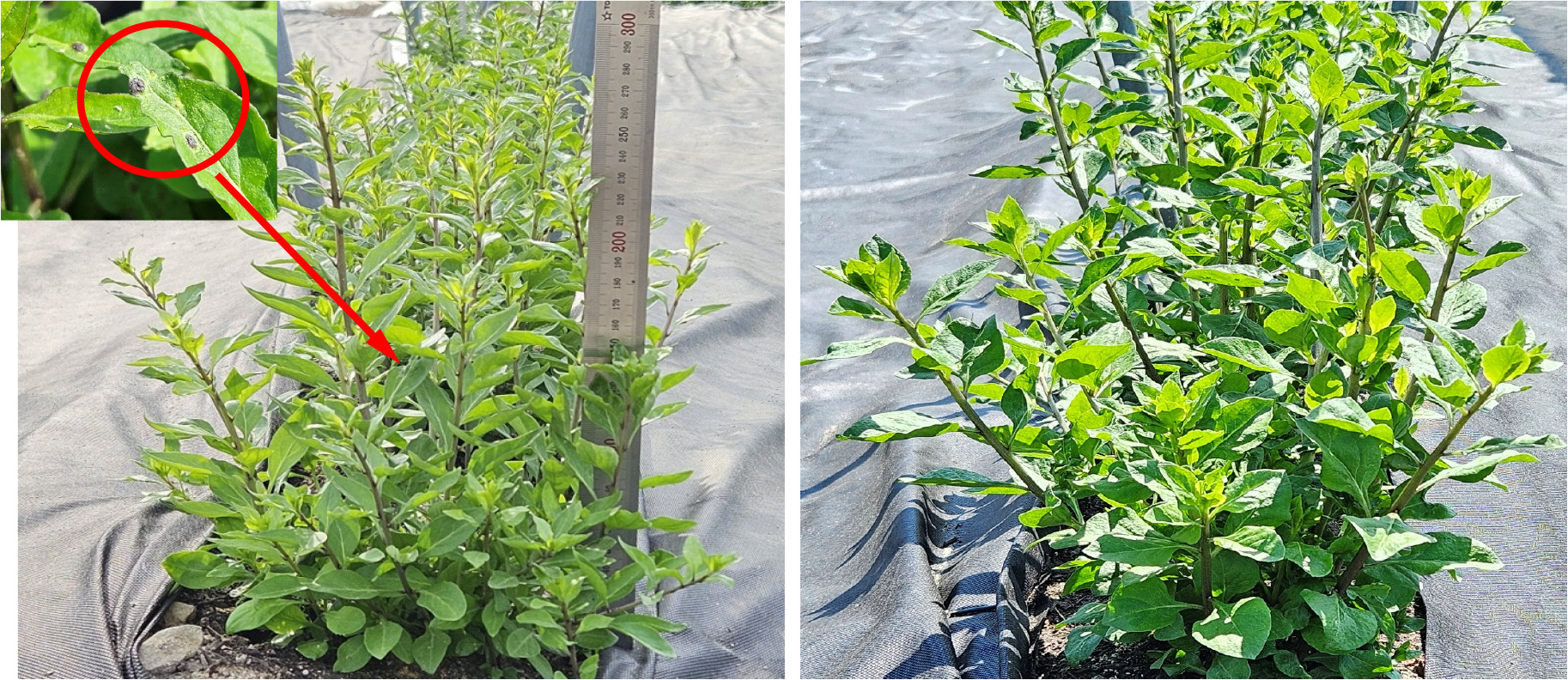
Table 1Operating conditions of HPLC/DAD.
Table 1
|
Parameters |
Conditions |
|
Instrument |
Agilent 1260 infinity II |
|
Detector |
DAD (265 nm) |
|
Column |
Reverse-Phase C18 (Agilent eclipse Plus, 4.6×150 mm, 4 μm) |
|
Column temperature |
40℃ |
|
Mobile phase |
Time
(min) |
Az
(%) |
By
(%) |
|
0 |
35 |
65 |
|
5 |
50 |
50 |
|
10 |
35 |
65 |
|
Flow rate |
1.5 mL/min |
|
Sample injection |
10 μL |
Table 2Morphological characteristics of ‘Cheongsoon’ and the control variety ‘Gugisoon 1’.
Table 2
|
Cultivar |
Plant
shape |
Leaf |
Sprouting
abiliy |
Flower |
Fruit
shape |
Chromosome number |
|
Color |
Shape |
Size |
Color |
Size |
|
Cheongsoon |
Upright |
Green |
Eliptic |
Medium |
Strong |
Purple |
Large |
Eliptic |
2n=4x=48 |
|
Gugisoon 1 |
Upright |
Light green |
Lanceolate |
Medium |
Strong |
Light Purple |
Small |
Lanceolate |
2n=2x=24 |
Table 3Comparison of leaf characteristics between ‘Cheongsoon’ and the control variety ‘Gugisoon 1’ in the regional yield trial (2021-2022).
Table 3
|
Cultivar |
Leaf length
(cm, A) |
Leaf width
(cm, B) |
Leaf shapez
(B/A) |
Leaf thickness
(mm) |
Weight of
100 leaves (g) |
SPADy
value |
|
Cheongsoon |
6.2±0.3a x
|
3.1±0.1a
|
0.5±0.0a
|
0.4±0.0a
|
49.7±4.7a
|
50.1±0.8a
|
|
Gugisoon 1 |
5.6±0.3a
|
2.2±0.2b
|
0.4±0.0b
|
0.3±0.0b
|
26.5±2.4b
|
44.0±0.8b
|
Table 4Stem characteristics of ‘Cheongsoon’ and the control variety ‘Gugisoon 1’ in the regional yield trial (2021-2022).
Table 4
|
Cultivar |
Stem length
(cm) |
Stem diameter
(mm) |
NO. of stem
per plant (ea) |
Weight
per stem (g) |
|
Cheongsoon |
23.7±0.8a
|
3.2±0.7a
|
11.2±0.8b
|
79.7±9.0a
|
|
Gugisoon 1 |
25.0±2.4a
|
2.4±0.5b
|
14.9±0.5a
|
49.4±3.7b
|
Table 5Comparison of cultivar resistance to Eriophys macronis in the regional yield trial (2021-2022).
Table 5
|
Cultivar |
Damaged leaves (%) |
|
Insect galls per damaged leaf (ea) |
|
|
|
1st year |
2st year |
Mean |
1st year |
2st year |
Mean |
|
Cheongsoon |
2.0±0.5b
|
2.5±2.0b
|
2.3 |
|
1.3±0.0b
|
0.8±0.2b
|
1.3 |
|
Gugisoon 1 |
23.9±3.0a
|
22.6±3.7a
|
23.3 |
|
2.5±0.1a
|
3.3±0.7a
|
2.9 |
Table 6Comparison of goji sprout yield in the preliminary yield trial (PYT) and advanced yield trial (AYT).
Table 6
|
Cultivar |
PYT
(kg/10a) |
AYT
(kg/10a) |
Mean
(kg/10a) |
Index
(%) |
|
Cheongsoon |
4,691a
|
5,872a
|
5,282 |
213 |
|
Gugisoon 1 |
2,612b
|
2,340b
|
2,476 |
100 |
Table 7Sprout yield of goji berry cultivar in the regional yield trial.
Table 7
|
Cultivar |
Total sprouts (kg/10a) |
|
Tender sprouts (kg/10a) |
|
|
|
1st year |
2st year |
Mean (A) |
Index
(%) |
1st year |
2st year |
Mean (B) |
Index
(%) |
Ratio
(B/A, %) |
|
Cheongsoon |
4,560a
|
37,533a
|
21,047 |
144 |
|
742a
|
6,960a
|
3,851 |
224 |
18.3 |
|
|
Gugisoon 1 |
2,512b
|
26,818b
|
14,665 |
100 |
|
278b
|
3,164b
|
1,721 |
100 |
11.7 |
Table 8Rutin and quercetin contents in the regional yield trial (2021-2022).
Table 8
|
Cultivar |
Rutin (μg/g) |
Quercetin (μg/g) |
|
Cheongsoon |
107.1±2.5a
|
57.4±1.2b
|
|
Googisoon 1 |
42.4±0.3b
|
77.8±2.9a
|
References
- 1. Bae HC, Cho IS, Nam MS. 2004. Fermentation properties and functionality of yogurt added with Lycium chinense Miller. J Anim Sci & Technol 46: 687-700.
- 2. Cho IS, Bae HC, Nam MS. 2003. Fermentation properties of yogurt added by Lycii fructus, Lycii folium and Lycii cortex. Korean J Food Sci Ani Resour 23: 250-261.
- 3. Choi BH, Kim SH, Kim SK. 1996. Rutin and functional ingredients of buckwheat and their variations. Korean J Crop Sci 41(suppl):69-93.
- 4. Choi YS, Park DG. 2022. Goji Berry vermin ecological guide. Goji Berry Research Institute, Chungnam-do ARES, Cheongyang, Korea: pp. 9.
- 5. Chungnam Agricultural Research and Extension Services.2008. Experimental research report. pp. 538-544.
- 6. Chungnam-do ARES. Goji Berry Research Institute.2013. 20-Year history of the boxthorn research. Goji Berry Research Institute, Chungnam-do ARES, Cheongyang, Korea: pp. 267-268.
- 7. Hwang EY, Hong JH, Choi JH, Lee EJ, Lee IS. 2009. Study on anti-obesity hypoglycemic effects of Lycium Chinense Mill extracts. J Korean Soc Food Sci Nutr 38: 1528-1534.
- 8. Ju JI, Kim SD, Park YC, Lee BH, Seo JS, Nam YG, Paik SW, Kim HH. 2015. A Chinese matrimony vine (Lycium chinense Mill.) cultivar with many branches and high ingredients 'Chengkwang'. Korean J Breed Sci 47: 318-323.
- 9. Jung EJ, Lee JS, Bok SH, Choi MS. 2011. Effects of extracts of persimmom leaf and chinese matrimony vine leaf on body fat and lipid metabolism in rats. J Korean Soc Food Sci Nutr 40: 1215-1226.
- 10. Kim CH. 1968. Some biological notes on Eriphyes Kuko KISHIDA (1) Its biology and life history. Plant Protection 5: 59-63.
- 11. Kim DH, Lee SY, Kim NK, Youn BK, Jung DS, Choi EY, Hong SR, Yoon JY, Kang MW, Lee JY. 2011. Moderating effects of skin hyperpigmentation from Lycii fructus and Lycii folium extracts. J Appl Biol Chem 54: 270-278.
- 12. Kim GY, Lee KT, Choi YH, Kang CH, Lee MH, Kim SH. 2024. Investigating rutin as a potential transforming growth factor-β type I receptor antagonist for the inhibition of bleomycin-induced lung fibrosis. Biofactors 50: 477-492.
- 13. Kim HB, Seo SD, Koo HY, Seok YS, Kim SL, Sung GB. 2013a. Quantitative analysis of 1-deoxynojirimycin in mulberry leaves. Journal of Sericultural and Entomological Science 51: 20-29.
- 14. Kim SJ, Kim IH. 1994. The comparative studies on antidiabetic activities of Lycium drugs. Chung-ang J Pharm Sci 8: 5-15.
- 15. Kim TS, Park WJ, Kang MH. 2007. Effects of antioxidant activity and changes in vitamin C during storage of Lycii folium extracts prepared by different cooking methods. J Korean Soc Food Sci Nutr 36: 1578-1582.
- 16. Kim YH, Joo JI, Lee BC, Kim HH, Lee JS. 2013b. Screen of a novel yeasts for brewing of gugija leaf Makgeolli and optimal alcohol fermentation condition. Kor J Mycol 41: 167-171.
- 17. Lee JC, Lee BC, Park OC, Kim SD, Cho LS, Back SW, Lee BH. 2003. Lycium chinense Miller. Chungnam A.T.A.Chungyang Boxthorn Experimental Station. p. 12..
- 18. Lee SR. 1983. Studies on the quality of boxthorn (Lycium chinense Miller) in Korea. Korean J Crop Sci 28: 267-261.
- 19. Ministry of Agriculture, Food and Rural Affairs.2024. 2023 industrial crop production statistics. Ministry of Agriculture, Food and Rural Affairs, Sejong, Korea: pp. 35.
- 20. Ministry of Food and Drug Safety. 2025. Food meterial DB information service. http://www.foodsafetykorea.go.kr/portal/safefoodlife/foodMeterial/foodMeterialDB.do (cite by gojiberry)
- 21. Paik SW, Lee J, Yun TS, Park YC, Lee BH, Son SW, Ju JI. 2020. Effects of planting density and cutting height on production of leaves for processing raw materials in goji berry. Korean J Medicinal Crop Sci 28: 136-141.
- 22. Park WJ, Lee BC, Lee JC, Lee EN, Song JE, Lee DH, Lee JS. 2007. Cardiovascular biofunctional activity and antioxidant activity of Gugija (Lycium chinensis Mill.) species and its hybrids. Korean J Medicinal Crop Sci 15: 391-397.
- 23. Park WJ, Park JI, Kim GS, Bock JY. 1997. Studies on the separation and purification of carotenoid in Gugija (Lycium chinense Mill.). Kongju University Reserch 5: 223-235.
- 24. Rural Development Administration (RDA).2012. Manual for agricultural investigation. Suwon, Korea: pp. 773-775.