적요
Aralia elata (Miq.) Seem. (the Korean angelica tree) is a popular wild spring vegetable crop in East Asia. Owing to its ease of cultivation and harvesting from the second year after planting, this species is a promising forest crop for short-term income. However, the presence of prickles on the stems and shoots reduces harvesting efficiency and negatively affects product quality. This study reports the breeding and morphological characteristics of a new prickle-less cultivar, ‘Seochun’, which exhibits strong cold tolerance and early sprouting. Among the 192 native accessions collected across Korea, a superior prickle-less and cold-tolerant clone was selected and evaluated over two years (2019-2020) of field trials. The stems of ‘Seochun’ were completely smooth and prickle-less, with a larger basal diameter (40.0 mm) compared to the control (29.7 mm). The sprouting and harvesting times were approximately seven days earlier than those of the control. As an early harvest and prickle-less cultivar of A. elata, ‘Seochun’ is expected to improve both the shoot productivity and labor efficiency during harvesting and cutback operations (Research support number: 375).
서언
두릅나무(Aralia elata (Miq.) Seem.)는 두릅나무과(Araliaceae)에 속하는 대표적인 관목성 수종으로, 한반도를 포함한 동북아시아 전역에 자생한다. 우리나라와 일본 등지에서는 매년 4월 중⋅하순경 정아와 측아에서 발생하는 새순이 특유의 풍미와 식감으로 인해 봄철 나무 순채로 각광받고 있다. 과거에는 주로 자연 발생하는 두릅을 채취하여 판매하였으나, 최근에는 전국적으로 재배가 확대되고 있다.
재배 작물로서의 두릅나무는 식재 후 다음 해부터 수확이 가능하며, 새순 수확 후 대절을 통한 근맹아 유도와 생산량 증대가 용이하여 단기소득 임산물로서 경제적 가치가 높다. 산림청 「임산물생산조사」에 따르면 2023년 기준 두릅의 생산량은 2,035톤, 생산액은 332억 원으로 전년 대비 각각 23.8%와 24.1% 증가하였다(
Korea Forest Service 2024). 산지 재배의 경우 ha당 생산액은 약 1,343만 원으로, 전체 임산물 중 산마늘에 이어 두 번째로 높은 단위면적당 소득을 기록하였다(
Korea Forest Service 2025). 이에 따라 산림청은 표준재배기술 보급과 더불어 대절 시기 및 생육 연차에 따른 생산성 분석 자료를 제공하고(
Seo et al. 2022), 새순이 크고 수확량이 많은 조생성 품종 ‘영춘’ 등을 육성⋅보급하고 있다(
Kang & Shin 2024).
두릅나무의 줄기와 새순에는 표피조직이 변형된 가시가 존재하며, 이는 재배 과정에서 수확 및 대절 작업의 효율성을 저하시킬 뿐 아니라 새순의 품질에도 부정적인 영향을 미친다(
Kim et al. 2024). 「2024년 임산물소득조사」에 따르면 두릅 재배의 총 노동력 투입시간(724.8시간/ha) 중 수확(194.7시간/ha)과 대절(142.2시간/ha) 작업이 각각 26.9%와 19.6%를 차지하여 전체의 약 절반에 달하는데(
Korea Forest Service 2025), 이는 가시의 존재에 기인한 바가 크다고 할 수 있다.
두릅나무의 가시 크기와 밀도는 개체 간 변이가 커서, 가시가 크고 많은 개체에서부터 거의 없거나 전혀 없는 개체까지 다양하다. 일부 재배임가에서는 가시가 없거나 적은 ‘신구’, ‘자오’ 및 ‘정강’ 등의 일본 도입계통을 이용해 왔으나, 이들은 내한성이 낮아 중부 이북 지역에서는 안정적인 재배가 어렵다. 또한 ‘민두릅’이라 불리는 자가 선발 계통은 품종화되지 않아 품질의 균일성이 떨어진다는 한계가 있었다. 더불어 두릅의 출하시기가 중부 지방을 기준으로 4월 중순에 집중되어 가격 하락과 유통 불안정이 발생하는 문제도 있다.
국립산림과학원에서는 이러한 문제를 해결하고자 전국 각지에서 유망한 두릅나무 개체를 수집하였으며, 그중 내한성이 강하고 가시가 없으며 조기 수확이 가능한 개체를 선발하여 신품종 ‘서춘(Seochun)’을 육성하였다.
재료 및 방법
2014~2015년 2년간 전국적인 자생지 탐색을 통해 유망하다고 판단되는 192개체를 선발하고, 무성증식을 위해 각 개체별로 부정아가 포함된 뿌리를 채취하였다. 수집한 뿌리는 30 cm 길이로 절단하고, 젖은 이끼로 감싸 그늘지고 통풍이 잘되는 곳에서 발근 및 신초 생장을 유도하였다. 증식된 개체들은 국립산림과학원 산림생명자원연구부(경기 수원) 시험포지에 식재하여 양묘하였으며, 2016~2017년 동안 생장 및 형태적 특성을 조사하였다. 그 결과, 생장이 양호하고 가시가 없거나 거의 없으며 냉해 피해를 입지 않은 18개체를 1차 선발하였다.
이들 개체는 균일성 및 형질 안정성 검정을 위해 기존과 동일한 방법으로 무성증식하였으며, 개체당 평균 20본의 근삽묘(ramet)를 양묘하여 총 347본을 시험포지에 이식하였다. 2019년 봄에 국립산림품종관리센터의 특성조사요령(
Korea Seed & Variety Service 2013)에 따라 클론별 새순 특성, 수확 시기 및 생장 특성을 조사하였고, 근맹아로부터의 가지 생장을 유도하기 위해 지상부 30 cm 높이에서 대절하였다. 2020년에도 전년도와 동일한 방법으로 수형, 새순 및 잎 등의 형태적 특성을 평가하였다.
클론별 근맹아지 및 동아 특성은 5본을 선정하여 전수조사하였으며, 새순 특성은 순이 벌어지기 직전의 상품성이 높은 것을 20개씩 무작위로 선정하여 조사하였다. 잎 특성은 클론별로 3본을 선정하고, 본당 3개 복엽을 대상으로 크기와 소엽 특성을 조사하였다. 두릅나무의 2회우상복엽 구조를 고려하여 엽병의 길이와 직경, 엽신의 크기를 측정한 후 소엽의 개수를 확인하고 정소엽과 측소엽을 각각 5개씩 선정하여 특성을 분석하였다. 통계처리는 R (Version 4.0.2, The R Foundation for Statistical Computing Platform)을 활용하여 수행하였고, ‘서춘’과 대조구 간의 차이를 분석하기 위해 t-test를 실시한 후 Tukey HSD 사후검정을 적용하였다.
이러한 결과를 종합하여 1차 선발개체 중 수확 시기가 빠르고, 줄기 및 새순에 가시가 없으며, 해당 형질이 안정적으로 유지되는 1개 클론을 최종 선발하였다. 해당 클론을 ‘서춘’으로 명명하고 품종 출원 및 등록을 완료하였다. 품종 육성 과정은
Table 1에 요약하였다.
결과 및 고찰
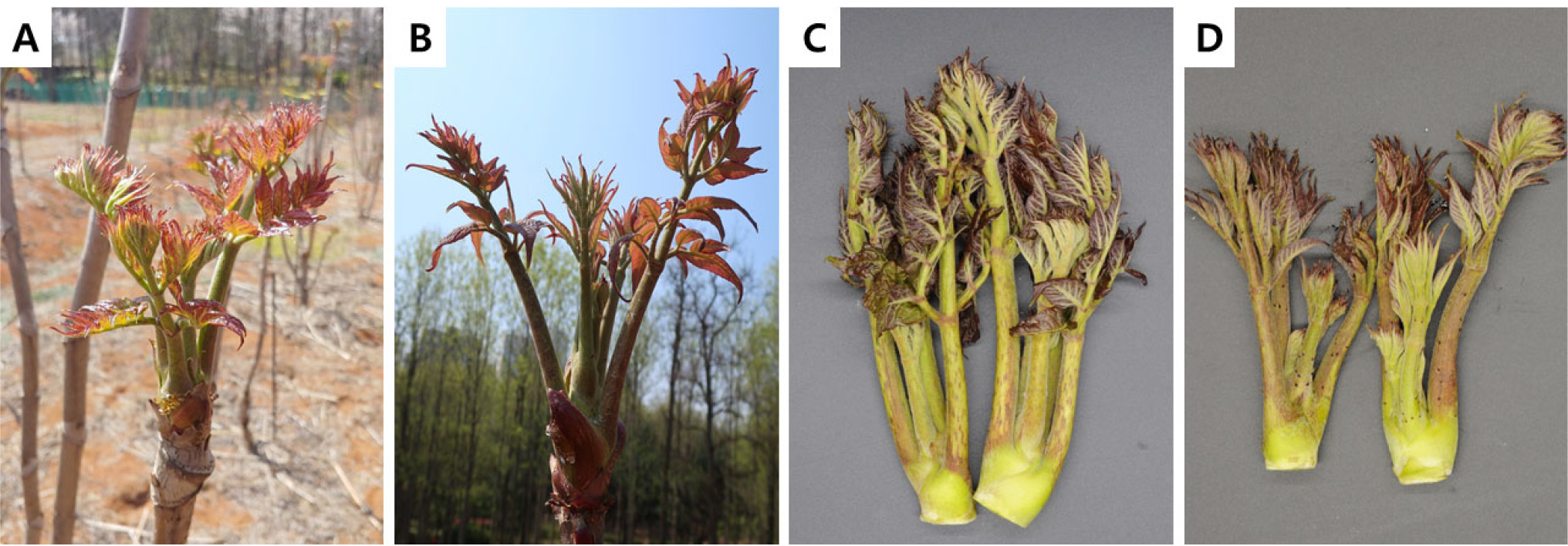
형질 특성을 비교하기 위한 대조구로는 자생지 탐색을 통해 1차 선발된 192개체 중 평균적이라고 판단되는 개체를 선정하였다. ‘서춘’의 새순 길이는 131.6 mm로 대조구(145.1 mm)보다 짧았으나, 직경(18.5 mm)과 중량(22.5 g)은 각각 대조구(16.2 mm, 19.9 g)보다 높았으며, 통계적으로 유의한 차이는 없었다. 새순의 색은 전체적으로 붉은 색을 띄는 적녹색으로 대조구와 유사하였다(
Table 2,
Fig. 1).
줄기의 근원경, 가시 유무 및 동아 특성을 비교한 결과(
Fig. 2,
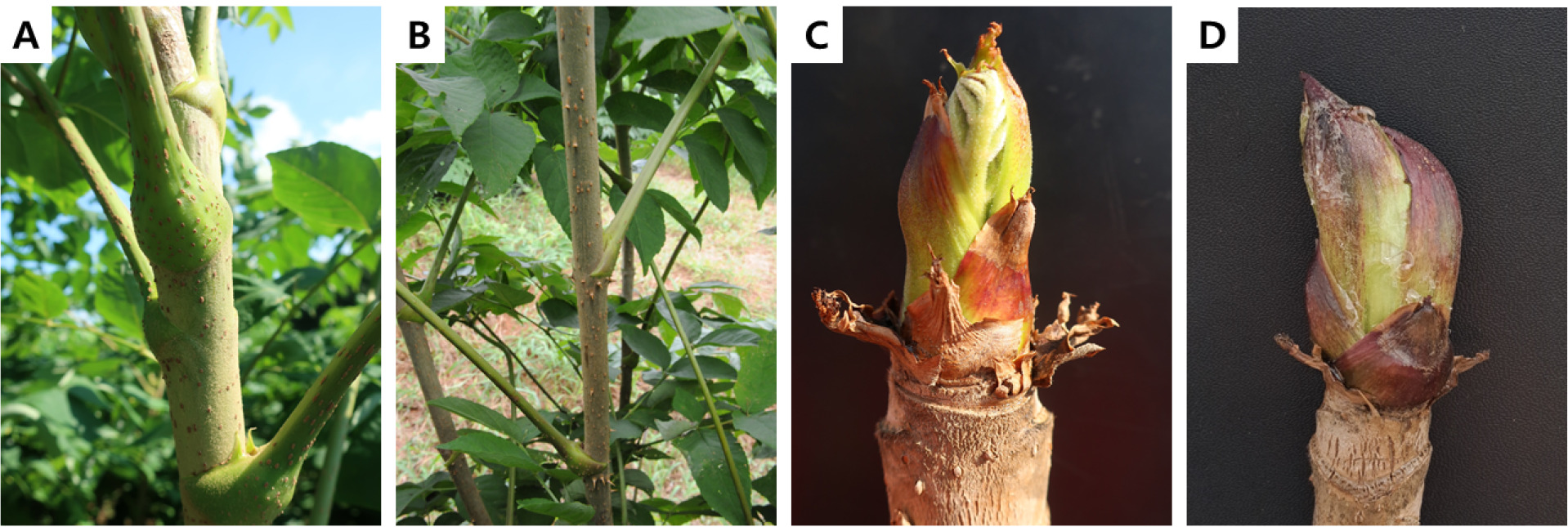
Table 3), ‘서춘’의 줄기는 가시가 전혀 없고 표면이 매끄러웠다. 대조구는 야생종에 비해 가시의 밀도가 낮았으나, 줄기 마디 부위에 소형의 가시가 원형 배열로 분포하였다. ‘서춘’의 근원경은 40.0 mm로 대조구(29.7 mm)보다 컸으며, 동아의 길이와 직경은 각각 15.2 mm와 17.4 mm로 대조구(13.5 mm, 19.8 mm)와 통계적으로 유의한 차이는 없었다.
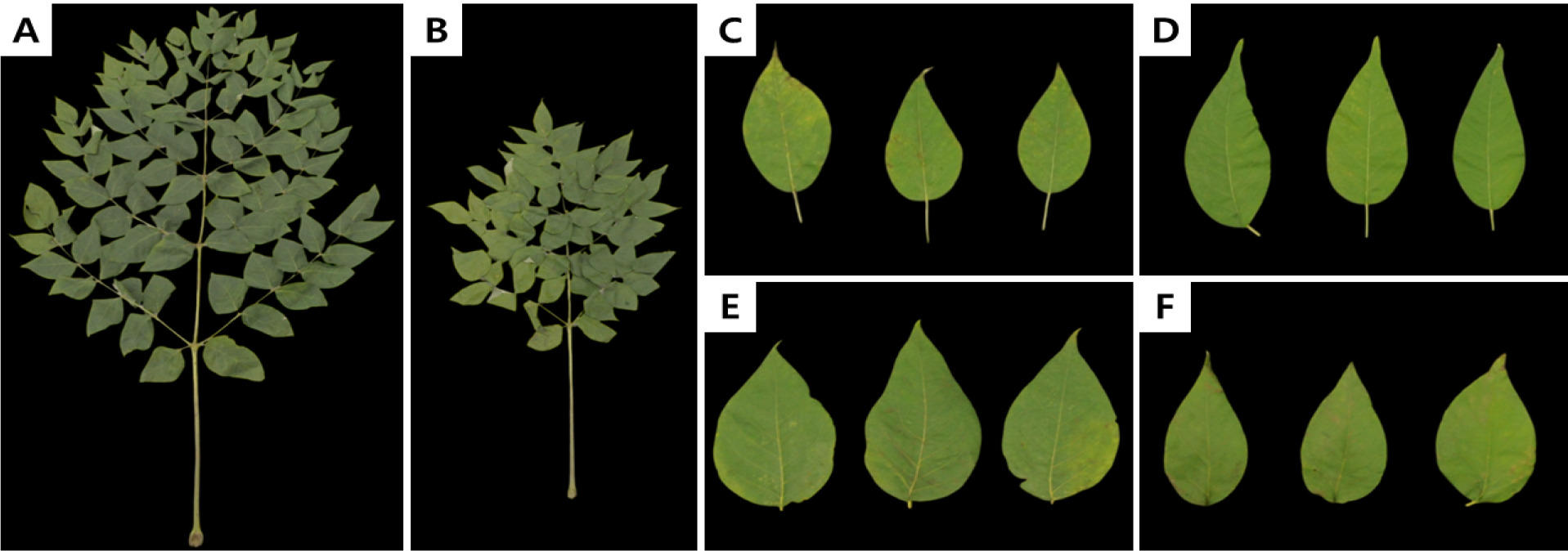
‘서춘’의 복엽 수는 12.3개로 대조구(14.4개)와 유사하였으며, 엽신의 길이와 폭은 ‘서춘’이 각각 90.4 cm와 74.4 cm로, 대조구(55.8 cm와 52.8 cm)보다 크게 나타났다. 소엽 수는 ‘서춘’이 123개로, 대조구(57.9개)에 비해 두배 이상 많았다. 정소엽의 형태는 ‘서춘’이 타원형 22.7%, 난형 77.3%로 구성되어 대조구(1.1%)보다 타원형 비율이 높았다. 정소엽의 길이와 너비는 각각 9.7 cm와 4.7 cm로 대조구보다 작았다. 엽선은 ‘서춘’의 경우 모두 점첨두였으며, 대조구는 대부분 점첨두이나 일부 예두였다. 엽연은 두 품종 모두 작은 치아상 톱니를 나타냈다. 전반적으로 ‘서춘’은 엽병이 두껍고 잎이 크며, 소엽의 수 또한 대조구보다 월등히 많은 것으로 나타났다. 또한 두릅나무는 엽절에 가시가 발생하기도 하는데, ‘서춘’의 경우 가시가 전혀 나타나지 않았다(
Fig. 3,
Table 4).
‘서춘’은 대조구 및 동일 검정포에 식재된 다른 개체들과 비교했을 때, 개엽 시기와 순의 수확 시점이 약 7일 정도 빠른 것으로 나타나 봄철 조기 수확이 가능한 품종으로 판단된다. 선발 당시 검정포가 위치한 경기 수원의 최저기온은 영하 16℃였으나 ‘서춘’은 가지 및 동아에 냉해 피해가 없어 기존에 알려진 가시없는 품종인 ‘정강’ 등에 비해 내한성이 상대적으로 우수하게 평가되었다. 그러나 극심한 가뭄 시에는 한발 피해가, 장기간 강우 시에는 습해가 발생하였다. 특히 과습 조건에서는 침수에 따른 피해 및 입고병 등의 발생 우려가 있으므로, 본 품종의 안정적인 생육과 수량 확보를 위해서는 배수 조건이 양호한 재배지가 요구된다.
출원된 품종은 주요 형질에서 특이한 이형주의 발생이 확인되지 않아 균일성을 유지하였으며, 두 차례에 걸친 독립 재배시험에서도 구별성과 균일성이 일관되게 유지되어 안정적인 형질 발현을 보였다. 이러한 결과를 바탕으로, 본 품종은 식물신품종보호법 제54조에 따라 2024년 4월 1일 품종보호 제375호로 등록되었다.
적요
두릅나무(Aralia elata (Miq.) Seem.)는 새순의 독특한 풍미로 봄철 대표 나무 순채로 이용되지만, 줄기와 새순에 발생하는 가시가 수확과 대절 작업의 효율성을 저하시키고 품질에도 부정적인 영향을 미친다. 본 연구에서는 내한성이 강하고 가시가 없는 두릅나무 신품종 ‘서춘’을 육성하고 그 형태적 특성을 평가하였다. 전국 자생지에서 수집한 192개체 중 생장과 내한성이 우수하며 줄기와 새순에 가시가 없는 개체를 선발하여 2019~2020년 2년간 재배 및 특성 검정을 수행하였다. ‘서춘’의 줄기는 가시가 전혀 없고 표면이 매끄러웠으며, 근원경이 대조구(29.7 mm)보다 큰 40.0 mm로 나타났다. 잎은 복엽 수 12.3개, 엽신 길이 90.4 cm, 폭 74.4 cm로 대조구보다 크고, 소엽 수(123개)도 약 2배 많았다. 개엽 시기와 수확 시점은 대조구보다 약 7일 빠른 조생성 특성을 보였다. ‘서춘’은 내한성이 강하고 가시가 없는 조생성 품종으로, 봄철 조기 수확이 가능하여 노동력 절감과 재배 효율성 향상에 기여할 것으로 기대된다(Grant number 375).
사사
본 연구는 산림청 국립산림과학원의 일반연구사업 「임간재배형 산채 생산 및 이용부위 확대 연구(과제번호 FP0802-2023-03-2024)」의 지원에 의해 이루어졌음.
Fig. 1Comparison of apical shoot between ‘Seochun’ (A, C) and the control (B, D).
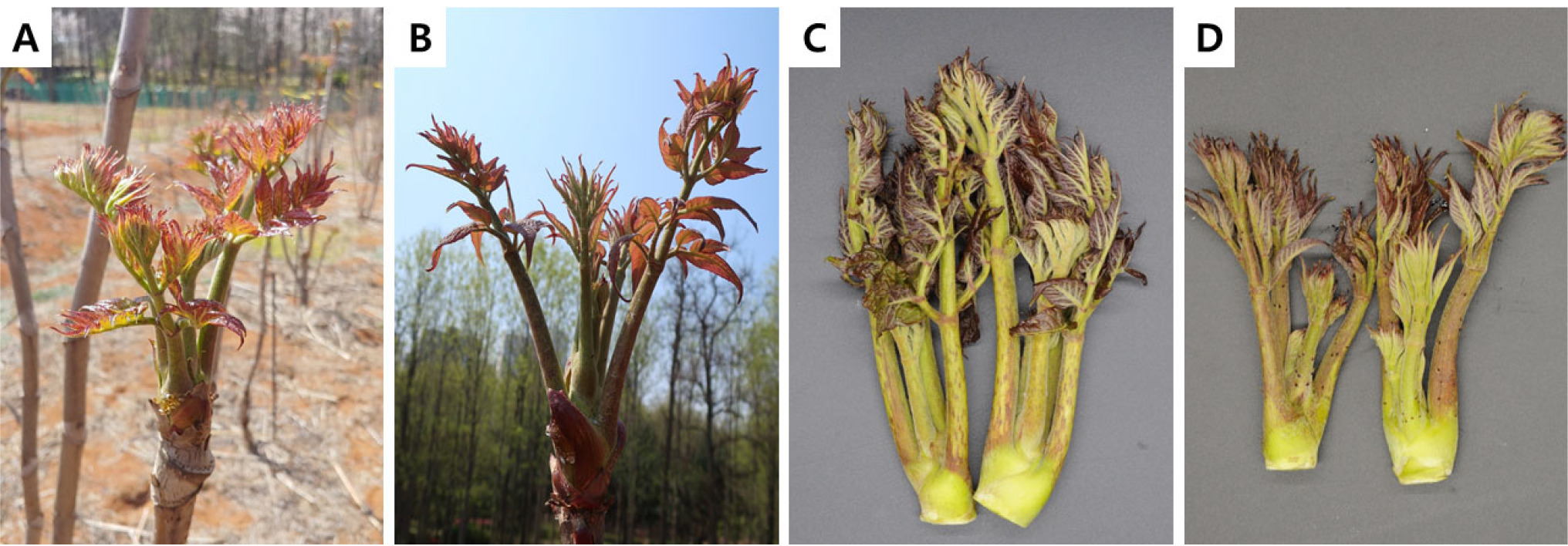
Fig. 2Comprison of stem and winter bud between ‘Seochun’ (A, C) and the control (B, D).
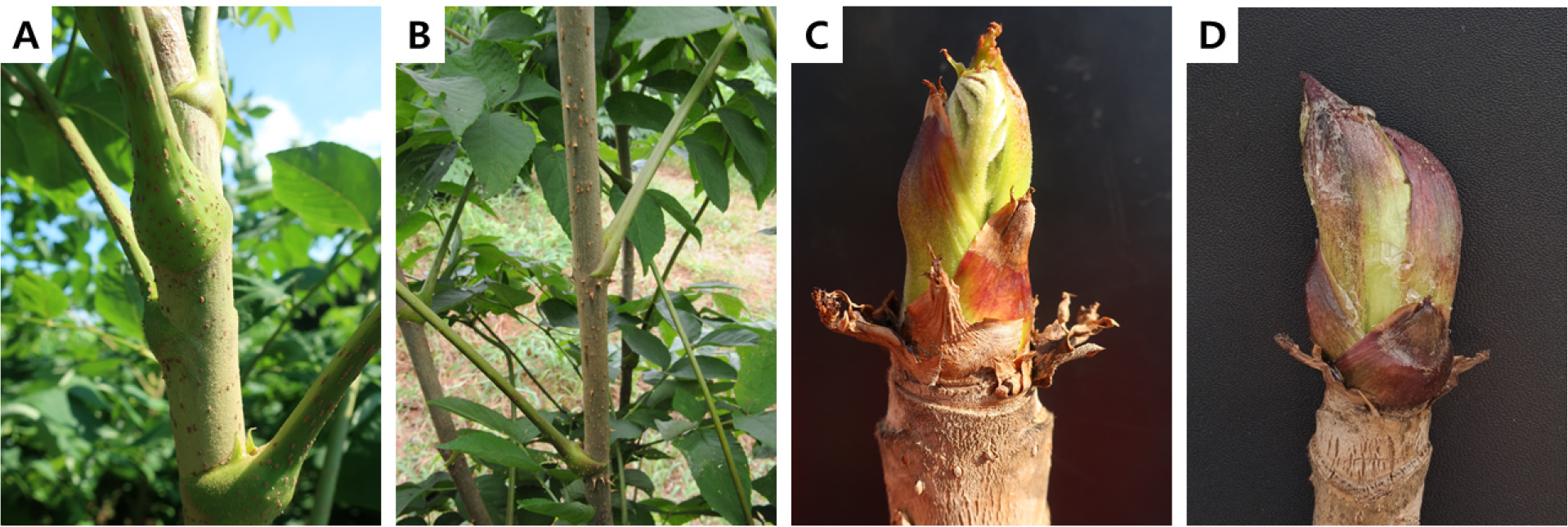
Fig. 3Evaluation of leaf characteristics between ‘Seochun’ (A, C, E) and the control (B, D, F).
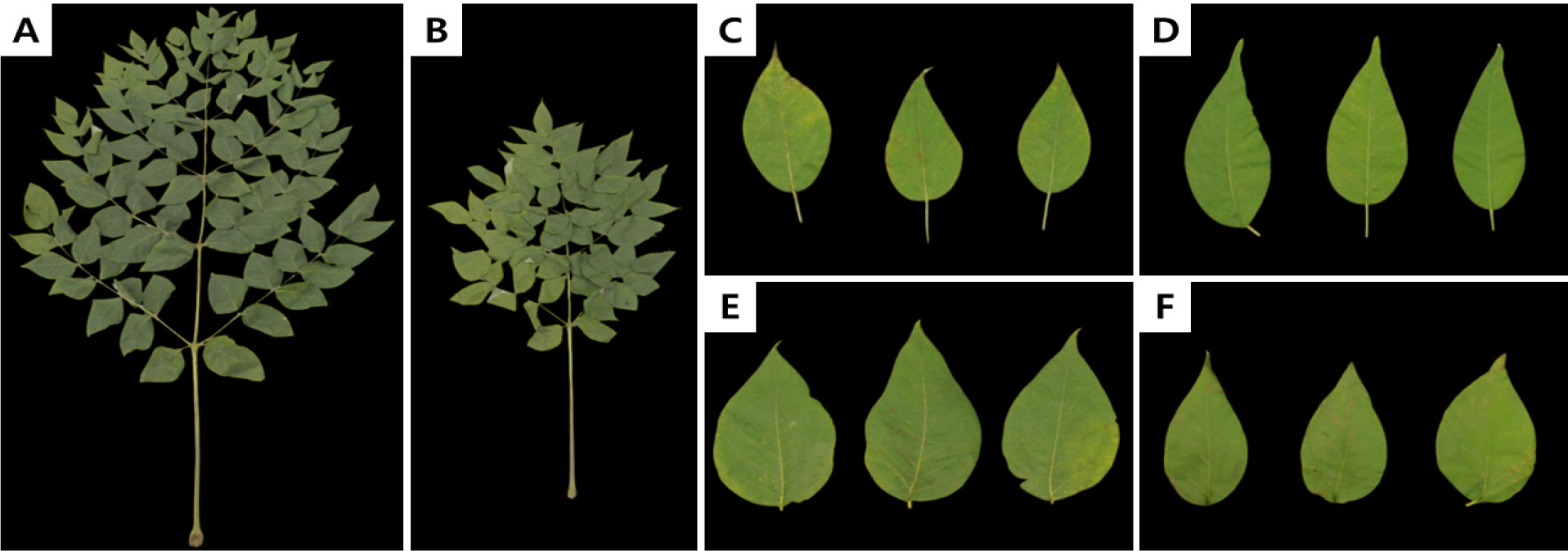
Table 1Breeding history of ‘Seochun’.
Table 1
|
Year |
2014~2015 |
2016~2017 |
2018 |
2019 |
2020 |
2020 |
Breeding
stage |
Collection and propagation by
root cutting of genetic resources |
Observation and first selection
of superior individuals |
Propagation
by root cutting
of selected individuals |
1st characteristic survey and
cutback of stems |
2nd characteristic survey, shoot harvest and comprehensive analysis |
Final
selection |
|
Number
of lines |
192 |
18 |
18 |
18 |
18 |
1 |
Table 2Apical shoot characteristics of ‘Seochun’.
Table 2
|
Cultivar |
Length (mm) |
Diameter (mm) |
Weight (g) |
Color |
|
Seochun |
131.6 |
±10.4z
|
18.5 |
±1.4 |
22.5 |
±3.9 |
187A |
|
Control |
145.1 |
±17.3 |
16.2 |
±1.9 |
19.9 |
±4.8 |
187A |
Table 3Stem and winter bud characteristics of ‘Seochun’.
Table 3
|
Cultivar |
Diameter of stem
at ground level
(mm) |
Number of
prickle*
|
Terminal bud |
Lateral bud |
|
|
Diameter
(mm) |
Length
(mm) |
Diameter
(mm) |
Length
(mm) |
|
Seochun |
40.0±9.8z
|
- |
17.4±1.9 |
15.2±2.2 |
6.0±1.0 |
7.1±1.3 |
|
Control |
29.7±10.3 |
16±2.0 |
19.8±2.9 |
13.5±2.7 |
6.4±1.0 |
7.3±1.2 |
Table 4Leaf characteristics of ‘Seochun’
Table 4
|
Cultivar |
No. of compound leaf |
Leaf blade |
No. of leaflet in compound leaf |
Existence ratio of prickles in surface (%) |
|
|
|
Length (cm) |
Width (cm) |
Adaxial |
Abaxial |
|
Seochun |
12.3±2.9z
|
90.4±6.2*
|
74.4±8.4*
|
123.2±8.2*
|
0 |
0 |
|
Control |
14.4±1.7 |
55.8±4.4 |
52.8±5.0 |
57.9±10.2 |
66.7 |
9.0 |
|
|
Cultivar |
Vertical leaflet |
|
|
Length (cm) |
Width (cm) |
Shape |
Apex |
Margin |
Base |
|
|
Seochun |
9.7±1.7*
|
4.7±1.1*
|
ovate |
acuminate |
denticulata |
acute |
|
Control |
11.9±2.0 |
5.3±1.0 |
ovate |
acuminate |
denticulata |
abtuse |
|
|
Cultivar |
Lateral leaflet |
|
|
Length (cm) |
Width (cm) |
Shape |
Apex |
Margin |
Base |
|
|
Seochun |
10.7±1.6 |
6.3±1.5*
|
ovate |
acuminate |
denticulata |
abtuse |
|
Control |
10.3±1.4 |
5.1±0.6 |
ovate |
acuminate |
denticulata |
abtuse |
References
- 1. Kang SW, Shin H. 2024. 'Youngchun': An early-maturing Aralia elata cultivar with large shoots and high yield. Korean Journal of Breeding Science 56: 507-512.
- 2. Kim J, Park Y, Moon S, Seo JA, Moon J, Park H, Choi BY, Raveendar S, Kim CW, Chung JW, Shim D. 2024. A comprehensive analysis integrating phenotypic assessment uncovering thornless cultivar lineages in Aralia elata. Genomics 116: 110824.
- 3. Korea Forest Service.2024. Production of forest products. Korea Forest Service, pp. 23.
- 4. Korea Forest Service.2025. Forest product income survey. Korea Forest Service, pp. 40.
- 5. Korea Seed & Variety Service.2013. Guideline of characteristics for applicatioin and registration of new varieties in Aralia elata. Anyang, Korea: pp. 1-22.
- 6. Seo JA, Shin H, Park Y. LeeU2022. Effect of pruning on annual Aralia elata shoot production. Journal of Korean Society of Forest Science 111: 644-650.
Citations
Citations to this article as recorded by