적요
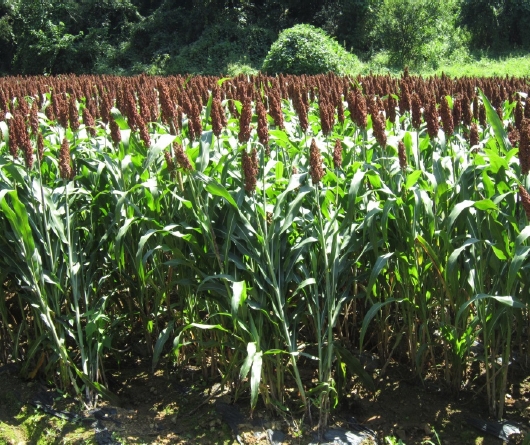
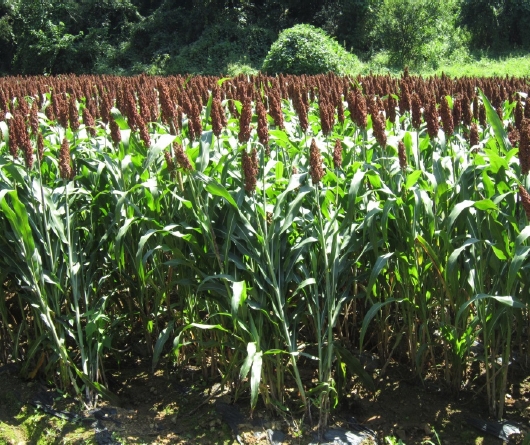
The demand of sorghum is increasing since sorghum has significant and positive role in promoting nutrition and health of human beings; however, sorghum cultivated by farms is mostly a native variety having low genetic purity and low production, so it is necessary to improve the variety. Accordingly, the National Institute of Crop Science (NICS) developed “Donganme” that is non-glutinous and functional sorghum having antioxidant activity with higher yield potential. “Donganme” is the variety cultivated in 2012 through the breeding by the separation method from the foundation stock of ‘CS-4 LOCAL COLLECTION’ parceled out from the National Agricultural Genetic Resources Center. “Donganme” is a medium maturing variety, which takes the average of 71 days from the sowing date to the heading date, and the average of 120 days to the harvest. It has the culm length of 138 cm; the egg-shaped spikelets; dark red seeds, which are redder than those of the native variety, “Hwanggumchal.” Since the number of the ears is 3 per plant, the advantage of tillers is mature at the same time; The average quantity of the regional adaptation test is 3.1 MT/ha, and it means the high-yielding ability. In addition, Donganme contains various functional components including polyphenols, flavonoids, etc.; its antioxidant activity is 42.0 mgTE/g and 30% higher than that of “Hwanggumchal.” Unpolished grain’s thousand-kernel weight is 26.8 g; the weight per plant is as heavy as 33.6 g; the lodging is stronger than that of “Hwanggumchal”. Hwanggumchal has been cooked simply with rice due to its glutinous property, however, Donganme can be used more widely for processed food, such as bread, crackers, noodles, etc., due to its non-glutinous property. Moreover, its antioxidant activity can enhance the quality of those processed food.
서언
수수는 탄닌, 페놀산, 안토시아닌, 파이토스테롤, 폴리코사놀 등 다양한 식물성 화학 물질(phytochemical)을 가져 항산화성을 높이고 콜레스테롤을 낮춰 심혈관 질환 치료에 효과가 있다고 알려져 있다(
Awika & Rooney 2004). 수수의 페놀은 주로 phenolic acid와 flavonoids로 구성되어 있고 해충과 질병으로부터 작물을 보호해주는 역할 뿐만 아니라 항산화, 항염증, 항암효과가 있다는 연구 결과가 있으며(
Bralley et al. 2008), 종실에 함유된 탄닌은 칼로리 이용성을 낮춰 비만예방 효과가 있다는 연구결과가 있다(
Barros et al. 2012).
재료 및 방법
신품종 ‘동안메’의 특성 및 수량검정 시험은 2011부터 2012까지 2년간 5개 지역(원주, 괴산, 해남, 수원, 밀양)에서 지역적응시험을 통해 수행하였다. 표준품종 ‘황금찰’ 수수와 난괴법 3반복으로 배치하였고 질소, 인산, 가리를 성분량 기준으로 각각 100, 70, 80 kg/ha 시비하고, 퇴비는 10 ton을 전량기비로 사용하였다. 재식거리는 주간 20 cm, 휴간 60 cm로 1휴 1열로 재식하였다. 파종기는 2011년은 5월 19일, 2012년은 5월 17일 육묘한 뒤 15일 후에 1주 1본으로 정식 재배하였다. 간장, 이삭길이 등 생육특성은 각 시험구에서 고유특성이 잘 나타나는 균일지역을 선정하여 20주를 조사하였다. 생육 및 수량특성 등 지역적응시험 조사 방법은 농촌진흥청 농업과학기술 연구조사분석기준에 준하여 실시하였고(
RDA 2012), 5개 지역에서의 2년간 시험성적의 평균값을 생육 및 수량구성요소의 비교값으로 활용하였다. 항산화성분은 분쇄된 시료를 80%에탄올로 진탕추출한 추출물을 이용하여 총 폴리페놀은 gallic acid equivalent (GAE), 총 플라보노이드 함량은 catechin equivalent (CE)로 표현하였고(
Choi et al. 2006), DPPH, ABTS 라디칼 소거활성은 trolox equivalent (TE)로 표현하였다(
Choe et al. 2016). 항당뇨 활성관련 a-amylase 저해활성 측정은 효소반응에 의해 감소하는 가용성 전분을 요오드 방법으로 측정하였고(
Wilson & Ingledew 1982), α-glucosidase 저해활성은 기질인
p-nitropheyl-a-D-glucopyranoside로부터 α-glucosidase에 의해 분해되어 유리된
p-nitrophenol의 양을 흡광도로 측정하였다(
Kim et al. 2005,
Park et al. 2008). ‘황금찰’과 대비품종간의 조사 평균값에 대한 유의성 검정은 JMP v.8 (Statistical Discovery, SAS Institute Inc.) 프로그램을 이용하여
t-test를 실시하였다.
결과 및 고찰
육성경위
‘동안메’는 2009년 국립농업유전자원센터에서 분양 받은 수수 종자 중 CS-4 LOCAL COLLETION(IT201458)을 기본집단으로 하여 분리육종법을 통해 육성하였다. 2009년 개화기, 초형, 이삭모양, 분지정도 등 특성검정과 집단양성을 통해 우량개체를 선발하였고 2010년 head to row 방식으로 기계화 재배에 적합한 단간 내도복 초형 계통을 선발하였다. 선발된 계통은 ‘밀양3호’로 계통명을 부여하여 2011~2012년 2년간 생산력 검정시험과 지역적응시험을 동시에 실시하였고(
Fig. 1) 그 결과 ‘밀양3호’는 2012년 농작물 직무육성 신품종선정위원회에서 국가목록등재 품종으로 선정하고 ‘동안메’로 명명하였다.
Fig. 1Pedigree diagram of new sorghum variety ‘Donganme’.

고유 특성
‘동안메’의 고유특성은 측면모양이 계란형으로 대비 품종인 ‘황금찰’ 수수에 비해 조밀하다. 영과색과 종피색은 모두 짙은 적색이며, 배유 특성은 메성이다(
Table 1).
Table 1Inherent characteristics of a new sorghum variety ‘Donganme’.
Table 1
|
Variety |
Panicle |
Glume Color |
Grain Color |
Endosperm |
|
|
Shape |
Density |
|
Donganme |
Egg |
Compact |
Dark Red |
Dark Red |
Normal |
|
Hwanggeumchal |
Oval |
Semi compact |
Dark Brown |
Red Brown |
Waxy |
일반특성
‘동안메’의 출수일수는 71일로 ‘황금찰’보다 9일 늦으며, 이삭길이는 22 cm로 황금찰과 같다. 간장은 138 cm, 줄기직경은 14.3 mm, 잎폭은 6.3 mm ‘황금찰’과 비슷한 수준이며 잎길이는 69.2 mm로 20.3 mm 길다(
Table 2).
Table 2Agronomic characteristics of a new sorghum variety ‘Donganme’.
Table 2
|
Variety |
Days to heading |
Panicle length (cm) |
Culm length (cm) |
Thickness of culm (mm) |
Length of leaf (cm |
Width of leaf (cm) |
|
Donganme |
71**z
|
22ns
|
138ns
|
14.3ns
|
69.2**
|
6.3ns
|
|
Hwanggeumchal |
62 |
22 |
132**
|
15.0**
|
48.9*** |
6.9*** |
수량 구성 요소에서 ‘동안메’의 주당이삭수는 3개, 이삭당 종실중은 33.6 g, 현곡천립중이 26.8 g으로 ‘황금찰’ 대비 각각 2개, 13.0 g, 7.8 g 높았다(
Table 3).
Table 3Yield component analysis of new sorghum variety ‘Donganme’.
Table 3
|
Variety |
No. of panicle /plant |
Weight of grain/panicle (g) |
1,000-grain Weight (g) |
|
Donganme |
3**z
|
33.6**
|
26.8**
|
|
Hwanggeumchal |
1* |
20.6* |
19.0 |
내재해성
포장조건에서 2년간 병충해를 등숙기와 수확기에 달관 조사한 결과, 이삭곰팡이 발생은 ‘황금찰’ 대비 현저히 낮은 수준이었으며, 깜부기병 포장 저항성을 보였다. 충해에서는 조명나방과 노린재 피해가 황금찰과 유사한 수준이었고 왕담배나방 피해는 황금찰대비 발생이 적었으나, 진딧물 발생은 높은 편이었다. 또한 도복은 황금찰에 비해 강한 것으로 나타났다(
Table 4).
Table 4Reaction to major disease and insects and physiological traits of ‘Donganme’.
Table 4
|
Variety |
Lodgingz(1~9) |
Disease (0~9)y
|
Insect (0~9)x
|
|
|
|
Anthracnose stalk rot |
Grain Mold |
Ostrinia furnacalis
|
Helicoverpa armigera
|
Rhopalosiphum padi
|
Nysius plebejus
|
|
Donganme |
3 |
1 |
3 |
3 |
3 |
5 |
3 |
|
Hwanggeunmchal |
7 |
1 |
7 |
3 |
7 |
3 |
3 |
품질특성
‘동안메’ 항산화성분인 폴리페놀과 플라보노이드 함량은 각각 25.5 mgGAE/g, 4.76 mgCE/g으로 ‘황금찰’ 대비 각각 4.2 mgGAE/g, 0.6 mgCE/g 높았고, 항산화활성 비교를 위한 ABTS 라디컬 소거능은 42.0 mgTE/g으로 황금찰 대비 9.8 mgTE/g 높았다(
Table 5).
Table 5Antioxidant activity of ‘Donganme’ extracts.
Table 5
|
Variety |
Polyphenols content (mgGAE/g) |
Flavonoids content (mgCE/g) |
Proanthocyannidin (μg/g) |
ABTS radical scavenging activity (mgTE/g) |
|
Donganme |
25.5*
|
4.76ns
|
343.4**
|
42.0**z
|
|
Hwanggeumchal |
21.3 |
4.16 |
244.8 |
32.2 |
α-glucosidase에 대한 저해활성 결과 에탄올 추출물 0.1 mg/mL의 농도에서 동안메는 88.42%로 황금찰 3.70%, 대조구 Acabose 55.98% 대비 높은 활성을 보였고, α-amylase 효소 저해활성 측정결과 에탄올 추출물 1 mg/mL의 농도에서 동안메는 61.94%로 황금찰 17.99%, Acabose 49.68% 대비 높은 저해활성을 가졌다(
Table 6). 수수의 탄닌 성분이 소화효소와 결합해 활성을 저해하여 혈당수치의 급격한 변화를 억제하는 효과를 가지고 있는데(
Al-Mamary et al. 2001) 동안메는 그 활성이 높아 그 활용성이 높음을 확인할 수 있었다.
Table 6α-amylase and α –glucosidase inhibitory activity of ‘Donganme’ extracts (200 µg of EtOH/mL) and acarbose against α –glucosidase (0.1 mg/mL) and α-amylase (1 mg/mL)
Table 6
|
Variety |
α-glucosidase (0.1 mg/mL) |
α-amylase (1 mg/mL) |
|
Donganme |
88.42**
|
61.94**z
|
|
Hwanggeumchal |
3.70 |
17.99 |
|
Acabose(10 mg/mL) |
55.98 |
49.68 |
수량성
2011~2012년 생산력검정시험(밀양) 결과 ‘동안메’의 ha당 평균 종실수량은 각각 1.68톤, 3.42톤으로 2년간의 평균수량은 ‘황금찰’ 대비 75.8% 높았다(
Table 7).
Table 7Grain yield performance of ‘Donganme’ at advanced yield trial.
Table 7
|
Variety |
Grain yield(MT/ha) |
|
|
2011 |
2012 |
Average |
|
Donganme |
1.68 |
3.42 |
2.55**z
|
|
Hwanggeumchal |
1.21 |
1.68 |
1.45 |
2011년에서 2012년까지 2년간 5개지역에서 실시된 지역적응시험 결과 연차간 지역간 차이는 있었지만 평균수량성은 3.10톤으로 ‘황금찰’ 1.95톤보다 58.9% 증수되었다(
Table 8).
Table 8Grain yield potential of ‘Donganmel’ at regional yield trial for 2 years.
Table 8
|
Region |
Donganme |
Hwanggeumchal |
|
|
|
2011 |
2012 |
Mean(MT/ha) |
Mean(MT/ha) |
2011 |
2012 |
|
Wonju |
3.69 |
5.67 |
4.68 |
3.46 |
4.17 |
3.82 |
|
Goesan |
1.98 |
3.86 |
2.92 |
1.60 |
1.69 |
1.65 |
|
Haenam |
- |
2.65 |
2.65 |
- |
1.74 |
1.74 |
|
Suwon |
- |
2.43 |
2.43 |
- |
1.18 |
1.18 |
|
Miryang |
1.86 |
3.82 |
2.84 |
1.13 |
1.54 |
1.34 |
|
|
Average |
2.51 |
3.69 |
3.10a
|
2.06 |
2.06 |
1.95b
|
|
|
LSD(5%)= 63.2 |
2012년 5월~8월의 평균기온이 2011년보다 높고 일강수량이 많아 생산력 검정시험과 지역적응 시험 모두 높은 수량성을 가진 것으로 보인다.
적응지역 및 재배상 유의점
‘동안메’는 중생종으로 전국에 재배가 가능하다. 또한, 도복에 강하지만 습해에는 약하므로 과습지나 배수가 불량한 논토양에서 재배는 피하는 것이 좋다. 출수 이후 조류피해 및 나방류, 노린재에 대한 적절한 방제가 필요하다.
적요
국내 수수는 대부분 재래종을 재배하고 있어 유전적으로 순도가 높지 못해 품종개발이 필요하다. 이에 따라 국립식량과학원에서는 항산화 활성과 수량성이 높은 건강기능성 메수수 ‘동안메’를 육성하였다. ‘동안메’는 2009년 국립농업유전자원센터에서 분양받은 분양받은 ‘CS-4 LOCAL COLLECTION’을 기본집단으로 하여 분리육종법을 통해 2012년 육성된 품종이다. “동안메”는 파종 후 출수까지 평균 71일, 수확까지는 평균 120일인 중생종이다. 간장은 약 138 cm이고 이삭의 형태는 밀도가 높은 계란형이다. 받침껍질(영)색과 종실색은 짙은 갈색으로 표준품종인 “황금찰”보다 좀 더 진한 붉은색을 띈다. 한 주당 이삭수는 3개로, 각 분얼의 이삭이 동시에 성숙하여 일시에 수확할 수 있다는 장점이 있으며 지역적응시험 평균 수량은 3.10 MT/ha로 다수성이다. 폴리페놀, 플라보노이드 등 다양한 기능성 성분을 많이 함유하고 있으며 항산화활성(ABTS)이 42.0 mgTE/g으로 “황금찰”에 비해 30%가 높다. 현곡 천립중은 26.8 g, 주당 이삭중은 33.6 g으로 무거우며, 도복은 “황금찰”보다 강한 편이다. “동안메”는 메수수이므로 점질성이 높은 찰수수보다 빵, 과자, 국수 등 가공식품 원료곡으로 이용하기에 적합하여, 종래의 단순 혼반용을 넘어 다양하고 폭넓게 활용 가능한 품종이다(
Fig. 2).
Fig. 2A new sorghum variety ‘Donganme’ plant.
사사
본 논문은 농촌진흥청 시험연구사업(세부과제명: 기계화 재배 적합 기능성 수수 품종 육성, 세부과제번호: PJ011365012018)의 지원에 의해 이루어진 것임.
References
- Al-Mamary M, Al-habori M, Al-Aghbari A, Al-Obeidi A. 2001. In vivo effects of dietary sorghum tannins on rabbit digestive enzymes and mineral absorption. Nutr Res 21: 1393-1401.
- Awika JM, Rooney LW. 2004. Sorghum phytochemicals and their potential impact on human health. Phytochemistry 65: 1199-1221.
- Barros F, Awika J, Rooney LW. 2012. Interaction of tannins and other sorghum phenolic compounds with starch and effects on in vitro starch digestibility. J Agric Food Chem 60: 111609-11617.
- Bralley E, Greenspan P, Hargrove JL, Hartle DK. 2008. Inhibition of hyaluronidase activity by select sorghum brans. J Med Food 11: 307-312.
- Choe ME, Kim JI, Jung TW, Kwak DY, Kim KY, Ko JY, Woo KS, Song SB, Jung KY, Oh IS. 2016. Waxy sorghum (Sorghum bicolor L.). variety ‘Nampungchal’ with lodging resistant and high yield. Korean J Breed Sci 48: 192-197.
- Choi Y, Lee SM, Chun J, Lee HB, Lee J. 2006. Influence of heat treatment on the antioxidant activities and polyphenolic compounds of Shiitake (Lentinus edodes) mushroom. Food Chem 99: 381-387.
- Dykes L, Rooney LW, Waniska RD, Rooney WL. 2005. Phenolic compounds and antioxidant activity of sorghum grains of varying genotypes. J Agric Food Chem 53: 6813-6818.
- Dykes L, Rooney LW. 2006. Sorghum and millet phenols and antioxidants. J Cereal Sci 44: 236-251.
- Fang Q, Hanna MA. 2000. Functional properties of polylactic acid starch-based loose-fill packaging foams. Cereal Chem 77: 779-783.
- Hancock JD. 2000. Value of sorghum and sorghum co-products in diets for livestock. In: Wayne Smith, C, Fredericksen R.A. Sorghum: Origin, History, Technology, and Production, pp. 731-749. John Wiley & Sons, New Yorks.
- Kim YM, Jeong YK, Wang MH, Lee WY, Rhee HI. 2005. Inhibitory effect of pine extract on alpha-glucosidase activity and postprandial hyperglycemia. Nutrition 21: 756-761.
- Park H, Hwang KY, Kim YH, Oo KH, Lee JY, Kim K. 2008. Discovery and biological evaluation of novel alpha-glucosidase inhibitors with in vivo antidiabetic effect. Bioorg Med Chem Lett 18: 3711-3715.
- Paterson AH, Bowers JE, Bruggmann R, Dubchak I, Grimwood J, Gundlach H, Haberer G, Hellsten U, Mitros T, Poliakov A. 2009. The Sorghum bicolor genome and the diversification of grasses. Nutr 457: 551-556.
- Rhodes DH, LH Jr, Rooney WL, Ramu P, Morris GP, Kresovich S. 2014. Genome-wide association study of grain polyphenol concentrations in global sorghum(Sorghum bicolor (L.). Moench) germplasm. J Agric Food Chem 62: 10916-10927.
- Rhodes DH, JR LH, Rooney WL, Herald TJ, Bean S, Boyles R, Brenton ZW, Kresovich S. 2017. Genetic architecture of kernel composition in global sorghum germplasm. BMC Genomics 18: 15
- Rooney WL, Aydin S, Kuhlman LC. 2005. Assessing the relationship between endosperm type and grain yield potential in sorghum(Sorghum bicolor L. Moench). Field Crops Res 91: 199-205.
- Rooney WL, Rooney LW, Awika J, Dykes L. 2013. Registration of Tx3362 sorghum germplasm. J Plant Regist 7: 104-107.
- Rooney LW, Serna-Saldivar SO. 2000. Sorghum. Handbook of cereal science and technology. 2nd ed. Marcel Dekker, New York.
- Rural Development Administration (RDA)2012. Plan of regional yield trials for new variety development in summer season crop 391-395.
- Udachan IS, Sahu Ak, Hend FM. 2012. Extraction and characterization of sorghum (Sorghum bicolor L. Moench) starch. Int Food Res J 19: 315-319.
- Wilson JJ, Ingledew WM. 1982. Isolation and characterization of Schwanniomyces alluvius amylolytic enzymes. Appl Environ Microbiol 44: 301-307.
- Wu X, Zhao R, Bean SR, Seib PA, McLaren JS, Madl RL, Tuinstra M, Lenz MC, Wang D. 2007. Factors impacting ethanol production from grain sorghum in the dry grind process. Cereal Chem 84: 130-136.
- Zhu F. 2014. Structure, physicochemical properties, modifications and uses of sorghum starch. Compr Rev Food Sci Food Saf 13: 597-610.
Citations
Citations to this article as recorded by

- ‘Cheongpungchal’, a High-Yielding Short-Culm Waxy Sorghum Cultivar with Adaptability for Mechanized Harvesting
Sol-Ji Noh, Geon-Sig Yun, Ju Hyun Im, Woo-Ri Han, Hyun-Ju Eom, Jae-Ho Park, Ju-Hyung Kim, Eun Hee Cho
Korean Journal of Breeding Science.2026; 58(2): 219. CrossRef - ‘Cheongpung’ - Early maturing sorghum (Sorghum bicolar L.) variety with high yield and machine harvesting-adaptability
Geon-Sig Yun, Jae-Wung Lee, Se-Gu Hwang, Ik-Jei Kim, Seong-Taeg Hong, Myeong-Eun Choe, Gyu-Hwan Choi, Yong-Soon Kim, Hong-Sig Kim
Korean Journal of Breeding Science.2019; 51(4): 434. CrossRef