

Skip to main navigation Skip to main content

Korean. J. Breed. Sci. : Korean Journal of Breeding Science

OPEN ACCESS
ABOUT
BROWSE ARTICLES
EDITORIAL POLICIES
FOR CONTRIBUTORS

Articles

ARTICLE

수분수용 고품질 떫은감 ‘파트너’( Thunb.) 육성

Breeding of ‘Partner’ (Diospyros kaki Thunb.) Astringent Persimmon with High Quality as a Pollinizer

Korean Journal of Breeding Science 2015;47(3):294-298.
Published online: August 31, 2015

1 국립원예특작과학원 배연구소

1 Pear Research Institute, National Institute of Horticultural & Herbal Science, RDA, Naju, Jeonnam, 523-820, Korea

2 농촌진흥청 연구운영과

2 Research Policy Bureau, Rural Development Administration, Jeon-Ju, Jeonbuk, 560-500, Korea

*Corresponding author (gbma@korea.kr, Tel: +82-61-330-1542, Fax: +82-61-330-1533)
• Received: May 27, 2015   • Revised: August 18, 2015   • Accepted: August 20, 2015

© Korean Society of Breeding Science All rights reserved

This is an Open-Access article distributed under the terms of the Creative Commons Attribution Non-Commercial License (http://creativecommons.org/licenses/by-nc/3.0) which permits unrestricted non-commercial use, distribution, and reproduction in any medium, provided the original work is properly cited.
  • 8 Views
  • 0 Download
prev next
  • In order to select pollinizer varieties of high fruit qualities with large sized and high soluble solid contents, ‘Nishimurawase’ was crossed with ‘Johongsi’ at the Pear Research Institute, National Institute of Horticultural & Herbal Science in 2000. Among these crossed seedlings, ‘00-16-121’ was selected primarily in 2007, and it was finally selected since it was worthy of not only a pollinizer but also ripen and dried persimmon and named ‘Partner’ in 2009. ‘Partner’ shows intermediate in growth habit and semi-spreading tree shape. It has plenty of male flowers and rich pollen amount with about 380 mg per one hundred flowers. The average optimum harvest time of ‘Partner’ was 144 days after full bloom and it matured around one week earlier than ‘Zenzimaru’ and three weeks later than ‘Nishimurawase’. The fruit is elliptic in shape and orange in skin color. Average fruit weight was 224 g, and soluble solids content was 18.8°Brix.
감(Diospyros kaki Thunb.)은 중국이 원산지로 감나무과 (Ebenaceae)에 속하며(Luo et al. 2008), 중국, 한국, 그리고 일본 등 아시아 지역에서 주로 재배된다. 전세계 감 생산량 4.3백만톤 중 중국(3.4백만톤), 한국(0.4백만톤), 일본(0.2백 만톤)이 90% 이상을 차지하고 있다(FAO 2011).
감은 암꽃과 수꽃이 따로 피는 단성화이기 때문에 안정적 인 결실을 위해서는 수분수 품종이 5~10%의 비율로 식재되 어야 한다. 우리나라에서 재배되는 감 품종은 ‘부유’, ‘차랑’ 등 만생종이 전체 재배면적의 94%이고(KAFRA 2013, KREI 2012), 그 중 ‘부유’ 품종이 전체 재배면적의 82.5%로 편중되어 있다. ‘부유’ 품종은 암꽃만 착생되기 때문에 안정 결실을 위해서는 우량한 수분수 품종이 필요하다. ‘선사환’은 수꽃 착생이 잘 되고, 꽃가루양도 많으며, 개화기도 부유와 비 슷하여 수분수로서는 우수하나, 과실이 작고 식미가 낮아 과 실의 경제성이 떨어지기 때문에 단감 재배 농가에서는 수분 수로의 식재를 회피하고 있어, 안정적인 수량을 확보하는데 있어 저해 요인이 되고 있다. 따라서 우리나라 기후 풍토에 적 응력이 강하고, 연시 및 곶감용으로 이용이 가능한 수분수용 고품질 불완전떫은감 품종 ‘파트너’를 육성하여 등록하였다.
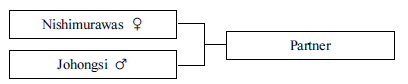
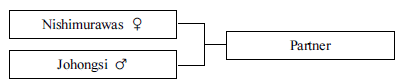
국립원예특작과학원 배연구소에서는 경제성이 높은 고품 질의 수분수용 떫은감 품종을 육성하기 위하여 2000년에 전 남 강진군 성전면 대월마을 조영철 농가 포장에 재식되어 있 는 20년생 ‘조홍시’에 ‘서촌조생’을 교배하였다(Fig. 1). 교배 종자는 완숙된 과실을 수확하여 상온에 저장 후 과육이 연화 된 다음에 채취하고 물에 씻어서 약간 건조시킨 후 벤레이트 수화제로 종자 소독을 하고, 폴리에틸렌 봉지에 넣어서 파종 전까지 5°C의 저장고에 보관하였다.
Fig. 1.
Pedigree of ‘Partner’ persimmon.
KJBS-47-294_F1.gif
2001년 3월 상순 버미큘라이트와 펄라이트(2:1, v/v)를 혼 합한 상토에 종자를 섞어 20°C에서 15일 간 최아시켰다. 최 아된 종자는 원예용 상토(50 L, (주)신성미네랄, Korea)를 담 은 지피포트(Round 11 × 10 cm, Jiffy®, Denmark)에 파종 하여 832개체의 교배실생을 획득하여 2001년 4월 본 포장에 재식하였다.
교배실생의 수체생육 및 과실 특성조사는 농림축산식품부 국립종자원의 신품종 심사를 위한 특성조사 요령(KSVS 2007) 에 따랐다. 단감 재배지역은 남부지역(경상남도와 전라남도) 에 만 한정되어 시험지간 환경변이가 크지 않아 지역적응시 험을 거치지 않았다.
육성경위
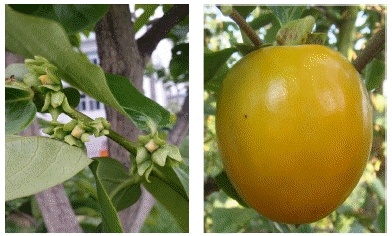
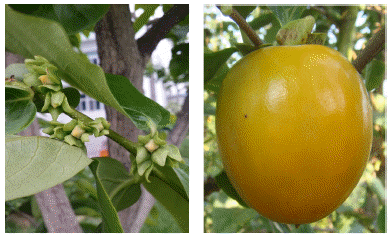
국립원예특작과학원 배연구소에서는 경제성이 높은 고품 질 수분수용 떫은감 품종을 육성하기 위해 2000년에 ‘서촌조 생’에 ‘조홍시’를 교배하여 832계통의 교배실생을 얻었다. 교 배실생 중에서 수꽃 착생이 잘되면서 꽃가루양은 풍부하여 수분수로서의 제반 특성이 우수하고 과실의 품질 또한 우수 하여 ‘00-16-121’을 2007년에 ‘원교 바-2호’로 1차 선발하였 다. 이 후 정밀 특성 검정 결과, 연차 간 변이가 적고, 과실 및 수분수로서 특성이 우수하여 2009년 경제성이 높은 수분 수용 떫은감 품종으로 최종 선발하고 ‘파트너’로 명명하여 2010년에 품종보호 출원하였다(Fig. 2).
Fig. 2.
Male flowers (left) and a fruit (right) of ‘Partner’ astringent persimmon.
KJBS-47-294_F2.gif
생육 특성
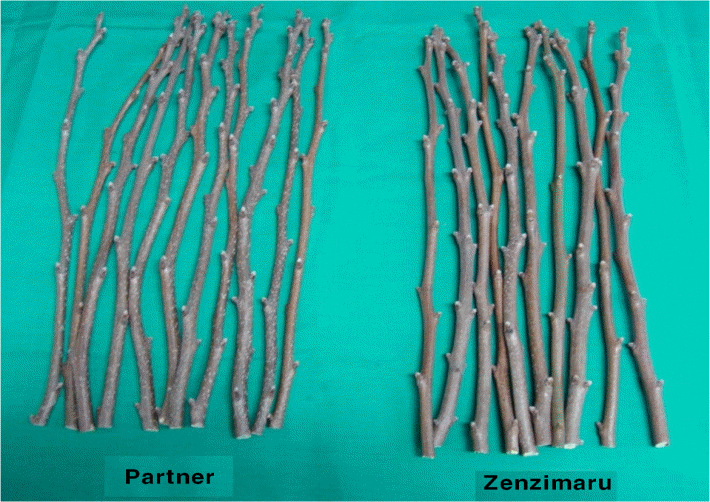
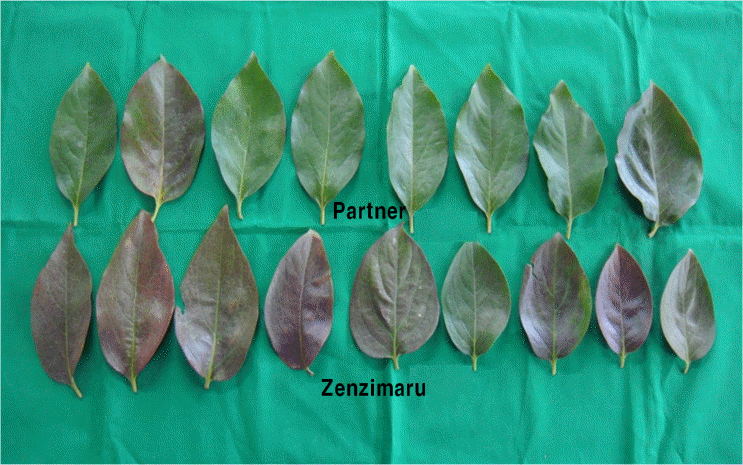
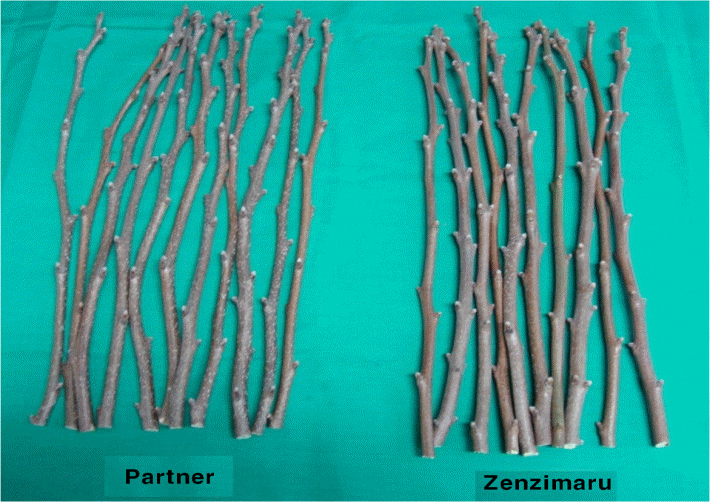
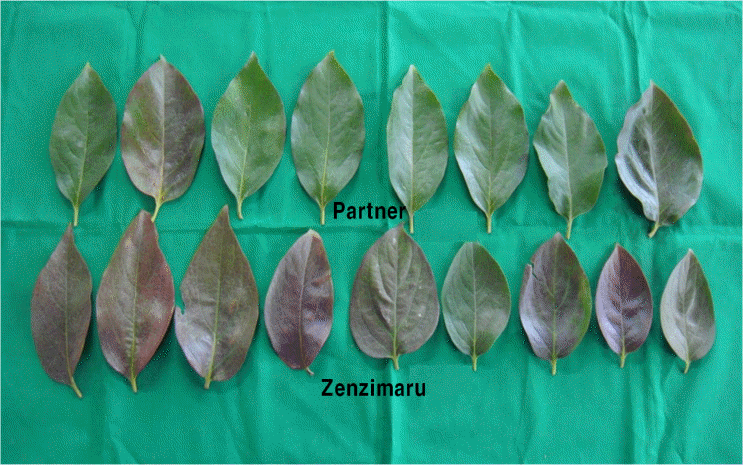
‘파트너’의 수세는 중간 정도이고, 나무 형태는 반개장(半 開張)성이다(Table 1). 휴면기에 조사한 일년생 가지의 길이 는 긴 편이었고, 가지의 중간부위 직경은 굵은 편이었으며 (Table 1, Fig. 3), 가지의 양광면의 색깔은 갈색이었다. 일년 생 가지의 중간부위 5 cm의 피목 크기는 대조품종인 ‘선사 환’과 같이 중간 정도였으나, 형태는 대조품종인 ‘선사환’의 타원형에 비해 원형이었으며, 피목수도 중간 정도로 피목수가 많은 대조품종인 ‘선사환’과 차이를 보였다(Table 1). 여름철 신초의 생육이 정지한 가지의 중간 부위의 엽신의 형태는 타 원형으로 대조품종인 ‘선사환’의 도란형과는 차이를 보였고, 엽신의 정부 형태는 대조품종인 ‘선사환’과 같은 예두이었며, 엽신의 기부 모양은 대조품종인 ‘선사환’의 둔각에 비해 좁은 뾰족이었다(Table 1, Fig. 4). 암꽃의 개화기는 5월 29로 대조 품종인 ‘선사환’ 보다 1일 빠른 경향이었고, 수꽃의 착생 정 도는 대조품종인 ‘선사환’과 같이 많았으며, 100화당 화분량 은 380 mg으로 대조 품종인 ‘선사환’의 680 mg보다는 적었 다(Table 1).
Fig. 3.
One-year-old shoot shape of ‘Partner’ astringent (left) and ‘Zenzimaru’ non-astringent (right) persimmon.
KJBS-47-294_F3.gif
Fig. 4.
Leaf blade shape of ‘Partner’ astringent (upper) and ‘Zenzimaru’ non-astringent (lower) persimmon.
KJBS-47-294_F4.gif
Table 1.
Tree characteristics of ‘Partner’ astringent persimmon.
Table 1.
CultivarC Tree vigor Tree form One-year shoot

Length Thickness Color sunny side Number of lenticels Size of lenticels Shape of lenticels

Partner Medium Semi-spreading Long Thick Brown Medium Medium Circular
Nishimura-wase Medium Semi-spreading Medium Medium Yellow brown Many Small Circular
Johongsi Medium Semi-spreading Medium Medium Brown Few Large Elliptic
Zenzimaru Medium Semi-spreading Long Thick Brown Many Medium Elliptic

Cultivar Full bloozm date Leaf blade No. male flower Pollen amount(mg/100 flowers)

Shape Shape of apex Shape of base

Partner May. 29 Elliptic Acute Elliptic Many 380 ± 60.0z
Nishimurawase May. 27 Elliptic Acute Ovate Few 220 ± 36.1
Johongsi May. 28 Ovate Acute Ovate Many 219 ± 55.9
Zenzimaru May. 30 Obovate Acute Obtuse Many 680 ± 140

zValues are mean ±SE

과실 특성
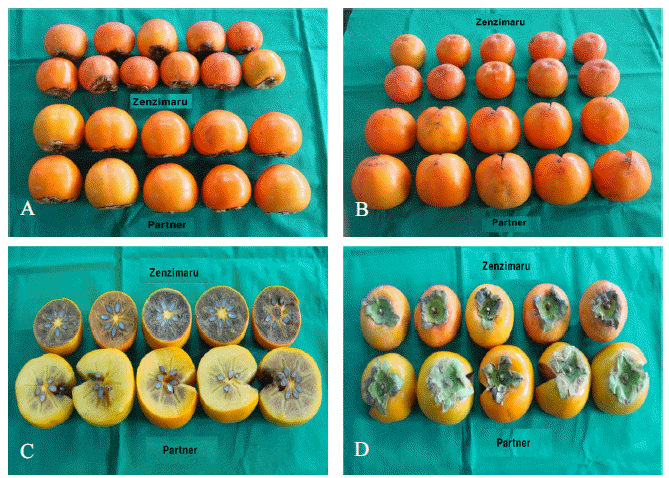
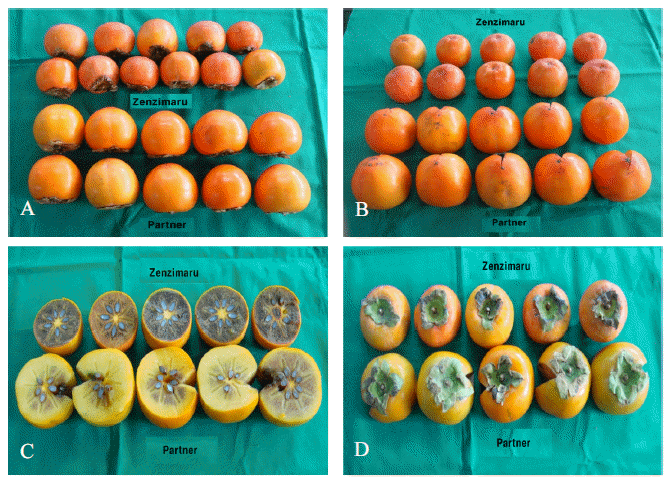
‘파트너’의 수확 시기는 영암에서 3년 평균 10월 20일경인 중만생종으로 대조품종인 ‘선사환’보다 7일정도 빨랐다(Table 2). ‘파트너’의 과실 모양은 장원형이고, 종단면의 정단부 형 태는 둔각형이었으며, 횡단면의 모양은 둥근 부정형이다(Fig 5). 과피색은 모본품종인 ‘서촌조생’과 같은 오렌지색으로 부 본품종인 ‘조홍시’와 대조 품종인 ‘선사환’의 짙은 오렌지색 과는 다소 차이를 보인다(Table 2, Fig. 5). ‘파트너’의 과육 경도는 2.5 kg/5mmø로 중간 정도이고, 과즙은 많은 편이다 (Table 2).
Fig. 5.
Fruit shape of ‘Partner’ astringent and ‘Zenzimaru’ non-astringent persimmon: A; lateral view, B; apex view, C; cross section, D; calyx view.
KJBS-47-294_F5.gif
Table 2.
Fruit characteristics of ‘Partner’ astringent persimmon.
Table 2.
Cultivar Maturity Fruit weight (g) Fruit shape Fruit shape Shape of apex in longitu dinal section General shape of fruit cross section

Partner Oct.20 224 az Elliptic Orange Obtuse Irregular rounded
Nishimurawase Sep.30 165 b Oblate Orange Rounded Irregular rounded
Johongsi Sep.24 145 bc Circular Red Orange Rounded Irregular rounded
Zenzimaru Oct.27 121 c Circular Red Orange Rounded Circular

Cultivar Soluble solids (°Bx) Hardness (kg/5mmø) Flesh of juice Cracking at calyx end fruit Cracking of fruit Persimmon typey

Partner 18.8 a 2.50 b Many Weak Medium PVA
Nishimurawase 14.7 c 3.48 a Medium Medium Weak PVNA
Johongsi 16.0 b 2.76 ab Medium Weak Weak PVNA
Zenzimaru 16.3 b 2.81 ab Few Weak Weak PVNA

z5% level by DMRT

yPCNA; pollination constant non-astringent, PVNA; pollination variant non-astringent, PVA; pollination variant astringent, PCA; pollination constant astringent

재배상 주의점
‘파트너’의 과실은 큰 편이나 과다 결실시키면 과실이 작아 질 수 있으므로 소과가 되지 않도록 개화 10~15일 전에 결 과지당 중간 위치의 충실한 꽃봉오리 1개를 남기고 솎아주고, 잎 5매 이하 결과지의 꽃봉오리는 모두 제거해주어야 한다. 수세가 너무 강하면 수꽃착생이 불량하므로 수세안정을 위하 여 여름철에 신초 유인 등 신초 관리를 철저히 해야 한다. 결 실관리가 미흡하고 수관 내 통풍이 나쁜 과원에서는 과피오 염 및 기형과 등 불량과의 발생률이 많으므로 상품과율을 높 이기 위해서는 통풍이 잘되도록 도장지를 조기에 유인하거나 제거하고, 토양이 과습 상태가 되지 않도록 관수와 배수에 유 의해야 한다(Son et al. 2013). 또한 ‘파트너’는 ‘서촌조생’과 같이 발아가 빨라 늦서리의 피해를 받을 위험이 크므로 생육 초기 저온 및 늦서리 피해를 예방하기 위해 살수법 등으로 예 방에 만전을 기해야 하며, 서리 상습지역에서는 재식을 피해 야 한다.
초 록
국립원예특작과학원 배연구소에서 과실이 크고, 당도가 높 은 수분수용 고품질 떫은감 품종을 육성하기 위해 2000년에 ‘서촌조생’에 ‘조홍시’를 교배하였다. 교배실생 중에서 ‘00- 16-121’를 2007년에 1차 선발하였고, 연시, 곶감 및 수분수 로의 특성이 우수하여 2009년 최종 선발하고 ‘파트너’로 명 명하였다. ‘파트너’의 수세는 중간 정도이고 수자는 반개장성 이다. 수꽃착생이 많으며 화분량은 100화당 380 mg으로 풍 부하다. 숙기는 만개후 144일로 ‘선사환’보다 1주일 빠르며, ‘서촌조생’보다 3주 가량 늦다. 평균과중은 224 g이며, 당도 는 18.8°Bx이다(등록번호 제5519호).
본 논문은 농촌진흥청 시험연구사업(과제번호 : PJ101266) 의 지원에 의해 이루어진 것임.
  • 1. Food and Agriculture Organization (FAO) http://www.fao.org/statistics/en/ 2011.
  • 2. Korea Agriculture Food and Rural Affairs (KAFRA)Statistics yearbook 2013. 90-118.
  • 3. Korea Rural Economic Institute (KREI) http://www.krei.re.kr/kor/statistics 2012.
  • 4. Korea Seed and Variety Service (KSVS)Guidelines for the conduct of tests for distinctness, uniformity and stability of Persimmon (Diospyros kaki L.) 2007.
  • 5. Luo Z, Wang R. Persimmon in China: Domestication and traditional utilizations of genetic resources. Advances in Horticultural Science 2008. 22: 239-243.
  • 6. Son JY, Kim SC, Park YO, Choi TM, Kim ES, Shin HY. Recommendations on cultural practices for producing quality fruits of new persimmon cultivars, ‘Jamisi’ and ‘Migamjosaeng’. Kor. J. Hort. Sci. Technol 2013. 31(SUPPL): -115.

Download Citation

Download a citation file in RIS format that can be imported by all major citation management software, including EndNote, ProCite, RefWorks, and Reference Manager.

Format:

Include:

Breeding of ‘Partner’ (Diospyros kaki Thunb.) Astringent Persimmon with High Quality as a Pollinizer
Korean. J. Breed. Sci.. 2015;47(3):294-298.   Published online September 30, 2015
Download Citation

Download a citation file in RIS format that can be imported by all major citation management software, including EndNote, ProCite, RefWorks, and Reference Manager.

Format:
Include:
Breeding of ‘Partner’ (Diospyros kaki Thunb.) Astringent Persimmon with High Quality as a Pollinizer
Korean. J. Breed. Sci.. 2015;47(3):294-298.   Published online September 30, 2015
Close

Figure

  • 0
  • 1
  • 2
  • 3
  • 4
Breeding of ‘Partner’ (Diospyros kaki Thunb.) Astringent Persimmon with High Quality as a Pollinizer
Image Image Image Image Image
Fig. 1. Pedigree of ‘Partner’ persimmon.
Fig. 2. Male flowers (left) and a fruit (right) of ‘Partner’ astringent persimmon.
Fig. 3. One-year-old shoot shape of ‘Partner’ astringent (left) and ‘Zenzimaru’ non-astringent (right) persimmon.
Fig. 4. Leaf blade shape of ‘Partner’ astringent (upper) and ‘Zenzimaru’ non-astringent (lower) persimmon.
Fig. 5. Fruit shape of ‘Partner’ astringent and ‘Zenzimaru’ non-astringent persimmon: A; lateral view, B; apex view, C; cross section, D; calyx view.
Breeding of ‘Partner’ (Diospyros kaki Thunb.) Astringent Persimmon with High Quality as a Pollinizer

Tree characteristics of ‘Partner’ astringent persimmon.

CultivarC Tree vigor Tree form One-year shoot

Length Thickness Color sunny side Number of lenticels Size of lenticels Shape of lenticels

Partner Medium Semi-spreading Long Thick Brown Medium Medium Circular
Nishimura-wase Medium Semi-spreading Medium Medium Yellow brown Many Small Circular
Johongsi Medium Semi-spreading Medium Medium Brown Few Large Elliptic
Zenzimaru Medium Semi-spreading Long Thick Brown Many Medium Elliptic

Cultivar Full bloozm date Leaf blade No. male flower Pollen amount(mg/100 flowers)

Shape Shape of apex Shape of base

Partner May. 29 Elliptic Acute Elliptic Many 380 ± 60.0z
Nishimurawase May. 27 Elliptic Acute Ovate Few 220 ± 36.1
Johongsi May. 28 Ovate Acute Ovate Many 219 ± 55.9
Zenzimaru May. 30 Obovate Acute Obtuse Many 680 ± 140

zValues are mean ±SE

Fruit characteristics of ‘Partner’ astringent persimmon.

Cultivar Maturity Fruit weight (g) Fruit shape Fruit shape Shape of apex in longitu dinal section General shape of fruit cross section

Partner Oct.20 224 az Elliptic Orange Obtuse Irregular rounded
Nishimurawase Sep.30 165 b Oblate Orange Rounded Irregular rounded
Johongsi Sep.24 145 bc Circular Red Orange Rounded Irregular rounded
Zenzimaru Oct.27 121 c Circular Red Orange Rounded Circular

Cultivar Soluble solids (°Bx) Hardness (kg/5mmø) Flesh of juice Cracking at calyx end fruit Cracking of fruit Persimmon typey

Partner 18.8 a 2.50 b Many Weak Medium PVA
Nishimurawase 14.7 c 3.48 a Medium Medium Weak PVNA
Johongsi 16.0 b 2.76 ab Medium Weak Weak PVNA
Zenzimaru 16.3 b 2.81 ab Few Weak Weak PVNA

z5% level by DMRT

yPCNA; pollination constant non-astringent, PVNA; pollination variant non-astringent, PVA; pollination variant astringent, PCA; pollination constant astringent

Table 1. Tree characteristics of ‘Partner’ astringent persimmon.

Values are mean ±SE

Table 2. Fruit characteristics of ‘Partner’ astringent persimmon.

5% level by DMRT

PCNA; pollination constant non-astringent, PVNA; pollination variant non-astringent, PVA; pollination variant astringent, PCA; pollination constant astringent