적요
‘Superjami 2’, a new blackish purple pigmented rice cultivar was derived from a cross between CG2-3-5-1-6-1 (Heugjinju/Suwon 425) having a high cyanidin 3-glucoside (C3G) contents and ‘Daeribbyeo 1’ having a large grain size. During selected by pedigree breeding method until F10 generation, a promising line, SR28721-7-5-2-1-2-1, was advanced and designated as the name of ‘KNOU 6’. This variety headed on Aug. 30, so 125 days to heading after sowing and has 106 cm culm length. The panicle length of ‘Superjami 2’ was 20.4 cm. The number of panicle per hill was 8.5 ea, and the number of grain per panicles was 143.0 ea. The ratio of fertility of ‘Superjami 2’ was about 82.0% and 1,000-grain weight was about 30.1 g. The 1,000 grain weight of ‘Superjami 2’ (30.1 g) was heavier than that of ‘Heugjinju’. Also, ‘Superjami 2’ has 9 times higher C3G content compared with ‘Heugjinju’.
서 언
쌀은 세계적인 주곡 작물로 아시아에서는 중요 영양 공급 원이다. 그럼에도 세계적으로 쌀의 재배면적과 쌀 생산량은 급격히 줄어들고 있다. 우리나라에서는 한 사람당 연평균 쌀 소비량이 지난 1979년의 135.6 kg을 고비로 점차 줄어들어 2013년에 69.0 kg 수준으로 떨어졌고, 더불어 쌀의 소비성향 이 고급화, 다양화됨에 따라 소비자들의 유색미, 향미 등 특수 용도 쌀 품종의 요구도가 높아지고 있다. 최근의 벼 육종은 쌀 소비를 촉진하기 위해 가공적성에 따른 품종의 특성연구 (
Oh et al. 2010), 지역별 쌀 품질(
Lee et al. 2005)과 같이 수 량증대, 품질향상, 가공적성 및 재배안정성 확대뿐만 아니라, 특수용도 적성 품종육성 또한 중요한 목표로 자리매김 되었다. 쌀의 현미층은 oryzanol, phytic acid, ferulic acid, arabinoxylan, arabinogalactan 등과 같은 다양한 유용성분이 포함 되어 있다는 사실이 알려지면서 새로운 기능성 소재의 원료 로서 각광을 받고 있다. 특히 ‘슈퍼자미’, ‘대립자미’ 품종 등 과 같은 유색미 품종의 미강은 일반 벼품종의 미강에 함유된 성분보다 높은 항산화 활성을 바탕으로 다양한 기능성이 밝 혀지고 있다. 특히 ‘슈퍼자미’ 등의 기능성 쌀은 안토시아닌 계열의 색소 함량이 높아 일반 벼 품종에 비해서 높은 생리활 성을 기대할 수 있는 소재로서 주목을 받고 있다(
Cho et al. 1996,
Kim et al. 2011,
Ryu 2014,
Xia et al. 2003).
유색미는 현미 종피층이 붉은색 혹은 자색, 녹색 등을 띠고 있는 쌀로서 다양한 천연색소를 함유하고 있는데, 이 중 흑자 색미의 안토시아닌 색소의 80% 정도는 cyanidin 3-glucoside (C3G)이며, 그 외 peonidin-3glucoside (P3G), cyanidin 3-rhamnoside, malvidin 3-galactoside, pelargonidin 및 selphinidin 등을 함유하고 있다(
Park et al. 2008,
Reddy et al. 1995,
Ryu et al. 1998). 안토시아닌은 항산화활성(
Han et al. 2004,
Kim et al. 2010,
Osawa et al. 1992), 항염효과 (
Wang et al. 1997), 항암효과(
Dai et al. 2009), 항아토피효 과(
Han et al. 2007,
Han et al. 2009), 항당뇨효과(
Kim et al. 2010) 및 심혈관계 질병 등의 예방과 치료효과(
Verlangieri et al. 1985)가 밝혀진 성분이다(
Ryu 2014).
다양한 기후 및 지역 적응을 위해 만생이면서 천립중이 무 겁고, 종피의 C3G 함량을 극대화시킨 ‘슈퍼자미2호(국립종 자원 품종등록 : 제5131호, 2014. 8. 26)’ 벼 품종의 작물학적 특성과 품질특성을 규명하고, 이를 활용하여 기능성 소재 및 건강 기능성 식품을 위한 기초자료로 활용코자 수행하였다.
재료 및 방법
재료
본 시험은 계통명 ‘KNOU 6호’를 2009~2011년까지 3년 간 중부평야 2개 지역에서 보통기 보비재배를 하여 대조품종 ‘흑진주벼’와 ‘슈퍼자미’의 주요 농업형질과 종피색소 특성을 비교 검토하였다. 각 지역에서 공시 품종을 5월 2일에 파종하 여 6월 4일에 이앙하였으며, 재식거리는 30 × 15 cm로 주당 3본으로 하였다. 시비량 및 질소분시방법은 농촌진흥청 표준 재배법에 준하였다.
성분분석
질소함량(protein)
시료에 따라 0.3~1 g을 유산지에 취하여 kjeldahal flask에 넣는다. Kjeldahal flask에 분해 촉진제 K2SO4 : Cu2SO4.H2O (9:1)와 진한 황산(98%) 20 mL를 넣고 최대 420°C에서 1.5 ~2 시간 분해하였다. 실온에서 냉각 후 flask에 H2O 40 mL 과 32% NaOH 60 mL을 가하여 증류하였다. 3% Boric acid 90 mL에 NH3 gas 를 포집하여 0.1N-HCl로 적정하였다. 계 산방법은
단백질(%)=(A-B)*f*질소계수*0.0014/S*100 이다.
A : 0.1N-HCl 소비량(mL)
B : blank test의 0.1N-HCl 소비량(mL)
f : 0.1N-HCl의 역가 = 1
S : Sample 채취량(g)
지 방(fat)
분말 2 g을 원통여과지에 넣고 검체 위에 탈지면을 충전하 여 용기에 담은 채로 100~105°C의 건조기에서 2~2시간 건조한 후, 데시케이터에서 식히고 속슬렛추출장치의 추출관 에 넣는다. 받는 그릇에 무수에테르 1/2용량을 넣어 8시간 추 출한다. 추출 후 waterbath에서 에테르를 완전히 증발시킨다. 받는 그릇을 깨끗이 닦은 후 98~100°C 건조기에서 1시간 항 량이 될 때까지 건조한 다음 데시케이터에서 식히고 칭량한다. 조지방 함량은 다음 식에 따라 산출한다(Soxhlet extraction method 식품공전 에테르추출법).
조지방(%) = (W1-W0/S)*100
W0 : 받는 그릇의 무게(g)
W1 : 조지방 추출하여 건조시킨 받는 그릇의 무게(g)
S : 검체의 채취량(g)
탄수화물(carbohydrate)
검체 100 g 중에서 수분, 조단백질, 조지방 및 회분의 양을 감하여 얻은양으로서 표시(식품공전 계산법).
열 량(Calorie)
식품공전(2009) 계산법에 따라
검체 100 g 중의 조단백질, 조지방 및 탄수화물 또는 당질 함량에 단백질 4, 지방 9, 탄수화물 4의 계수를 곱하고 각각 의 에너지를 kcal단위로 산출하여 그 총계로 나타냈다(에트워 턱 계수사용법).
안토시아닌(C3G)함량
종피에 함유된 안토시아닌 색소 중 C3G의 함량분석은
Ryu et al. (1998)의 방법을 따랐다. 유색미 종자를 제현 후 곱게 마쇄한 분말 2 g에 0.1% trifluoroacteic acid (TFA)-95% EtOH 용매 20 mL를 가한 후 진탕 추출하였다. 추출액은 50 mL로 적정하여 0.45
μm PVDF syringe filter로 여과하고 HPLC (waters 501 pump, millipore gradient controller, waters 480 UV-Vis detector)를 이용하여 정성, 정량하였다. HPLC 분석은 ODS-5 (4.6 mm × 250 mm, Nomura Chemical Co., Japan) column을 사용하였고, 530 nm 파장으로 검량하였다. 이동상으로 0.1% TFA in water, liner gradient, 0.1% in Acetonitrile을 사용하였고, 유속은 1.0 mL/min이었다.
무기성분
무기성분 중 Ca, K의 함량을 분석하기 위해 시료 1 g을 각 각 ICP 튜브에 담은 후 질산 5 mL을 넣고 150°C에서 습식분 해법을 이용하여 전처리 하였다. ICP 분석기기를 사용하여 Ca, K 표준시약 검량곡선을 이용하여 시료의 Ca, K 함량을 분석하였다.
DNA 분석
DNA추출은 각 종자를 파종 후 20일경 키운 어린잎을 따서 NucleoSpin® Plant Ⅱ kit (MACHEREY-NAGEL, Germany) 를 이용하여 추출하였다. nanodrop (Thermo, USA)정량을 하여 10 ng/μl로 희석하고, 10 ng/μl의 DNA를 5 μl, 10x reaction buffer를 2 μl, 2.5 mM d-NTP를 1.6 μl, 10 pmol primer F+R를 2 μl, taq을 0.5U 혼합한 후 DW로 20 μl로 총량을 맞추어 PCR을 진행하였다. PCR step 온도는 95°C 5 min, 95°C 30 sec, 58°C 30 sec, 72°C 60 sec로 35 cycle 을 하였다. Capillary 전기영동 기계인 Fragment Analyzer (Advanced Analytical Technologies Inc., USA)를 이용하여 PCR 산물의 size를 측정하였고, DNA 분리는 8.0 kv로 90분 간 전기영동하였다.
결과 및 고찰
육성경위
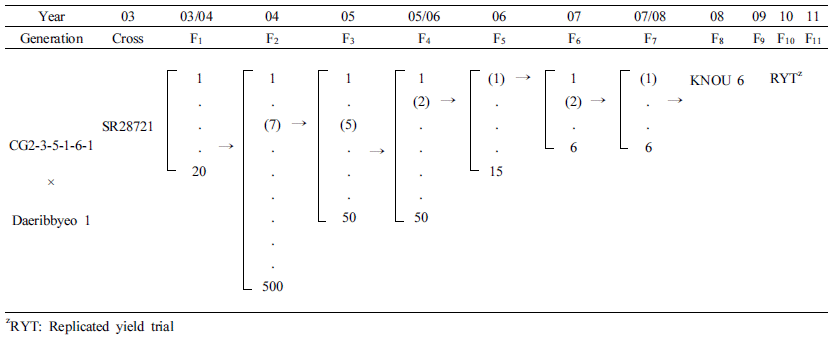
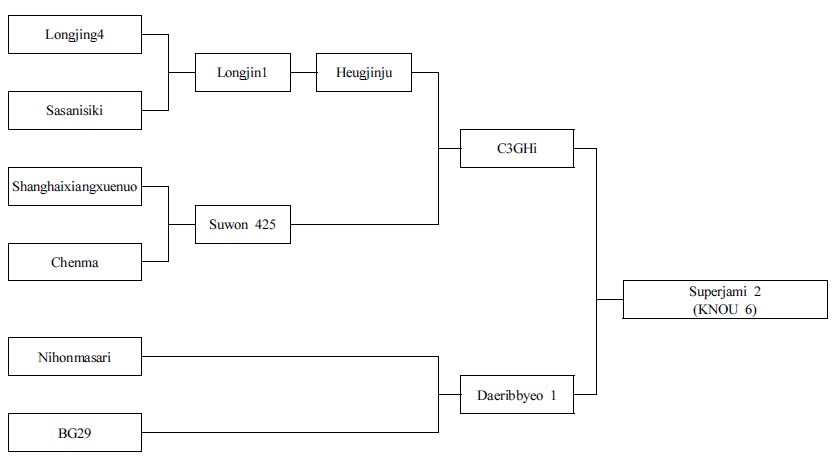
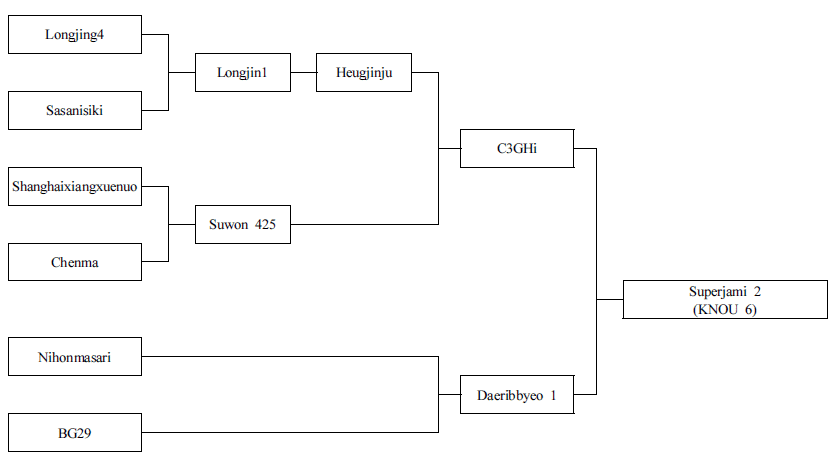
2003년 ‘흑진주벼’와 ‘수원425호’ 교배 후대계통 중 C3G 함량이 높은 계통(C3GHi)과 ‘대립벼 1호’를 인공교배한 F2 세대에서 초형이 우수하고, C3G 함량이 높은 개체를 선발하 였다(Fig.
1, Fig.
2). ‘슈퍼자미2호‘는 2003년 동계 온실에서 세대진전 후 2007년까지 매년 계통재배하면서 포장선발을 실 시하여 유전적으로 완전히 고정이 되었으며, 2009년부터 2011년까지 재배시험을 통해 기본적인 농업형질인 출수기, 간장, 등숙률, 현미천립중 등을 조사하였다. 2012년과 2013 년 포장에 1주 3본, 3반복으로 이앙하여 균일성을 조사한 결 과 전체적으로 균일하고 이형주가 발견되지 않았다.
Fig. 1.Pedigree diagram of ‘Superjami 2’.
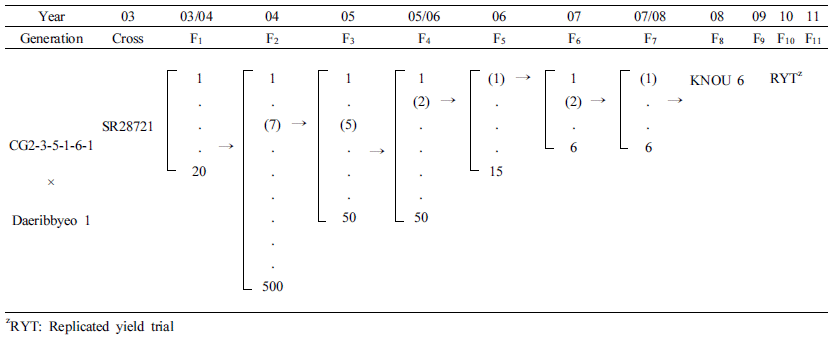
Fig. 2.Genealogical diagram of ‘Superjami 2’ (
Ryu 2015).
출수기 및 주요 농업적 특성
‘슈퍼자미2호’ 품종의 출수기는 중부평야 보통기 재배에서 8월 30일로 ‘슈퍼자미’ 품종보다 2일 늦은 만생종이다. 또한 ‘슈퍼자미2호’ 품종의 간장은 106.0 cm로 ‘흑진주벼’ 보다 28 cm가량 크며, ‘슈퍼자미’ 보다 약 30 cm 큰 품종이다. 수 장은 20.4 cm로 ‘흑진주벼’ 보다 짧다. 포기당 이삭수는 8.5 개로 ‘흑진주벼’와 비슷하고, 이삭당 벼알 수는 140.4개로 ‘흑진주벼’ 보다 많다. ‘슈퍼자미2호’의 임실율은 82.0% 수준 이고, 현미 천립중은 30.1 g으로 ‘흑진주’보다 1.3배 가량 무 거운 편이다(Table
1).
Table 1.Major agronomic traits and yield components.
Table 1.
|
Cultivar |
Year |
Heading date |
Culm Length (cm) |
Panicle length (cm) |
No. of panicle per hill |
No. of grain per panicles |
Ratio of fertility (%) |
Brown rice 1000 grain weight (g) |
|
|
Heugjinju |
2012 |
July. 25 |
75.0 |
21.0 |
9.0 |
93.8 |
77.6 |
17.0 |
|
2013 |
July. 26 |
78.8 |
22.7 |
7.5 |
95.5 |
75.7 |
19.6 |
|
2014 |
July. 27 |
80.2 |
23.5 |
6.8 |
104.0 |
75.1 |
19.4 |
|
z Average |
July. 26 |
78.0 ± 2.69 |
22.4 ± 1.28 |
7.8 ± 1.12 |
97.8 ± 5.46 |
76.1 ± 1.31 |
17.1 ± 0.25 |
|
|
Superjami |
2012 |
Aug. 29 |
76.8 |
19.3 |
10.8 |
104.2 |
83.4 |
25.9 |
|
2013 |
Aug. 28 |
74.8 |
19.7 |
10.5 |
115.1 |
83.0 |
26.3 |
|
2014 |
Aug. 26 |
73.0 |
20.6 |
10.4 |
111.3 |
82.1 |
26.4 |
|
z Average |
Aug. 28 |
74.9 ± 1.9 |
19.9 ± 0.7 |
10.6 ± 0.2 |
110.2 ± 5.5 |
82.8 ± 0.7 |
26.2 ± 0.3 |
|
|
Superjami 2 |
2012 |
Aug. 29 |
93.7 |
20.1 |
10.6 |
137.5 |
82.3 |
27.5 |
|
2013 |
Aug. 29 |
112.5 |
20.5 |
8.0 |
139.4 |
83.4 |
32.5 |
|
2014 |
Sep. 3 |
111.8 |
20.7 |
7.0 |
144.4 |
80.2 |
30.4 |
|
z Average |
Aug. 30 |
106.0 ± 10.7 |
20.4 ± 0.3 |
8.5 ± 1.9 |
140.4 ± 3.6 |
82.0 ± 1.6 |
30.1 ± 2.5 |
도정 및 품질특성
정현비율은 82.0%로 ‘흑진주벼’와 비슷하고, ‘슈퍼자미2 호’의 현미 장폭비는 2.08의 장원형으로 ‘흑진주벼’에 비해 길이와 폭이 각각 12%, 26%로 증가되었다(Table
2). 현미의 미량원소 함량에서 ‘슈퍼자미2호’가 ‘흑진주’에 비해 K, Ca 함량은 낮게 나타났고, 성분함량 분석 결과 단백질, 회분 함량 은 낮게 열량, 지방, 탄수화물 함량은 비슷한 수준으로 나타났 다(Table
3).
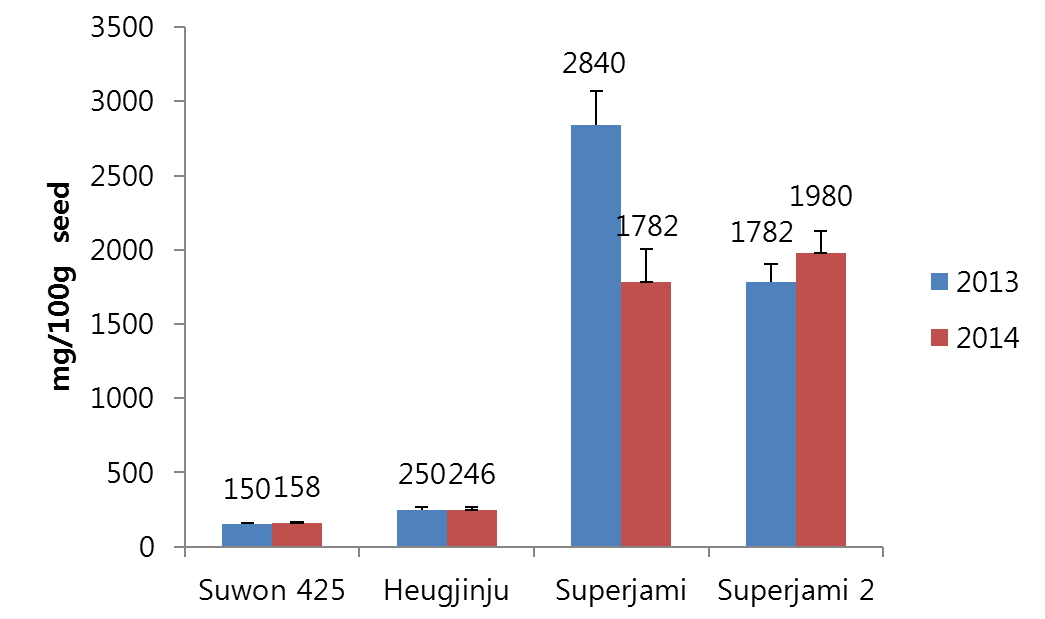
또한 ‘슈퍼자미2호’ 품종은 C3G 천연색소 함량이 현미 100 g당 2013년에는 1,782 mg, 2014년에는 1,980 mg으로 흑진주보다 9배 이상 높은 것으로 확인되었다(Fig.
3).
Fig. 3.Concentration of cyanidin 3-glucoside content in ‘Superjami 2’.
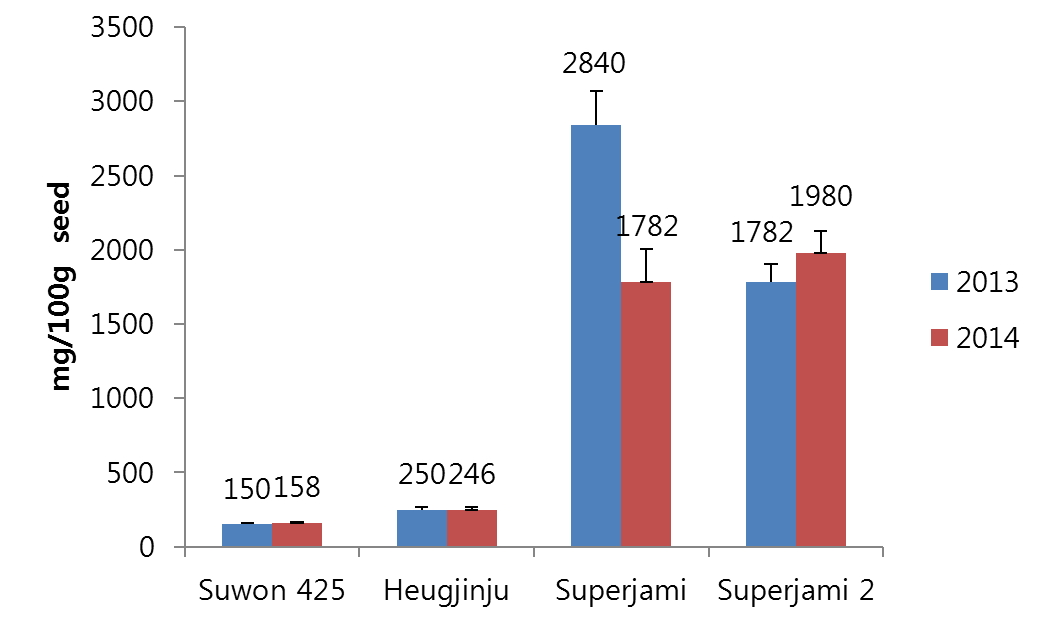
Table 2.Grain appearance and milling properties of ‘Superjami 2’.
Table 2.
|
Cultivar |
Rough rice (mm) |
Brown rice (mm) |
Dehulling recovery (Brown/Rough) (%) |
|
|
Length |
Width |
Thickness |
L/W ratio |
Length |
Width |
Thickness |
L/W ratio |
|
|
Heugjinju (a) |
7.63 |
3.11 |
2.02 |
|
5.77 |
2.46 |
1.79 |
|
|
|
Superjami (b) |
8.44 |
3.90 |
2.16 |
5.90 |
3.15 |
2.03 |
|
Superjami 2 (c) |
8.61 |
4.02 |
2.17 |
6.48 |
3.11 |
1.91 |
|
(c) / (a) |
1.13 |
1.29 |
1.07 |
1.23 |
1.26 |
1.07 |
Table 3.Mineral contents and physio-chemical properties of ‘Superjami 2’.
Table 3.
|
Cultivar |
Ca (mg/100g) |
K (mg/100g) |
Calorie (Kcal/100g) |
Fat (g/100g) |
Protein (g/100g) |
Ash (g/100g) |
Carbohydrate (g/100g) |
|
|
Heugjinju |
18.28 ± 0.74 |
331.48 ± 8.33 |
365 |
2.35 ± 0.96 |
8.29 ± 1.3 |
1.7 ± 0.01 |
77.6 |
|
Superjami |
13.55 ± 0.35 |
271.40 ± 4.91 |
351 |
2.06 ± 0.6 |
9.27 ± 1.8 |
1.4 ± 0.04 |
75.4 |
|
Superjami 2 |
11.29 ± 0.27 |
305.39 ± 4.23 |
361 |
2.04 ± 0.5 |
9.46 ± 1.2 |
1.5 ± 0.04 |
77.8 |
DNA 다형성 검정
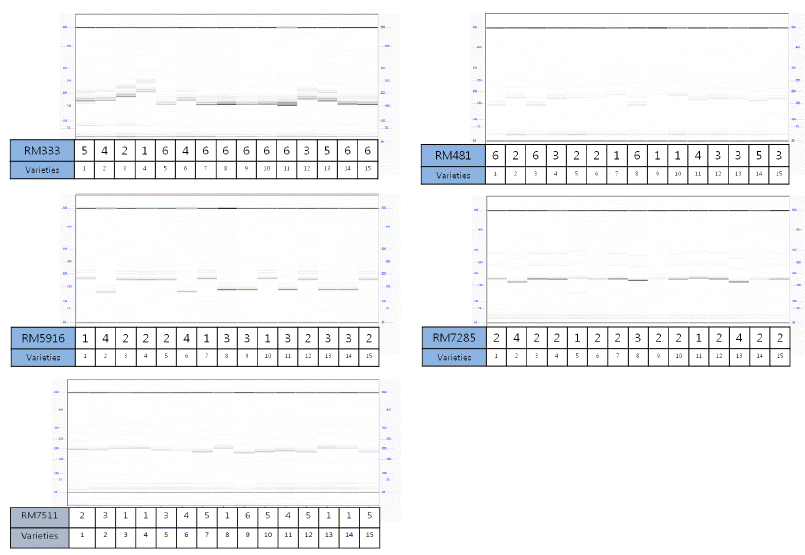
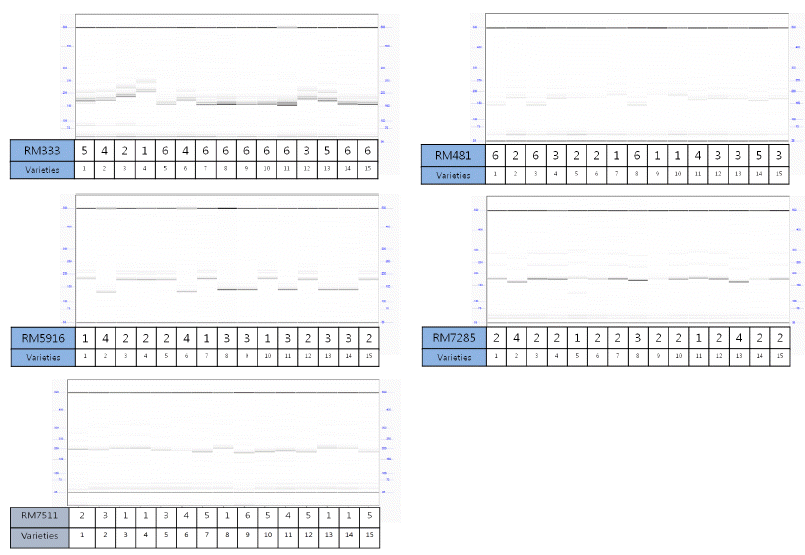
DNA 다형성 검정에서 다섯 개의 SSR marker (RM333, RM481, RM5916, RM7511, RM7285)를 이용하여 DNA를 분석하였을 때 ‘슈퍼자미2호’는 모본인 ‘흑진주벼’, ‘수원 425호’ 및 ‘대립벼 1호’의 교배후대임을 보여주었다. 또한 위 5개 marker 조합으로 기존의 흑자색 유색미 품종과 구분이 가능하였다(Fig.
4).
Fig. 4.
PCR product patterns of 15 blackish purple rice cultivars and ‘Superjami 2’ amplified by SSR markers. Rice cultivars (1) Heugnam, (2) Heughyang, (3) Shinmyoengheugchal, (4) Shinnongheugchal, (5) Heuggwang, (6) Heugseol, (7) Josangheugchal, (8) Boseugheugchal, (9) Choeunheugmi, (10) Nunkeunheugchal, (11) Heugjinju, (12) Daeribbyeo 1, (13) Suweon 425, (14) Superjami, (15) Superjami 2 were used as templates for PCR reaction.
*All varieties are blackish rice except Daeribbyeo 1(12) variety(white)
*(11)~(13): Parents of ‘Superjami 2’ variety
적 요
전통적인 교배육종을 통하여 천연색소(C3G) 함량을 높인 ‘슈퍼자미2호’(흑진주벼/수원 425호//대립벼 1호) 품종의 작 물학적 특성과 품질특성을 조사 분석한 중부평야지에서 평균 출수기는 8월 30일로 만생종이며, 간장은 106 cm 정도이며 임실률은 82.0%였다. 또한 현미천립중은 30.1 g 정도로 ‘슈 퍼자미’(26.2g)보다 무거운 품종이다. ‘슈퍼자미2호’ 품종의 현미 장폭비는 2.08의 장원형으로 흑진주벼에 비해 길이와 폭이 12%, 26%로 증가된 대립종이다. 미량원소 중 K, Ca 함 량은 ‘흑진주벼’에 비해 낮았고, 단백질, 회분 함량도 낮게, 열량, 지방, 탄수화물 함량은 비슷한 수준으로 나타났다. ‘슈 퍼자미2호’ 품종의 C3G 색소함량은 2013년에는 1,782 mg (100 g 종자), 2014년에는 1,980 mg(100 g 종자)으로서 ‘슈 퍼자미’ 보다는 다소 낮았으나 ‘흑진주벼’ 보다는 9배 이상 높았다.
사 사
이 논문은 농촌진흥청 차세대바이오그린21사업(PJ00817602) 의 지원에 의해 이루어진 것임.
References
- 1. Cho MH, Paik YS, Yoon HH, Hahn TR. Chemical structure of the major color component from a Korean pigmented rice variety. Agr. Chem. & Biotech 1996. 39: 304-308.
- 2. Dai J, Gupet A, Gates L, Mumper RJ. A comprehensive study of anthocyanin-containing extracts from selected blackberry cultivars: Extraction methods, stability, anticancer properties and mechanisms. Food and Chemical Toxicology 2009. 47: 837-847.
- 3. Han SJ, Trinh HT, Hong SS, Ryu SN, Kim DH. Antipruritic effect of black colored rice. Natural Product Science 2007. 13: 373-377.
- 4. Han SJ, Kim JS, Chae SW, Kang SS, Ryu SN, Hyun JW, Son KH, Shon HY, Chan HW. Biological screening of extracts from the colored rice cultivars. Korean J. Pharmacogn 2004. 35: 346-349.
- 5. Han SJ, Ryu SN, Trinh HT, Joh EH, Jang SY, Han MJ, Kim DH. Metabolism of cyanidin-3-O-beta-Dglycoside isolated from black rice and its anti-scratching behavioral effect in mice. J. of Food Science 2009. 74: 253-258.
- 6. Kim DJ, Choi SM, Kim HY, Kim JH, Ryu SN, Han SJ, Hong SG. Evaluation of biological activities of fermented rice bran from novel black colored rice cultivar SuperC3GHi. Korean J. Crop Sci 2011. 56: 420-426.
- 7. Kim HY, Kim JH, Lee SA, Ryu SN, Han SJ, Hong SG. Antioxidative and anti-diabetic activity of C3GHi, novel black rice breed. Korean J. Crop Sci 2010. 55: 38-46.
- 8. Kim YD, Ha KY, Lee KB, Shin HT, Cho SY. Varietal variation of anthocyanin content and physicochemical properties in colored rice. Korean J. Breed. Sci 1998. 30: 305-308.
- 9. Kwon SW, Chu SH, Han SJ, Ryu SN. A new rice variety 'Superjami' with high content of cyanidin 3-glucoside. Korean J. Breed. Sci 2011. 43: 196-200.
- 10. Lee SH, Won JS, Ahn DJ, Choi KY, Lee WG, Park SD, Son JK. Comparison of rice quality according to agroclimatic regions in Gyeoungbuk province. Korean J. Crop Sci 2005. 50: 94-98.
- 11. Oh SK, Kim DJ, Cheon AR, Yoon MR, Hong HC, Choi IS, Oh YJ, Oh KB, Kim YK. Quality evaluation of Juanbyeo as aseptic-packaged cooked rice. Korean J. Food Sci. Technol 2010. 42: 721-726.
- 12. Osawa T, Ramarathnam N, Kawakishi S, Namiki M. Phenolic Compounds in Food and Their Effects on Health Ⅱ. Antioxidants & Cancer Prevention. 1992. American Chemical Society. Washington.
- 13. Park SZ, Kim HY, Han SJ, Ryu SN. Cyanidin-3-glucoside content in F1, F2 and F3 grains of pigmented rice Heugjinjubyeo crosses. Korean J. Breed. Sci 2000. 32: 285-290.
- 14. Park SZ, Lee JH, Han SJ, Kim HY, Ryu SN. Quantitative analysis and varietal difference of cyaniding 3-glucoside in pigmented rice. Korean J. Crop Sci 1998. 43: 179-183.
- 15. Park YS, Kim SJ, Chang HI. Isolation of anthocyanin from black rice (Heugjinjubyeo) and screening of its antioxidant activities. Korean J. Microbiol. Biotechnol 2008. 36: 55-60.
- 16. Reddy VS, Dash S, Reddy AR. Anthocyanin pathway in rice (Oryza sativa L.): Identification of a mutant showing dominant inhibition of anthocyanins in leaf and accumulation of proanthocyanidins in pericarp. Theor. Appl. Genet 1995. 91: 301-312.
- 17. Ryu SN. Science of Functional Rice. 2014. KNOU Press.
- 18. Ryu SN. Quality characteristics of new high pigmented rice variety “Superjami 2”. KNOU Journal 2015. 59: 53-61.
- 19. Ryu SN, Park SZ, Ho CT. High performance liquid chromatographic determination of anthocyanin pigments in some varieties of black rice. Journal of Food and Drug analysis 1998. 6: 729-736.
- 20. Verlangieri A, Kapeghian J, el-Dean JC, Bush SM. Fruit and vegetable consumption and cardiovascular mortality. Med. Hypotheses 1985. 16: 7-15.
- 21. Wang H, Cao G, Prior RL. Oxygen radical absorbing capacity of anthocyanins. J. Agri. Food Chem 1997. 45: 304-309.
- 22. Xia M, Ling WH, Ma J, Kitts DD, Zawistoski J. Supplementation of diets with the black rice pigment fraction attenuates atherosclerotic plaque formation in Apolipoprotein E Deficient Mice. J. Nutr 2003. 133: 744-751.