적요
A soybean cultivar, “Seonyu2ho” for double cropping using soy-paste and tofu was developed in 2011 using the pedigree method by crossing “Milyang235ho” and “Jungmo3004ho.” A promising line, YS2441-B-2S-11-3, was selected and named as “Milyang334.” It demonstrated prominent early maturing, shattering resistance, and high yield in regional yield trials (RYTs) from 2017 to 2019, and was released by the name “Seonyu2ho.” The cultivar showed a determinate growth habit, white flowers, grey pubescence, yellow seed coat, yellow hilum, flat-spherical seed shape, and large seed size (27.9 g per 100 seeds). “Seonyu2ho” matured on October 5 (112-growing day cycle) in RYT and was suitable for double cropping with winter crops, such as wheat, barley, and onion. It was resistant to bacterial pustule and soybean mosaic virus and tolerant to lodging in fields. Particularly, “Seonyu2ho” showed a high yield (3.34 ton/ha) and shattering resistance, even if the previously developed early matured cultivars exhibited low yield and easy shattering. Overall, “Seonyu2ho” can contribute to stable soybean production in double cropping.
서 언
콩(
Glycine max (L.) Merr)은 단백질 함량이 40%, 지방 함량이 20% 수준으로 전 세계적으로 식물성 단백질 공급원과 기름용으로 각종 산업과 식품 원료로 활용되고 있는 중요한 작물이다. 국내에서도 연간 139만톤이 사용되고 있으며 이 중 105만톤은 산업용(사료, 기름)으로 활용되고 34만톤은 식품용으로 활용되고 있다(
MAFRA, 2016~2020).
식품용으로 활용되고 있는 원료 중 약 25.7만톤(75%)은 수입하고 있으며 약 8.5만톤(25%) 정도는 국내에서 생산되고 있는데, 콩에 대한 식량자급률이 이에 해당된다. 식량자급률은 국민 먹거리 안전을 확보하기 위한 안보 측면에서 매우 중요한 지표이며, 정부에서는 2030년까지 콩 자급률 40% 달성을 목표로 각종 지원 정책을 추진하고 있다. 주요 지원 내용은 식량작물공동경영체 중 논콩 및 밀-콩 2모작 생산단지를 대상으로 재배면적과 수량성 증대를 통해 국내 콩 생산량을 증가시켜 자급률 향상을 촉진하는 것이다.
콩 2모작은 기존 경지의 이용효율을 높여 제한된 면적에서 생산량을 증가시킬 수 있는 방안이며, 밀-콩 2모작 장려 등 정책적 지원도 뒷받침되고 있다. 콩과 2모작 가능한 작물은 동계기간 중 10월에서 6월까지 생육하는 것에 해당되며, 주요 작물로는 밀, 보리, 양파, 마늘, 봄감자 등이 있다. 이러한 작물의 재배면적은 2016년~2020년 평년 밀 7,036 ha, 겉보리 및 쌀보리 29,097 ha, 맥주보리 9,346 ha, 양파 20,404 ha, 한지형 마늘 10,750 ha, 난지형 마늘 15,226 ha, 봄감자 15,806 ha로 전체 10.7만 ha 정도 된다. 평년 콩 재배면적이 5.1만 ha정도 됨으로 기존 동계작물의 면적이 활용되면 자급률 향상에 기여할 수 있을 것으로 생각된다.
그러나 콩 2모작 시 크게 2가지 문제점이 있다. 첫 번째는 전-후 작물 간 작업 경합과 농지 간 작업 집중으로 인한 재배 상 어려움과 그로 인한 파종기 지연이 있다. 파종기 지연은 종자 품질 저하 및 생산성 감소를 유발할 수 있다. 두 번째는 기존 2모작용 콩 품종의 내탈립성이 약해 재배 안정성이 떨어지는 것이다. ‘태광콩(
Lee et al. 2015)’, ‘선유(
Lee et al. 2015)’ 등 생육기간 110일~115일 정도의 품종은 종자 품질은 우수하나 내탈립성에 약해 적기 수확을 놓치면 손실 위험성이 높다. 또한 ‘두루올(
Lee et al. 2015)’, ‘참올(
Ko et al. 2018)’, ‘황금올(
Ko et al. 2016)’ 등 생육기간 100일 내외 품종도 내탈립성이 약하고 수량성이 낮은 문제점이 있었다. 그러므로 적정 생육기간을 유지하며 내탈립성을 가지고 수량성이 높은 품종을 개발해야 할 필요가 있다.
콩은 단일성 작물로 일장에 의해 개화와 성숙이 조절되며,
E1-E10, J, Dt1 등 주요 유전영역에 의해 조절되는 것으로 연구되어 있으며,
E1-E4, E9, Dt1은 해당 유전자가 밝혀져 있다(Samanfar et al. 2016). 개화반응이 일어나는 최대 일장 조건을 한계일장이라고 하는데 북미 지역에서는 000에서 X까지 13개의 성숙군(Maturity group, MG)으로 구분하여 해당 지역에 적합한 적응 품종들을 개발하고 있다.
Yang et al (2019)의 연구에서는 14개의 성숙군으로 구분하여 0000그룹은 16.4시간에서 X그룹은 12시간의 한계일장을 가지는 것으로 분석되었으며, 국내 환경에서도 개화 조절 유전자의 조합을 통해 국내 한계일장에 적합하게 개화 및 생육기간이 조절된 품종을 개발하여 2모작 적응성을 향상시킬 수 있을 것이다.
탈립성은 수확기 지연, 건조 기상 및 기계화 수확 시 수량 손실을 유발할 수 있는 형질로 안정적재배를 위해 저항성을 지닐 필요가 있다. 내탈립성은 두 가지 요인에 의해 결정되는 것으로 연구되어 있는데, 첫 번째는 꼬투리 접합부위의 결합력 감소, 두 번째는 꼬투리 뒤틀림에 의한 탈립성이다. 꼬투리 결합력은 16번 염색체의
SHAT1-5 양적형질유전자좌(QTL, quantitative trait locus)와 연관되어 있는 것으로 밝혀져 있으며, 꼬투리 뒤틀림도 16번 염색체에서 리그난 생합성 촉매 효소인 DIR(Dirigent protein)을 암호화 하는
qPdh1 QTL이 연관되어 있는 것으로 연구되어 있다. 내탈립성 콩 품종 개발을 위해서는 꼬투리 건조 시험과 관련 분자마커 유전형 분석을 통해 우량계통을 검정하고 선발해야 할 것이다(Funatsuke et al 2014,
Zhang et al 2018).
생육기간이 짧고 내탈립성 품종의 신속한 개발을 위해 동계온실 활용 세대촉진 및 저세대 분리 계통에서 생육기간과 내탈립성 실내검정을 수행하여 데이터 기반으로 계통을 선발하고, 내탈립 분자 마커를 활용하여 유전형 분석으로 정확한 내탈립성 검정을 수행하고 있다. ‘선유2호’는 생육기간이 112일 정도로 밀, 양파, 한지형 마늘과 2모작 재배가 가능하며 내탈립성이 뛰어나고 수량성이 향상된 품종으로 육성과정과 특성에 대해 소개하고자 한다.
재료 및 방법
육성 과정
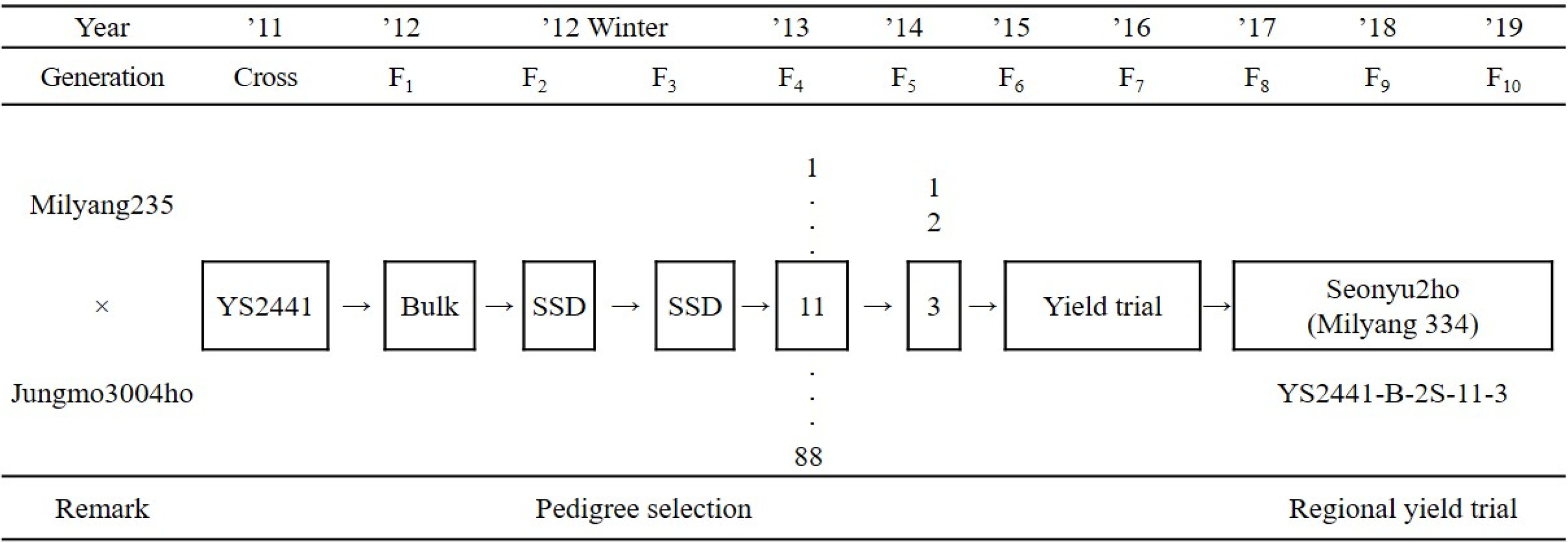
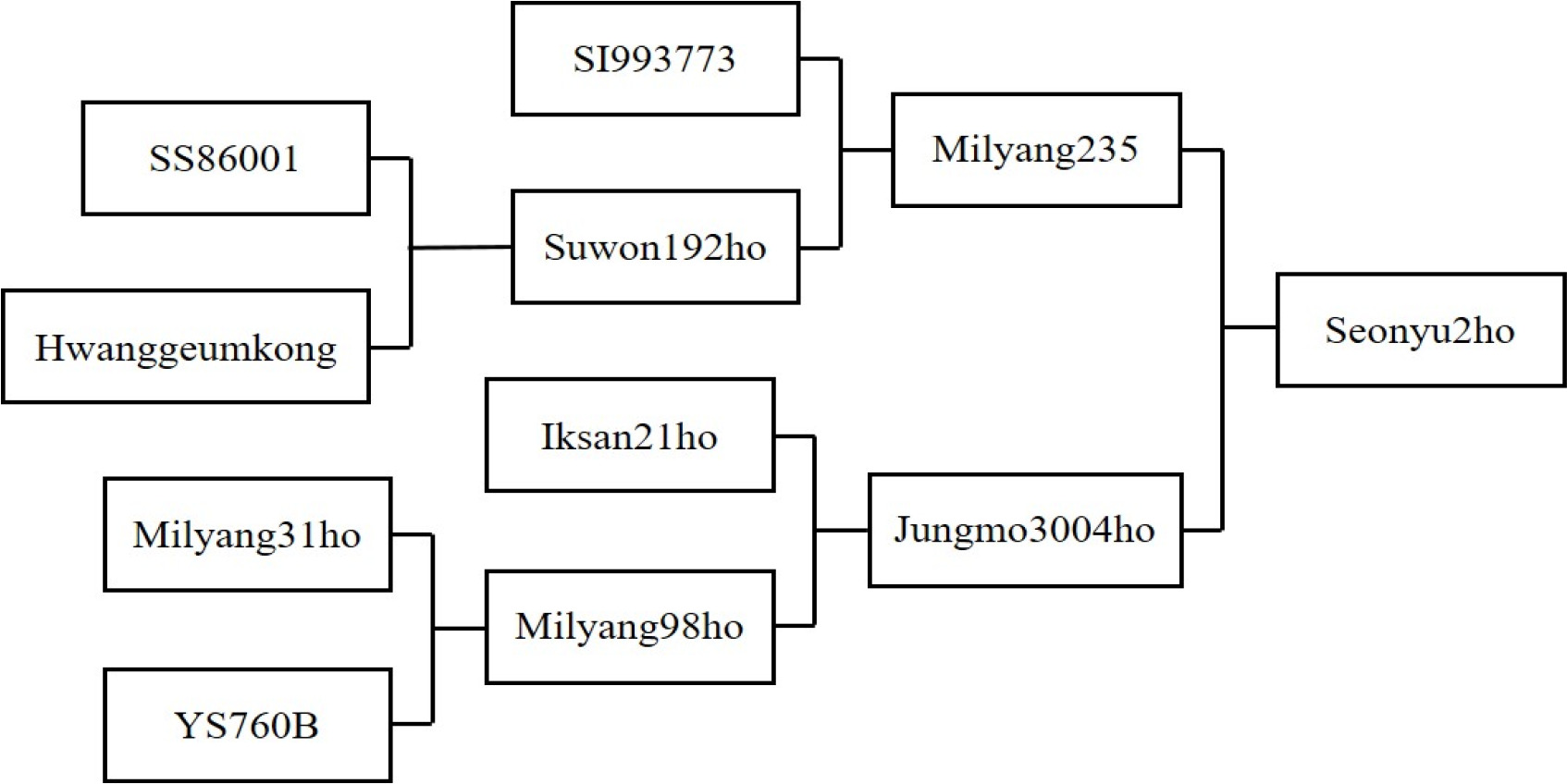
‘선유2호’는 성숙기간이 짧고 대립이면서도 수량성이 높고 내탈립 특성을 가진 콩 품종육성을 목표로 내탈립 조숙 특성의 ‘밀양235호’를 모본으로, 대립이며 수량성이 높은 ‘중모3004호’를 부본으로 2011년 인공교배하여 조합번호 YS2441을 부여하고 '12년 하계 F1 개체 양성, F2~F3세대는 '12년 동계온실에서 1개체1계통법(SSD, Single seed descent)을 통해 세대촉진을 수행하였다. '13년~'14년, F4~F5세대 계통을 전개하여 계통육종법으로 ‘YS2441-B-2G-11-3’ 계통을 선발하였다. '15~'16년, 생산력검정시험을 수행하여 생육기간이 짧고 수량성이 높은 것으로 평가되어 계통명 ’밀양334호‘를 부여하였다. '17~'19년, 3년간 지역적응시험을 통해 균일성과 안정성을 평가한 결과, 준조숙 특성으로 2모작이 가능하고, 내탈립이 높고 대립 다수성으로 인정되어 2019년 12월 농작물직무육성신품종선정위원회에서 신규등록품종으로 결정하고 ‘선유2호’로 명명하였다(
Fig. 1). 계보도를 보면 ‘선유2호’는 모본에 립질이 우수한 ‘황금콩(
Lee et al. 2015)’으로부터 유래한 ‘수원192호’, ‘밀양235호’ 등 성숙기가 빠르고 내탈립 특성의 유전적 배경과 부본에는 ‘밀양31호’로 부터 유래한 ‘밀양98호’, ‘중모3004호’ 등 립중이 굵고 수량성이 높은 유전적 배경을 가진 자원을 교배하여 육성하였다(
Fig. 2).
2015년 생산력검정예비시험(PYT, Preliminary Yield Trial), 2016년 생산력검정본시험(AYT, Advanced Yield Trial)을 대구 달성에 위치한 국립식량과학원 대구시험지에서 수행하였다. 생산력검정예비시험은 파종기 6월 18일, 시험구 면적 8.4 m2, 재식거리 70×15 cm, 1주2본으로 재배되고 난괴법 2반복으로 배치하였다. 생산력검정본시험은 파종기 6월 20일, 시험구 면적 11.2 m2, 재식거리 70×15 cm, 1주2본으로 재배되고 난괴법 3반복으로 배치하였다. 대조품종은 ‘새올콩’으로 농업과학기술 연구조사분석기준에 따라 생육특성과 수량성을 조사하였다(RDA 2012).
만파 적응성 시험
2018년~2019년, 대구 달성에 위치한 국립식량과학원 대구시험지에서 수행하였다. 파종기는 2018년 7월17일, 2019년 7월 15일이며 시험구 면적 생산력검정예비시험은 5.6 m2, 재식거리 70×15 cm, 1주2본으로 재배되고 난괴법 2반복으로 배치하였다. 대조품종은 ‘새올콩’, ‘태광콩’으로 비교하고 주요 생육특성과 수량성을 조사하였다.
지역적응시험
지역적응시험(RYT, Regional Yield Trial)은 경기 수원, 전북 익산, 대구 달성, 경남 진주 등 4개 지역에서 2017년부터 2019년까지 3년간 수행되었다. 재배방법은 시험구 면적 11.2 m2, 재식거리 70×15 cm, 1주2본으로 재배되고 달성과 수원은 난괴법 4반복으로 배치하였으며 익산과 진주는 난괴법 3반복으로 배치하였다. 파종기는 6월 중순으로 설정하였고 농업과학기술 연구조사분석 기준에 따라 생육특성 및 수량성을 조사하고 표준품종인 ‘새올콩’ 및 ‘태광콩’과 비교하였다.
내병성검정
유묘검정은 콩모자이크바이러스(SMV, soybean mosaic virus) 저항성 검정을 위해 각 시험 전년도에 접종 및 증식하여 저온 보관해둔 G6H(
Seo et al. 2009) 균계를 지닌 이병잎을 마쇄하여 2 mole 농도의 인산 나트륨 버퍼에 녹인 후 즙액을 만들어 초생엽 전개 시 철가루(Carborandom)을 이용하여 잎 표면에 상처를 낸 후 접종하였다. 접종 및 2주 후 접종한 하위엽을 조사하고 10일 뒤 상위 엽을 조사하였다. 병반 없음(-), 갈색 병반(L), 엽맥 병반(V), 모자익 증상(M), 고사(N) 5 가지 병징으로 판별 및 조사하였다. 불마름병은 8ra를 증식하여 증류수에 희석하고 OD값 0.2-0.3으로 농도를 희석하여 제 2본엽기에 충분히 분무 접종 및 습식처리 후 10일이 경과하고 2회에 걸쳐 잎에 나타난 병징을 조사하였다. 검은뿌리썩음 병(Root rot)은 과습포장에 재배하여 자연이병 개체수를 조사하여 전 개체수에 대한 백분율로 나타내었다. 종자 이병립율은 시험구에서 임의로 100립을 추출하여 3반복으로 자반병(Purple seed stain,
Cercospora kikuchii), 갈반병(Seed mottling), 미이라병(Phomopsis seed decay,
Phomopsis longicolla) 이병립수를 조사하였다. 콩나방 피해립율(Pod borer damage)은 경기도 연천 콩나방 상습 발병지(경기 연천)에서 피해립율을 조사하였다.
내도복성은 표준재배 및 2배 밀식 검정을 수행하였다. 표준재배는 지역적응시험 시험구에서 도복 정도를 조사하였다. 2배 밀식 재배는 재식거리를 70×7.5 cm, 1주 2본으로 표준재배의 2배로 밀식하여, 시험구 2.8 m2 2반복으로 배치하여 도복 정도를 조사하였다. 도복 정도는 성숙기에 45° 이상 기울어진 개체의 비율로 등급화 하였다. 등급은 ‘0’ 없음, ‘1’ 5% 이하, ‘3’ 6~10%, ‘5’ 11~50%, ‘7’ 51~75%, ‘9’ 76% 이상을 기준으로 조사되었다. 반복 및 연차간 등급을 평균하여 반올림 후 1~9로 최종등급을 표시하였다. 내탈립성은 내도복성 검정 시험구에서 실외검정과 실내검정을 수행하였다. 실외 검정은 수확기 후 꼬투리 터지는 정도를 ‘탈립이 잘 안됨(1)’, ‘보통(5)’, ‘탈립이 잘됨(9)’으로 등급화하여 조사하였다. 실내검정은 성숙한 꼬투리 20개를 성숙기에 채취하여 40℃ 건조기에 48시간 건조 후 벌어진 꼬투리의 수를 조사하고 백분율로 나타내었다.
품질분석
단백질 함량은 질소 분석기(Elementar Analysen system, US/RapidN111, Germany)를 이용하여 분석하였으며 지방함량 및 지방산 조성분석은 자동유지추출장치(Soxhlet System: BUCHI Labotechnik, B-811, AG, Switzerland)에 넣고 n-hexane으로 3시간 열수 추출한 후 지방함량을 구하였다. 그리고 지방산 조성 분석은 가스크로마토그래피(Agilent, GC 7890A, USA)로 분석하였다.
아이소플라본은 성분 분석을 위해 분쇄한 시료 1.0 g을 50% methanol 용액 20 mL에 12시간 실온에서 교반한 뒤 추출액을 여과지(Whatman NO. 2)를 이용하여 여과하였다. 여과된 시료는 다시 HPLC 분석을 위해 0.45 μm 필터를 하였다. 이소플라본 분석은 액체크로마토그래피(Agilent, 1100, USA)로 분석하였다. 아이소플라본은 배당체와 비배당체의 함량을 모두 합하여 표시하였다.
두부⋅청국장 및 메주가공적성 평가
두부는 원료콩 150 g을 10℃에서 15시간 침지 시킨 후 가수량을 13배로 하여 두부제조기(㈜코코, 코코두부제조기-8800)로 가열 및 마쇄하고, 마쇄한 두유와 비지를 여과포에 넣어 한일탈수기로 3분간 탈수하여 두유와 비지를 분리하였다. 분리된 비지는 방냉 후 비지의 무게를 측정하였다. 두유는 황산마그네슘 3 g (2% 수준)을 첨가하고 막대로 약하게 저으며 응고시켰다. 랩을 덮어 10분간 두었다가 응고물은 나무로 된 두부 성형틀에 넣고(12× 10×4 cm) 자체 제작한 압축기(4 psi)로 압착성형을 하였다. 압착된 두부는 냉장상태에서 1시간 방랭 시킨 후 시료 간 온도가 동일하게 한 후 완성된 두부를 시료로 사용하여 물성⋅색차 및 수율을 조사하였다. 물성은 Texture analyzer를 이용하여 탄력성, 검성, 응집성, 씹힘성, 경도를 조사하였다. 두부의 색차는 색차계(Minolta, JP/CM-3700D)를 이용하여 L, a, b값을 측정하였다. 식미검정은 연령이 다양한 15명을 대상으로 외관의 색택과 맛을 1~9점으로 평가하고 평균하였다.
청국장은 원료콩 20g을 15시간 침종 후 121℃에서 15분간 살균하고 청국장 균(bacillus subtilis) 200μl를 접종하여 유산균 발효기(㈜엔유씨전자, NY-3200S)에 치상하였다. 24시간 뒤 끈적임 정도를 ‘대원콩’을 ‘3’으로 하여 1(약)-5(강) 수준으로 평가하고, γ-PGA 함량은 청국장 5g에 증류수 30 ml를 가하여 낟알이 부서지지 않게 저어 추출한 후 15,000×g에서 10분간 원심분리하여 얻은 상층액을 동결 건조하여 중량을 측정하였다.
메주는 원료콩 2 kg을 세척 후 9시간 동안 수침한 후 5분동안 절수하고 115℃에서 40분간 증자하였다. 증자 후 콩을 압력솥에서 꺼낸 후 넓게 펴 식힌 다음 롤러자동형 메주기계(PIKA®)로 마쇄하고 목재 성형틀에 넣어 성형한 후 30±2℃, 70±5% RH의 항온항습실에서 40일 동안 발효시켰다. 발효된 메주는 실외 건조 후 무게를 측정하였다.
결과 및 고찰
고유특성 및 생육특성
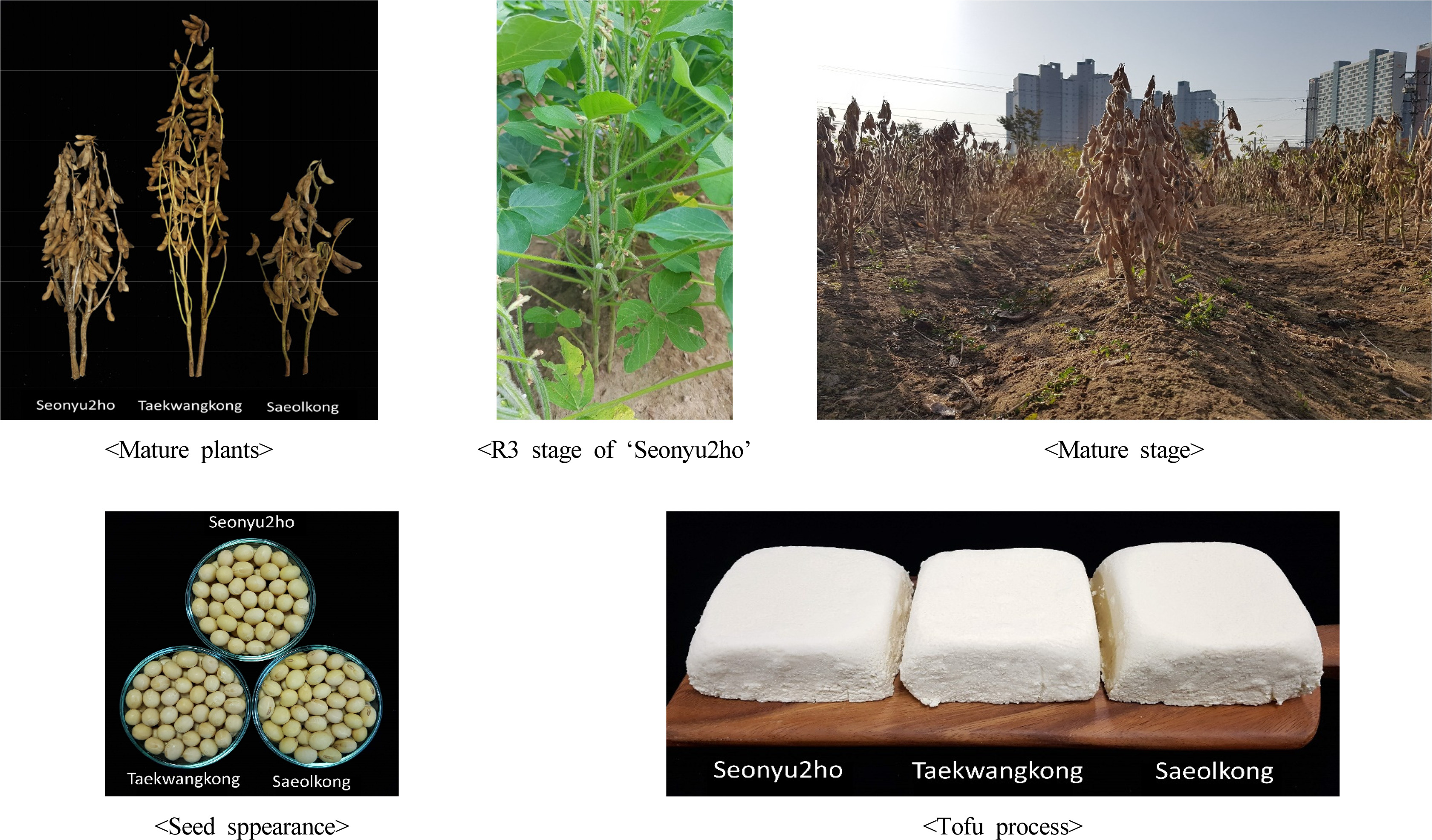
‘선유2호’는 유한신육형이며 엽형은 난형, 화색은 백색, 모용색은 회색, 협색은 담갈색, 종실은 편구형이며 종피색과 배꼽색은 황색이다(
Table 1). 개화기는 7월 28일, 성숙기는 10월 5일로 ‘새올콩(
Lee et al. 2015)’ 대비 각각 3일, 6일 늦고, ‘태광콩’ 대비 각각 3일, 6일 빠르다. 경장은 49 cm, 착협고는 12 cm, 마디수는 11개, 분지수는 3.0개였다. 수량구성요소인 협수는 39개, 협당립수는 1.9개, 100립중은 27.9 g으로 대립 특성의 품종이다(
Table 2,
Fig. 3). ‘선유2호’는 장타원형의 초형을 나타내는 품종으로 경장이 작아 쓰러짐에 강하고 분지가 많아 협수 확보의 잠재성이 높고 종실이 굵어 생육기간이 짧은 편이지만 수량성은 높은 특성을 나타낸다. 특히, 2모작용 콩은 전 작물의 수확 후 작물 간, 노동 투입 시기 간 경합이 일어나 6월 15일~30일 경의 적기 파종기를 놓지고 7월 초~중순으로 파종이 지연되는 경우가 있고 2모작 콩 재배 시 문제점이 된다. 7월 중순 경 파종한 만파 시험 결과 ‘선유2호’는 개화기 8월 16일, 성숙기 10월 19일로 ‘태광콩’ 대비 각각 2일, 1일 빠르고, ‘새올콩’ 대비 각각 3일, 12일 늦어, 10월 20일 경으로 잡히는 초상일 안에 수확할 수 있을 것으로 생각된다. 경장은 41 cm, 착협고는 12 cm, 마디수는 9개, 분지수는 2.4개로 적파 대비 경장이 8 cm, 마디수 2개, 분지수 0.6개 감소되었다. 협수는 37개, 100립중은 29.4 g, 수량성은 263 kg/10a로 평가되어 수량 감소정도가 21%로 ‘태광콩’ 24% 대비 3% 포인트 낮아 만파에 따른 수량성 감소율이 낮아 만파 적응성이 상대적으로 우수하다고 볼 수 있다. 또한, 만파 시 재식밀도를 높여 수량성을 더 확보할 수 있을 것으로 생각된다(
Table 3). ‘선유2호’의 생육기간은 수원 지역 111일, 달성 지역 105일, 익산 지역 122일, 진주 지역 110일로 평균 112일이며 밀, 보리, 양파, 한지형 마늘과 2모작 작부체계가 가능하다. 주로 경남지역과 전남지역에서 주로 재배중인 ‘태광콩’은 평균 118일로 평가 지역에 따라 3일에서 10일 늦다. 2모작 콩 표준품종인 ‘새올콩’은 평균 106일로 평가 지역에 따라 2일에서 15일 빠르다(
Table 4).
‘선유2호’는 시험포장에서 내도복성이 ‘1’로 평가되었고 2배 밀식재배에서 ‘2’로 평가되어 쓰러짐게 강한 특성을 나타냈다. 내탈립 검정 시 ‘선유2호’는 포장에서 ‘1’로 평가되어 ‘2’로 평가된 ‘태광콩’, ‘7’로 평가된 ‘새올콩’ 대비 포장 내탈립성이 강했으며, 건조기를 이용한 실내검정에서도 0.4%로 54.6%로 평가된 ‘태광콩’, 92.5%로 평가된 ‘새올콩’ 대비 내탈립성이 강했다. ‘선유2호’는
qPDH1-KS 연관 내탈립 분자마커 검정 결과 내탈립성 유전형을 나타내었고, ‘태광콩’과 ‘새올콩’은 감수성 유전형을 나타냈다(
Lee et al. 2017). 기존 단기성 콩 품종을 보면, ‘황금올’, ‘참올’, ‘두루올’, ‘선유’ 등 내탈립성이 약해 농가 재배 시 문제점이었으나 ‘선유2호’는 내탈립성 유전자를 포함하여 기존의 문제점을 개선할 수 있는 품종이다(
Table 5).
불마름병 검정결과 시험포장 검정에서는 ‘1’로 평가되어 강한 저항성을 나타내었으며, 유묘접종 검정에서는 ‘3’으로 평가되어 ‘4’로 평가된 ‘태광콩’과 ‘새올콩’ 대비 저항성이 강하였다. 과습포장의 검은뿌리썩음병 발병율은 0.0%로 나타났다. 콩모자이크바이러스 검정결과 G6H 유묘검정에서는 접종엽 국부 고사(Local necrosis) 증상이 나타났고 상위엽에 모자이크(Mosaic) 증상이 나타났다. 상위엽 고사 증상이 나타난 ‘태광콩’과 병징이 다르게 나타났다. 포장검정에서는 ‘2’로 평가되어 각각 ‘3’과 ‘5’로 평가된 ‘태광콩’과 ‘새올콩’보다 저항성이 높았다. 종실 이병립 조사 결과는 자주빛무늬병이 2.8%, 갈반병이 0.5%, 미이라병이 0.4%로 조사되어 전체 이병립율 3.7%로 ‘태광콩(3.3%)’ 보다는 높고 ‘새올콩(4.8%)’ 보다는 낮았다(
Table 6).
‘선유2호’의 단백질 함량은 40.2%, 지방함량은 19.2%, 포화지방산은 15.9%, 불포화 지방산은 84.1%로 단백질 함량과 지방 함량은 ‘새올콩’ 대비 각각 낮고, 높았다. ‘태광콩’과는 단백질 함량과 지방 함량에 통계적 차이가 없었으나, 포화지방산 함량은 높고, 불포화지방산은 낮은 것으로 분석되었다. 이소플라본 함량은 2,199 μg/g으로 1,495 μg/g인 ‘태광콩’, 1,366 μg/g인 ‘새올콩’ 등 기존 단기성 콩의 이소플라본 함량이 낮은 것과 비교 시 높은 함량을 나타내었다(
Table 7).
두부가공적성 평가결과 두부수율은 217%, 비지수율은 128%로 ‘태광콩’ 대비 두부 수율이 9% 포인트 높고 ‘새올콩’ 대비 20% 포인트 낮았다. 두부의 색차는 밝기(L)가 90 초록~빨강색(a)값이 1.0, 파랑~노랑색(b)값이 16.7로 ‘태광콩’과
ΔE값은 0.4로 미약한 차이가 있었고, ‘새올콩’과
ΔE값은 1.7로 인지 할 만한 시각적 차이가 나타났다. 두부의 물리적 특성의 검정 결과 탄력성은 0.91, 검성은 1,891, 응집성은 0.82, 씹힘성은 1,658, 경도는 2,210 g/3.14mm
2로 ‘태광콩’보다는 부드럽고 ‘새올콩’보다는 단단한 특성을 나타내었다. 연령이 서로 다른 표본 15명의 식미검정 결과 두부 색, 질감 등 외관은 ‘선유2호’가 6.4점으로 ‘태광콩’ 5.5점, ‘새올콩’ 5.3점 대비 가장 높았고, 맛을 포함한 총평은 ‘선유2호’가 5.3점으로 ‘태광콩’ 4.8점 보다 높고 ‘새올콩’ 5.6점 보다 낮았다(
Table 8).
장류 가공적성 검정결과, 메주 수율은 84%로 ‘태광콩’ 82% 보다 높고 ‘새올콩’ 85% 보다 낮았다. 청국장 발효 적성은 수율 205%로 ‘태광콩’ 208%, ‘새올콩’ 216% 보다 낮았으며, 끈적임 정도는 ‘3’으로 보통 수준이었다. γ-PGA가 30.9 mg/g으로 ‘태광콩’ 26.4 mg/g보다 높고 ‘새올콩’ 43.1 mg/g보다 낮았다(
Table 9).
‘선유2호’은 2017년~2019년 4개소에서 실시한 지역적응시험 결과 전국 평균 3.34 ton/ha로 ‘새올콩’ 2.25 ton/ha대비 48% 증수되었고, ‘태광콩’ 3.12 ton/ha대비 7% 증수되어 각 평가 지역 모두 높았다(
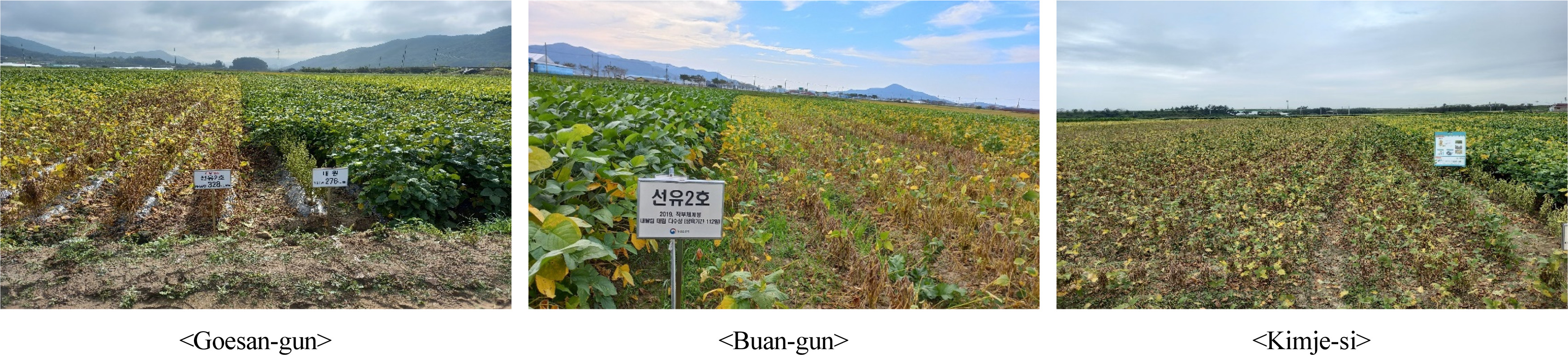
Table 10). 2021년 4지역에서 수행된 농가현장실증시험에서는 전북 부안에서 3.39 ton/ha, 전북 김제에서 3.06 ton/ha, 경남 합천에서 3.77 ton/ha, 충북 괴산에서 3.28 ton/ha로 지역과 파종기 및 재배양식이 서로 달랐으나 수량성이 3 ton/ha 이상 생산되는 것을 확인하였으며, 쓰러짐에 강하고 성숙기가 10월 초순으로 2모작 재배에 용이한 것으로 나타났다(
Fig. 4). 실증시험은 논 조건에서 수행되어 논 재배 상에도 특이한 문제점은 발견되지 않았다(
Table 11).
‘선유2호’는 생육기간이 일반 품종인 ‘대원콩’ 대비 약 15~20일 짧아 2모작에 용이한 품종이다. 그러나 생육기간이 약 112일 경으로 밀, 보리, 양파, 한지형 마늘 등 동계작물과 재배 가능하나 난지형 마늘 등 9월 하순에 정식해야 하는 동계작물과는 맞지 않으며, 해당 지역의 동계작물 정식 및 수확 시기와 ‘선유2호’의 생육기간을 고려하여 재배해야 한다. ‘선유2호’는 단기성 콩의 문제점 중 하나인 자주빛무늬병 발생율이 기존 ‘새올콩’ 대비 개선되었으나 ‘대원콩’이나 ‘태광콩’ 대비 높기 때문에 적기에 살균제 처리를 통해 예방할 수 있도록 관리되어야 한다. 만생종 품종과 함께 재배하는 경우 방제가 적기에 되지 않는 경우 노린재와 이병이 생육이 빠른 콩에 먼저 영향을 주므로 꼬투리 피해, 립 형성 지연, 성숙 지연 등 피해가 나타날 수 있음으로 재배 시 유의해야 한다. ‘선유2호’는 경장이 짧고 착협고가 12 cm 수준이며, 쓰러짐에 강한 특성이 있음으로, 기계수확을 위해 다소 밀식재배를 통해 경장과 착협고 향상과 수량성 증대를 유도할 수 있을 것으로 생각됨으로, 재식 밀도에 관한 추가시험이 필요할 것으로 생각된다.
적 요
‘선유2호’는 콩 자급률 향상을 위한 재배면적 확대 측면에서 2모작이 가능하고 수량성이 높은 특성으로 유망한 품종이다. ‘밀양235호’를 모본, ‘중모3004호’를 부본으로 2011년 인공교배하여 동계온실 이용 세대단축과 계통육종법에 의해 설발하였다. 2017~2019년 4개소 지역적응시험에서 생육기간이 짧고 대립이며 수량성이 높고 내탈립성이 개선되어 직무육성신품종심의위원회를 거쳐 품종으로 출원되었다. ‘선유2호’는 유한신육형, 잎은 난형, 화색은 백색, 모용색은 회색, 협색은 담갈색, 종피와 제색은 황색, 종실은 편구형인 장류 및 두부용 콩 품종이다. 개화기는 7월 28일, 성숙기는 10월 5일, 생육일수 112일, 경장은 49 cm, 착협고는 12 cm, 마디수는 11개, 분지수는 3.0개, 협수는 39개, 협당립수는 1.9개, 100립중은 27.9 g으로 대립특성을 가지고 있다. 만파 시 수량 감소율이 21% 수준으로 대조품종 대비 만파적응성이 높다. ‘선유2호’는 쓰러짐이 강하고 협개열성이 0.4% 수준으로 qPDH-KS 연관 분자마커 검정결과에서도 내탈립 유전형을 가지고 있어 재배 안정성이 우수한 특성을 나타내었다. 불마름병과 콩모자이크바이러스는 포장과 유묘검정에서 저항성이 대조품종 대비 우수하거나 유사한 특성을 나타내었다. 이병립율은 3.7% 수준으로 일반 콩 대비 높으나 기존 단기성 콩 대비 낮은 수준이다. ‘선유2호’의 종실 품질은 단백질 40.2%, 지방 19.2%로 일반적인 수준이며 이소플라본 함량은 2,199 μg/g로 일반적인 단기성 콩 대비 높은 수준이다. 두부 가공적성 평가 결과 수율이 217%로 높고 단단한 특성을 나타내었으며 장류 발효적성은 일반적인 수준이었다. ‘선유2호’의 수량성은 3.34 ton/ha로 ‘태광콩’ 대비 7%, ‘새올콩’ 대비 48% 높게 평가되었으며, 농가현장실증시험에서도 3.06~3.77 ton/ha로 3 ton/ha 이상 생산되는 것으로 평가된 다수성 품종이다.
사 사
본 연구는 농촌진흥청 연구사업(과제명: 콩 가공적성 및 기능성 향상 신품종 육성, 과제번호: PJ01483901)의 지원에 의해 수행되었다.
Fig. 1Pedigree diagram of 'Seonyu2ho'.
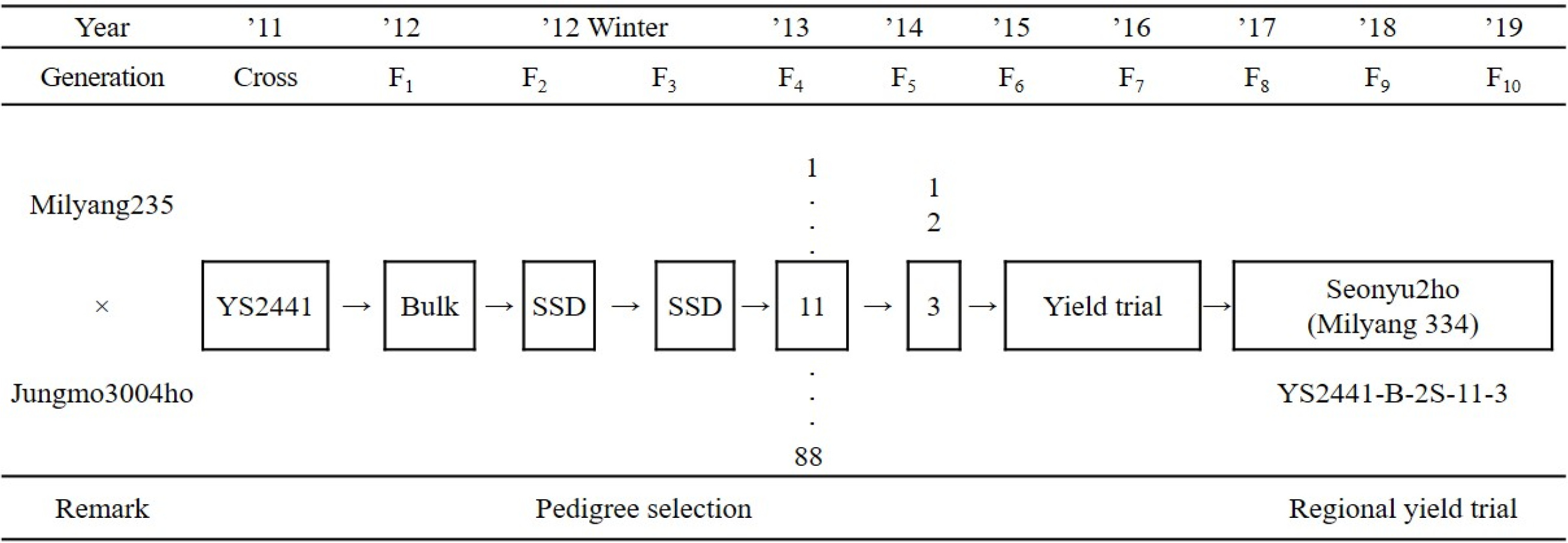
Fig. 2
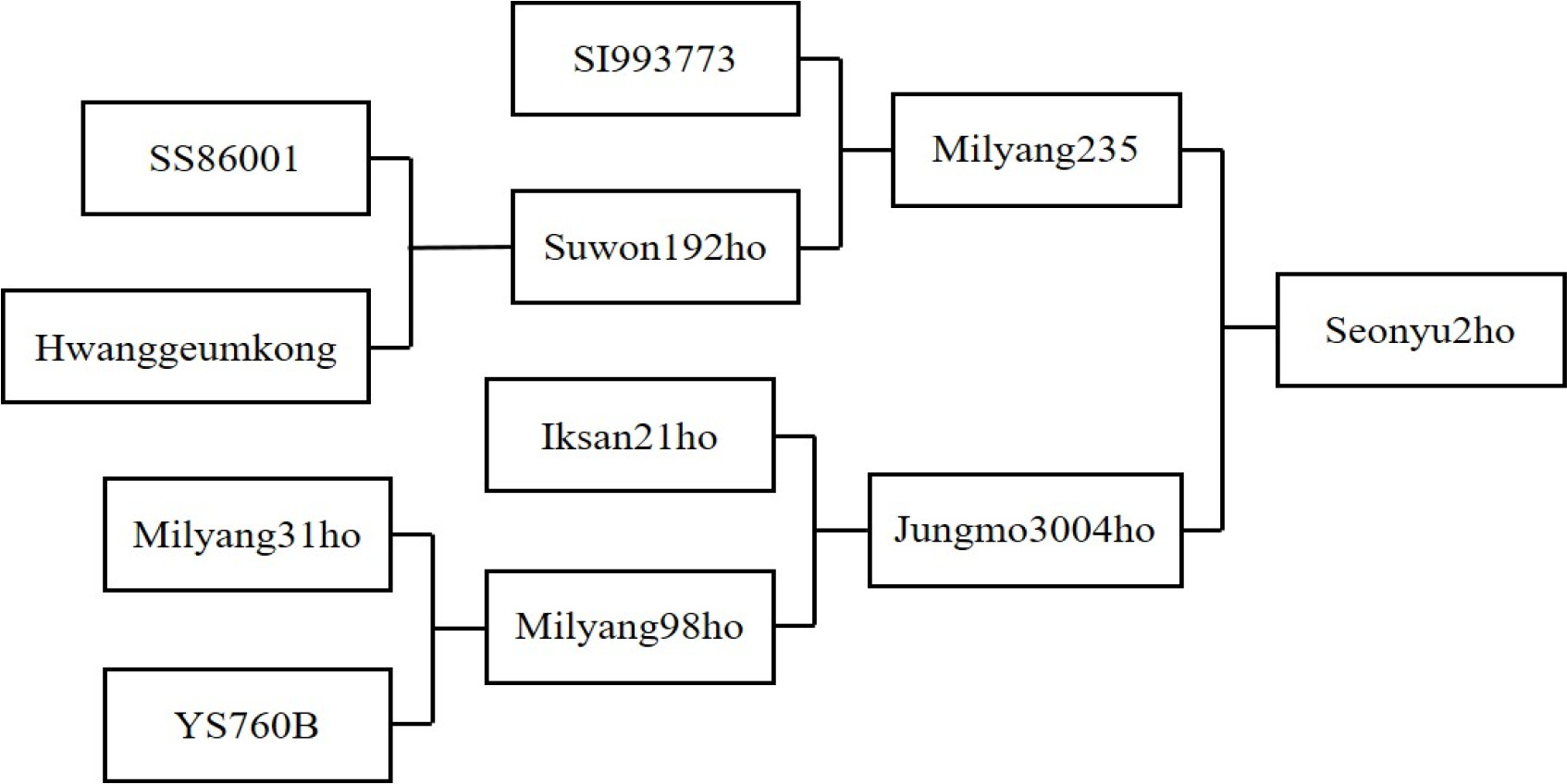
Fig. 3Characteristics for appearance of ‘Seonyu2ho’.
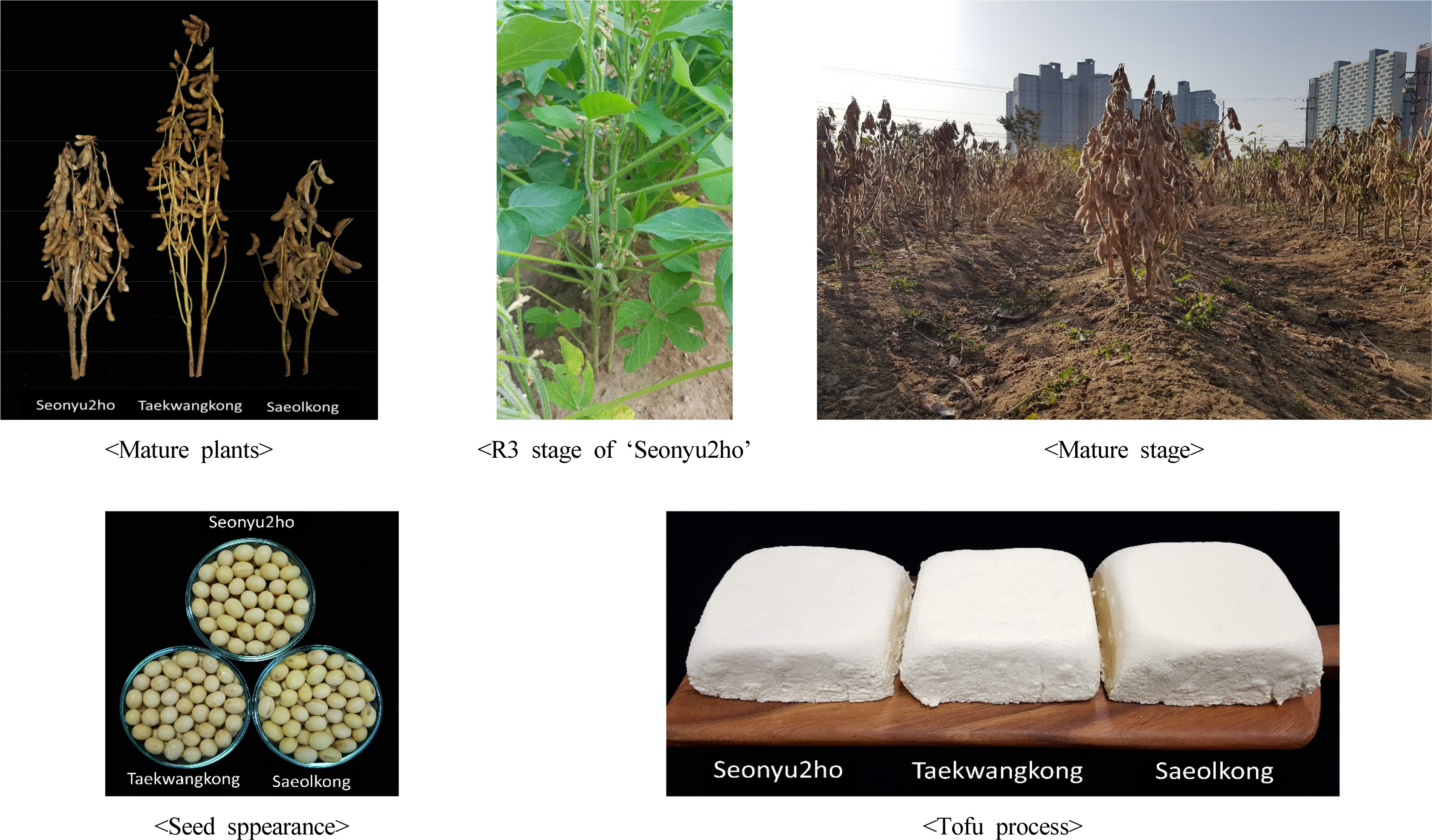
Fig. 4Field application and maturing characteristics of ‘Seonyu2ho’ compared to long-day growing cultivar.
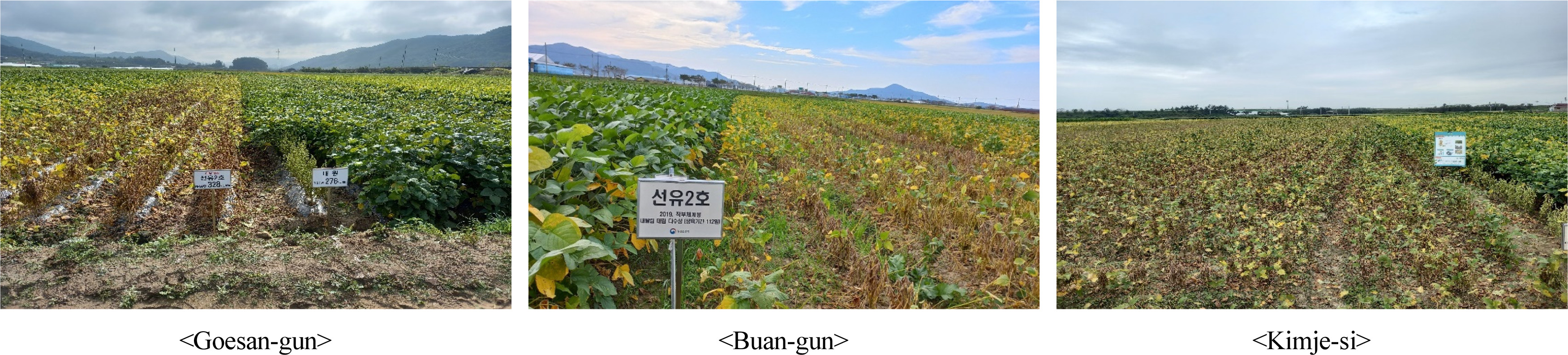
Table 1Qualitative characteristics of ‘Seonyu2ho’.
Table 1
|
Cultivar |
Growth type |
Leaflet shape |
Flower color |
Pubescence color |
Pod color |
Seed coat color |
Hilum color |
Seed shape |
|
Seonyu2ho |
Determinate |
Oval |
White |
Grey |
Yellowish brown |
Yellow |
Yellow |
Spherical flattened |
|
Taekwangkong |
Determinate |
Oval |
Purple |
Grey |
Yellowish brown |
Yellow |
Yellow |
Spherical |
|
Saeolkong |
Determinate |
Oval |
White |
Grey |
Yellowish brown |
Yellow |
Light brown |
Spherical flattened |
Table 2Quantitative characteristics of ‘Seonyu2ho’ determined by regional yield trial from 2017 to 2019.
Table 2
|
Cultivar |
Flowering date |
Maturity date |
Stem height (cm) |
First pod height (cm) |
No. of nods |
No. of branch |
No. of pods
per plant |
No. of seeds per pod |
Weight per 100 seeds (g) |
|
Seonyu2ho |
July 28 |
Oct 5 |
49b |
12ab |
11a |
3.0ab |
39a |
1.9a |
27.9ab |
|
Taekwangkong |
July 31 |
Oct 11 |
63a |
15a |
13a |
3.8a |
42a |
2.0a |
26.4b |
|
Saeolkong |
July 25 |
Sep 29 |
45b |
9b |
10a |
2.2b |
31b |
2.0a |
29.2a |
Table 3Quantitative characteristics of ‘Seonyu2ho’ by late-seeded trial in Dalseong area from 2018 to 2019.
Table 3
|
Cultivar |
Flowering
date |
Maturity
date |
Stem height
(cm) |
First pod height (cm) |
No. of
nods |
No. of
branches |
No. of
pods
per plant |
Weight per 100 seeds (g) |
Yield
(kg/10a) |
|
Seonyu2ho |
Aug 16 |
Oct 19 |
41c |
12b |
9c |
2.4a |
37b |
29.4a |
263a |
|
Taekwangkong |
Aug 18 |
Oct 20 |
53a |
16a |
12a |
3.6a |
50a |
23.7b |
232a |
|
Saeolkong |
Aug 13 |
Oct 7 |
46b |
14ab |
10b |
2.3a |
28c |
29.6a |
205a |
Table 4Maturing date and growing days of ‘Seonyu2ho’ compared to ‘Taekwangkong’ and ‘Saeolkong’ on the regional yield trials carried out at 4 locations.
Table 4
|
Location |
Seonyu2ho |
|
Taekwangkong |
|
Saeolkong |
|
2017 |
2018 |
2019 |
Mean |
Days from planting to maturity |
|
2017 |
2018 |
2019 |
Mean |
Days from planting to maturity |
|
2017 |
2018 |
2019 |
Mean |
Days from planting to maturity |
|
Suwon |
Sept.25 |
Sept.29 |
Oct. 2 |
Sept.28 |
111 |
|
Sept.28 |
Oct.16 |
Oct.11 |
Oct. 8 |
121 |
|
Sept.17 |
Oct. 6 |
Sept.25 |
Sept.26 |
108 |
|
Dalseong |
Sept.29 |
Oct. 5 |
Oct. 4 |
Oct. 2 |
105 |
|
Sept.24 |
Oct.11 |
Oct.14 |
Oct. 6 |
108 |
|
Sept.23 |
Oct.10 |
Sept.30 |
Oct. 1 |
103 |
|
Iksan |
Oct.11 |
Oct.12 |
Oct.25 |
Oct.16 |
122 |
|
Oct.22 |
Oct.13 |
Oct.25 |
Oct.20 |
126 |
|
Sept.25 |
Sept.30 |
Oct. 7 |
Sept.30 |
107 |
|
Jinju |
Sept.27 |
Oct. 5 |
Oct.14 |
Oct. 5 |
110 |
|
Sept.28 |
Oct. 9 |
Oct.27 |
Oct.11 |
116 |
|
Sept.23 |
Sept.29 |
Oct. 6 |
Sept.29 |
104 |
|
Mean |
Sept.30 |
Oct. 5 |
Oct.11 |
Oct. 5 |
112 |
|
Oct. 3 |
Oct.12 |
Oct.16 |
Oct.11 |
118 |
|
Sept.22 |
Oct. 3 |
Oct. 2 |
Sept.29 |
106 |
|
t-value(p=0.05)
|
|
|
|
|
|
|
|
|
|
|
-0.99ns
|
|
|
|
|
|
1.22ns
|
Table 5The response of ‘Soenyu2ho’ to lodging and shattering resistance estimated from 2017 to 2019.
Table 5
|
Cultivar |
Lodging at field (1-9)x
|
|
Shattering |
|
Normal culture |
Density culture |
|
Field(1-9)y
|
Ratios by oven test(%)z
|
qPDH1-KS
|
|
Seonyu2ho |
1 |
2 |
|
1 |
0.4 |
Resistant |
|
Taekwangkong |
1 |
3 |
|
2 |
54.6 |
Susceptible |
|
Saeolkong |
1 |
3 |
|
7 |
92.5 |
Susceptible |
Table 6The resistance of ‘Seonyu2ho’ to the diseases of soybean estimated from 2017 to 2019.
Table 6
|
Cultivar |
Bacterial pustule (0-9)x
|
Root rot (%) |
Soybean mosaic virus |
|
Percentages of damaged seed(%) |
Field
|
Inoculationy
|
Inoculationz
|
Field
(0-9) |
Purple seed stain |
Seed spot |
Phomopsis |
Total |
|
G6H |
|
Seonyu2ho |
1 |
3 |
0.0 |
L-N / M |
2 |
|
2.8 |
0.5 |
0.4 |
3.7 |
|
Taekwangkong |
2 |
4 |
0.0 |
L-N / N |
3 |
|
1.9 |
0.8 |
0.6 |
3.3 |
|
Saeolkong |
1 |
4 |
0.0 |
L / M |
5 |
|
3.6 |
1.0 |
0.2 |
4.8 |
Table 7Major chemical components of seed in ‘Seonyu2ho’ estimated from 2017 to 2019.
Table 7
|
Cultivar |
Crude protein
(%) |
Crude oil
(%) |
Fatty acids (%) |
Isoflavone (μg/g) |
|
Saturated |
Unsaturated |
|
Seonyu2ho |
40.2b |
19.2a |
15.9a |
84.1b |
2,199a |
|
Taekwangkong |
39.1b |
17.6ab |
13.3b |
86.7a |
1,495a |
|
Saeolkong |
43.8a |
16.7b |
14.5ab |
85.5ab |
1,366a |
Table 8Evaluation of tofu characteristics of ‘Seonyu2ho’.
Table 8
|
Cultivar |
Yield
(%)x
|
Bean curd
residue
(%) |
Color valuey
|
|
Physical characteristics |
|
Flavor testz
|
|
L |
a |
b |
ΔE |
|
Elasticity |
Gum |
Cohesiveness |
Adhesiveness |
Hardness (g/3.14mm2) |
|
Appearance |
Total |
|
Seonyu2ho |
217 |
128 |
90 |
1.0 |
16.7 |
|
|
0.91 |
1,891 |
0.82 |
1,658 |
2,210 |
|
6.4 |
5.3 |
|
Taekwangkong |
208 |
142 |
90 |
0.6 |
16.7 |
0.4 |
|
0.93 |
1,922 |
0.83 |
1,779 |
2,321 |
|
5.5 |
4.8 |
|
Saeolkong |
247 |
118 |
90 |
0.7 |
18.4 |
1.7 |
|
0.90 |
1,547 |
0.83 |
1,394 |
1,852 |
|
5.3 |
5.6 |
Table 9Meju (Soybean malt) and Cheonggukjang (fermented soybean) process ability of ‘Seonyu2ho’.
Table 9
|
Cultivar |
Meju yield (%)x
|
Cheonggukjang (Fermented soybean) |
|
Yield (%) |
Degree of fermentation (1-5)y
|
γ-PGA (mg/g)z
|
|
Seonyu2ho |
84 |
205 |
3 |
30.9 |
|
Taekwangkong |
82 |
208 |
3 |
26.4 |
|
Saeolkong |
85 |
216 |
4 |
43.1 |
Table 10Yield of ‘Seonyu2ho’ compared to ‘Taekwangkong’ and ‘Saeolkong’ on the regional yield trials in 4 locations from 2017 to 2019.
Table 10
|
Location |
Seonyu2ho (ton/ha) |
|
Taekwangkong (ton/ha) |
|
Saeolkong (ton/ha) |
|
2017 |
2018 |
2019 |
Mean |
Index |
|
2017 |
2018 |
2019 |
Mean |
|
2017 |
2018 |
2019 |
Mean |
|
Taekwangkong |
Saeolkong |
|
|
Suwon |
3.45 |
4.24 |
3.29 |
3.66 |
103
|
145
|
|
3.55 |
3.88 |
3.21 |
3.55 |
|
2.57 |
2.30 |
2.72 |
2.53 |
|
Dalseong |
3.72 |
3.25 |
2.96 |
3.31 |
108
|
164
|
|
3.46 |
2.56 |
3.16 |
3.06 |
|
2.69 |
1.54 |
1.83 |
2.02 |
|
Iksan |
3.46 |
2.57 |
2.62 |
2.88 |
103
|
132
|
|
2.88 |
2.91 |
2.58 |
2.79 |
|
2.16 |
2.04 |
2.33 |
2.18 |
|
Jinju |
3.40 |
3.55 |
3.55 |
3.50 |
113
|
153
|
|
3.14 |
3.34 |
2.80 |
3.09 |
|
2.51 |
2.02 |
2.34 |
2.29 |
|
Mean |
3.51 |
3.40 |
3.10 |
3.34 |
107
|
148
|
|
3.26 |
3.17 |
2.94 |
3.12 |
|
2.48 |
1.98 |
2.31 |
2.25 |
|
t-value |
|
|
|
|
|
|
|
|
|
|
1.23ns
|
|
|
|
|
6.45***
|
Table 11Farm field application of ‘Seonyu2ho’ in 4 regions in 2021.
Table 11
|
Region |
Soil type |
Seeding date(Month. Day) |
Planting distance |
No. of plants per hole |
Cropping type (Crop) |
Yield(kg/10a) |
Index |
|
Seonyu2ho |
Taekwangkong |
|
Jeollabuk-do Buan-gun |
Paddy |
June 23 |
70×30 cm |
4.5 |
Double (Wheat) |
339 |
246 |
138
|
|
Jeollabuk-do Kimje-si |
Paddy |
June 25 |
70×28 cm |
3.5 |
Double (Wheat) |
306 |
158z
|
194
|
|
Kyeongsangnam-do Hapcheon-gun |
Paddy |
July 14 |
60×20 cm |
3.5 |
Double (Onion) |
377 |
273 |
138
|
|
Choongcheongbuk-doGoesan-gun |
Paddy |
June 14 |
90×30 cm |
3.5 |
Mono |
328 |
- |
- |
References
- 1. Funatsuki H, Suzuki M, Hirose A, Inaba H, Yamada T, Hajika M, Komatsu K, Katayama T, Sayama T, Ishimoto M, Fujino K. 2014. Molecular basis of a shattering resistance boosting global dissemination of soybean. PNAS 111: 17797-17802. https://www.pnas.org/cgi/doi/10.1073/pnas.1417282111.
- 2. Ko JM, Kim HT, Han WY, Baek IY, Yun HT, Lee YH, Lee BW, Jeong CS, Ha TJ, Shin SO, Park CH, Kim HS, Seo JH, Kang BK, Seo MJ, Choi KH, Shin JH, Kwak DY. 2018. 'Chamol', an early maturing, high yield, and large-seed soybean cultivar for double cropping. Korean J Breed Sci 50: 478-484. https://doi.org/10.9787/KJBS.2018.50.4.478.
- 3. Ko JM, Baek IY, Han WY, Lee BW, Lee YH, Shin SO, Kang BK, Kim HT, Ha TJ, Moon JK, Lee SK, Choi KH, Kang DS, Kim ST, Kim YD. 2016. Early maturing soybean cultivar, 'Hwangkeumol' with high yield and suitable for double cropping system. Korean J Breed Sci 48: 307-312. https://doi.org/10.9787/KJBS.2016.48.3.307.
- 4. Lee C, Choi MS, Kim HT, Yun HT, Lee B, Chung YS, Kim RW, Choi HK. 2015. Soybean [Glycine max (L.) Merrill]: Importance as a crop and pedigree reconstruction of Korean varieties. Plant Breed Biotech 3: 179-196. https://doi.org/10.9787/PBB.2015.3.3.179.
- 5. Lee JS, Kim KR, Ha BK, Kang ST. 2017. Identification of SNPs tightly linked to the QTL for pod shattering in soybean. Mol Breeding 37: 54. http://10.1007/s11032-017-0656-2.
- 6. Ministry of agriculture, food and rural affairs(MAFRA).2016. A food policy 2016-2020.
- 7. Rural Development Administration (RDA).2012. Agricultural science technology research analysis standard. 5th ed. pp. 429-430.
- 8. Seo JK, Ohshima K, Lee HG, Son M, Choi HS, Lee SH, Sohn SH, Kim KH. 2009. Molecular variability and genetic structure of the population of soybean mosaic virus based on the analysis of complete genome sequence. Virology 393: 91-103.
- 9. Samanfar B, Molnar SJ, Charette M, Schoenrock A, Dehne F, Golshani A, Belzile F, Cober ER. 2016. Mapping and identification of a potential candidate gene for a novel maturity locus, E10, in soybean. Theor Appl Genet 130: 377-390. https://doi /10.1007/s00122-016-2819-7.
- 10. Yang W, Wu T, Zhang X, Song W, Xu C, Sun S, Hou W, Jiang B, Han T, Wu C. 2019. Critical photoperiod measurement of soybean genotypes in different maturity groups. Crops Sci 59: 2055-2061. https://doi/10.2135/cropsci2019.03.0170.
- 11. Zhang Q, Tu B, Liu C, Liu X. 2018. Pod anatomy, morphology and dehiscing forces in pod dehiscence of soybean (Glycine max (L.) Merrill). Flora 248: 48-53. https://doi.org/10.1016/j-flora.2018.08.014.