

Skip to main navigation Skip to main content

Korean. J. Breed. Sci. : Korean Journal of Breeding Science

OPEN ACCESS
ABOUT
BROWSE ARTICLES
EDITORIAL POLICIES
FOR CONTRIBUTORS

Articles

ARTICLE

완전미 도정수율이 높은 조생 고품질 벼 ‘온다미’

A Early-Maturing Rice Cultivar with High-Quality and Head Rice Milling Recovery Ratio, ‘Ondami’

Korean Journal of Breeding Science 2015;47(4):448-453.
Published online: November 30, 2015

1 국립식량과학원

1 National Institute of Crop Science, RDA, Wanju 55365, Republic of Korea

2 농촌진흥청

2 Rural Development Administration, Jeonju 54875, Republic of Korea

*Corresponding author (biocheman@korea.kr, Tel: +82-54-533-0465, Fax: +82-54-533-7773)
• Received: October 19, 2015   • Revised: October 28, 2015   • Accepted: October 28, 2015

© Korean Society of Breeding Science All rights reserved

This is an Open-Access article distributed under the terms of the Creative Commons Attribution Non-Commercial License (http://creativecommons.org/licenses/by-nc/3.0) which permits unrestricted non-commercial use, distribution, and reproduction in any medium, provided the original work is properly cited.

  • 7 Views
  • 0 Download
prev next
  • ‘Ondami’, a japonica rice cultivar developed from a cross between Hitomebore having a high grain quality and Sangju27 adaptable to southern mid-mountainous area was developed by the rice breeding team of Sangju Substation, NICS, RDA in 2013. The heading date of ‘Ondami’ is july 27 which is same with ‘Odae’ in Southern mid-mountainous area, mid mountainous, southern alpine area and north-east coastal area of South Korea. ‘Ondami’ has 70cm culm length, 19cm panicle length which is 2cm shorter than those of ‘Odae’ and 78 spikelets per panicle. In reaction to biotic and abiotic stresses, it shows strong resistance to blast, but is susceptible to bacterial blight, virus diseases, and insect pests. The milled rice of ‘Ondami’ exhibits translucent and, relatively clear non-glutinous endosperm, and medium short grain shape. This variety has a higher head rice milling recovery ratio(73.1%) and lower amylose content(18.8%) than that of ‘Odae’. The milled rice yield performance of this variety was about 5.29 MT/ha in ordinary cultivation of local adaptability test for three years. ‘Ondami’ could be adaptable to Southern mid-mountainous area, mid mountainous, southern alpine area and north-east coastal area of South Korea.
최근 쌀농업을 둘러싸고 생산, 소비, 가격, 개방화, 정책 등 에서 많은 변화가 나타나고 있다. 우리 농가의 주소득원인 쌀 은 1995년 이후 DDA와 FTA 협상체결의 확대로 시장 개방 이 확대되고 있을 뿐만 아니라, 재배기상환경의 잦은 변화 (Heo & Lee 2006)로 인해 풍작과 흉작을 반복하며 농민들은 기상에 좌우되어 안정적인 소득을 얻지 못하는 경우가 발생 하고 있다. 여기에 더하여 식생활의 서구화와 다양한 먹거리 등장에 따라 1인당 연간 쌀 소비량은 2014년 기준 65.1 kg으로 1970년(136.4 kg)의 절반수준으로 감소하였다(Kim 2011). 쌀소비가 계속해서 줄면서 쌀 재고량의 적정 수준을 맞추기 위해 다수확 품종의 재배를 지양하며 적정 수준의 수량을 갖 춘 고품질 품종의 재배를 권장하는 추세이다.
2014년 우리나라의 생태형별 벼 재배면적은 조생종 11.8%, 중생종 5.2%, 중만생종 83.0%로, 가을철 중만생종 벼의 집중 출하로 인해 쌀값 및 쌀품질 하락의 문제를 야기하고 있다. 이러한 문제를 해결하기 위해서는 안정적이고 다수확 능력을 가진 조생 및 중생 고품질 벼 품종을 지속적으로 개발 보급하 는 것이 안정적인 농가소득 증대와 쌀 산업 활성화를 증대시 킬 수 있는 방법이 될 것이다. 이에 국립식량과학원 상주출장 소는 지역적응시험 3년 동안 다양한 재배환경에 안정적인 쌀 수량성을 보이며 우수한 도정특성과 미질특성을 갖춰 생산자, 유통업자, 소비자를 모두 만족시킬 수 있는 ‘온다미’를 개발 하여 그 육성경위와 주요특성을 보고하는 바이다.
본 시험은 ‘상주46호’를 2011 ~ 2013년까지 3년간 남부중 산간지, 중산간지, 남부고냉지 및 동북부해안지 5개 지역에서 보통기 표준재배로 수행하여 표준품종 ‘오대’와 비교 검토하 였다(RDA 2012a, 2013a, 2014). 각 지역에서 시험에 공시한 계통은 4월 20일 파종, 5월 20일에 이앙하였고 재식거리는 30 × 12 cm 주당 5본으로 하였다. 기타 재배는 농진청 표준 재배법에 준하였고, 농업형질, 수량구성요소 및 수량성, 생리 장해 및 병해충 저항성, 도정특성 조사는 농진청 신품종 개발 공동연구사업 과제 수행계획서 조사기준에 준하여 실시하였 다(RDA 2011, 2012b, 2012c, 2013b). 내냉성 검정은 이앙 후 20일부터 등숙기까지 수온 17℃, 수심 5 cm로 냉수처리 후 적고, 출수지연일, 임실율 등을 조사하였다. 수발아는 출수 후 40일 된 주간이삭을 25℃의 생육상을 이용하여 Petri-dish 에 습도를 포화상태로 유지하여 발아된 종자를 7일 후에 조사 하였다. 잎도열병 검정은 6월 하순에 밭못자리에 파종하고 30 일 후 이병정도를 조사하였다. 벼흰잎마름병은 접종을 위한 균주 증식은 pentone sucrose agar(PSA) 배지로 활력을 회복 시켜 bacto nutrient broth 분말을 증류수 1 L에 8 g씩 녹여 고압멸균 후 병원균을 28℃에서 진탕배양 하였다. 배양된 병 원균은 108 ~ 109 cells/ml농도로 조정하여 최고분얼기에 각 균주별로 품종 당 4개체의 엽선단 5 cm 부위를 가위절엽 접 종하였다. 접종 2주 후에 각각 개체에서 가장 긴 병반을 가진 3개 엽의 병반장을 측정하여 그 값을 평균하여 병반장에 따라 5 cm 이하는 저항성(R), 5 ~ 10 cm는 중도저항성(M), 10 cm 이상은 이병성(S)으로 질적 저항성을 구분하였다. 벼 바이러 스 검정은 본엽 2 ~ 3엽기에 벼 바이러스 이병주에 매개 충을 흡즙시킨 보독충 애멸구를 이용하여 접종 후 30일에 조사하 였다.
육성경위
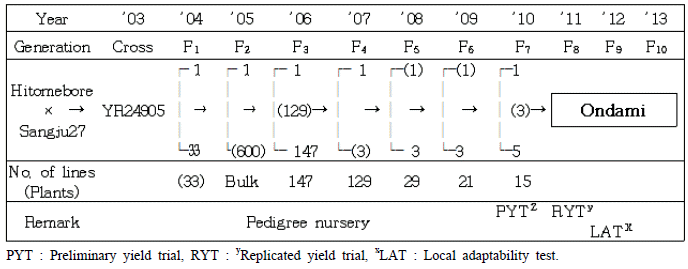
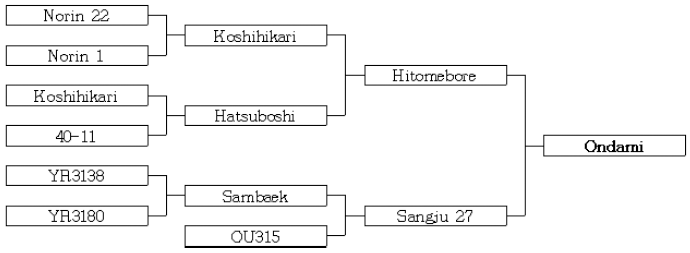
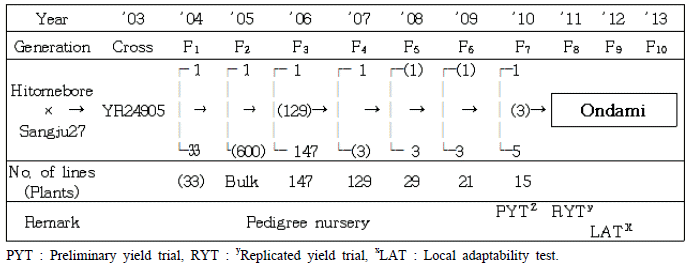
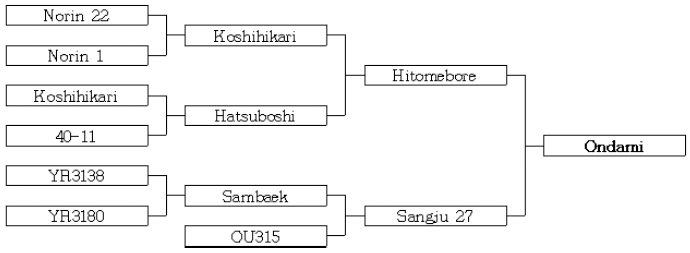
‘온다미’는 국립식량과학원 상주출장소에서 중산간지 재배 에 알맞은 고품질 벼를 육성하고자 2003년 하계에 고품질인 히토메보레를 모본으로 하고 중산간지 적응성 조생 상주27호 를 부본으로 인공교배하여 F3이후 계통육종법에 의하여 육성 선발하면서 주요 농업형질 조사 및 병해충, 미질검정을 실시 하였다. 2010 ~ 2011년 생산력검정을 실시한 결과 내도복이 며 수량성이 우수한 YR24905-129-3-1-1-3 계통을 선발하여 ‘상주46호’로 계통명을 부여하였다. 2011 ~ 2013년 지역적응 성시험을 실시한 결과 대조품종에 비해 수량성이 높고 내도 복성, 내수발아성 및 도열병에 강하며 외관품위와 도정특성이 매우 우수하여 2013년 12월 농촌진흥청 직무육성 신품종선 정위원회에서 신품종으로 선정하고 ‘온다미’라 명명하였다. ‘온다미’의 육성과정은 Fig. 1 및 Fig. 2와 같다.
Fig. 1.
Pedigree diagram of ‘Ondami’.
KJBS-47-448_F1.gif
Fig. 2.
Genealogical diagram of ‘Ondami’
KJBS-47-448_F2.gif
주요특성
1

1 출수기 및 주요 농업적 특성

‘온다미’는 보통기 재배에서 평균 출수기가 7월 27일로 ‘오 대’와 같은 조생종이다. 간장은 70 cm로 ‘오대’와 같고 수장 은 19 cm로 ‘오대’보다 2 cm 작다. 주당 이삭수와 이삭당 입 수는 16개, 78개로 각각 ‘오대’보다 각각 3개, 2개 많았다. 등 숙비율은 88.8%로 ‘오대’보다 높으며, 현미천립중이 21.7 g 으로 중소립종이다(Table 1).
Table 1.
Major agronomic traits and yield components
Table 1.
Variety Heading date Culm length (cm) Panicle length (cm) No. of panicles per hill No. of spikelets per panicle Ratio of ripened grain (%) Brown rice 1000 grain weight(g)

Ondami Jul. 27ns 70ns 19* 16* 78ns 88.8ns 21.7*
Odae Jul. 27 70 21 13 76 86.2 25.8

*significant at 5% level

nsnot significant

2

2 생리장해 저항성

‘온다미’는 재배기간 동안 위조현상은 나타나지 않았으며 성숙기 하엽노화가 느리고 불시출수율은 낮으나 수발아율은 10.5%로 ‘오대’보다 높은 수준이었다. 춘천출장소에서 냉수 처리 내냉성 검정 결과 출수지연일수가 7일로 ‘오대’보다 3일 짧았고, 냉수구 임실률이 35%로 ‘오대’보다 낮았다. 재배포 장에서의 도복은 ‘오대’와 비슷한 수준이었다(Table 2).
Table 2.
Reaction to environmental and physiological stresses.
Table 2.
Variety Appearance of wilting Adult leaf senescence Cold tolerancey Viviparous Germinationw (%) Field lodging resistancev (1-9)

Discol-oration (1-9)z Heading delay (days) Grain fertility (%) PAx

Ondami Strong Late 6 7 35ns 7 10.5ns 3
Odae Strong Late 7 10 51 5 2.2 3

zEvaluation at maximum tillering stage (1: tolerance; 9: susceptible)

yCold tolerance was evaluated at Chuncheon cold-water (17°C) irrigated nursery

xPhenotypic Acceptability

wGermination rate at 7th day after incubation (25°C)

vMean lodging degree under wet direct seeding of local adaptability test for 2011 to 2013

nsnot significant

3

3 병해충 저항성

‘온다미’는 전국 14개소에서 실시한 잎도열병 밭못자리 검 정에서 강 9개소, 중 5개소, 평균 3.0으로 ‘오대’에 비해 강한 저항성 반응을 보였다. 목도열병 포장검정에서는 이천, 제천 에서 경미한 발병을 보였다. 흰잎마름병, 줄무늬잎마름병, 멸 구류, 기타 바이러스병 및 충에는 저항성이 없다(Table 3, Table 4). 따라서, ‘온다미’는 흰잎마름병과 바이러스 발병이 심한 남부평야지에서는 추석전 조기출하용으로써 재배를 지 양해야 할 것으로 생각된다.
Table 3.
Reaction to leaf blast and neck blast.
Table 3.
Variety No. of nursery based on reaction to leaf blast Field test of neck blast


Rz (0~3) M (4~6) S (7~9) Ave. Rate of disease panicle(%)

Icheon Jecheon Iksan Milyang

Ondami 9 5 0 3.0 4.4 2.7 0.0 0.0
Odae 5 8 1 4.3 0.5 13.2 0.0 0.0

zR : Resistant, M : Moderate, S : Susceptible

Table 4.
Reaction to major disease and insect pest.
Table 4.
Variety Bacterial blight Virus disease(%) Planthopper


K1 z K2 K3 K3a RSVy RDV RBSDV BPHx SBPH

Ondami Sw S S S S(81.0) S(100.0) S(97.9) S S
Odae S S S S S(81.1) S(80.0) S(91.7) S S

zK1 : HB01013, K2 : HB01014, K3 : HB01015, K3a : HB01009 isolate

yRSV : Rice stripe virus, RDV : Rice dwarf virus, RBSDV : Rice black-streaked dwarf

xBPH : Brown planthopper, SBPH : Small brown planthopper

wR : Resistant, M: Moderate, S: Susceptible

4

4 미질 및 도정특성

‘온다미’는 현미 장폭비가 1.85로 단원형이고, 쌀알은 심복 백이 없이 맑고 투명하여 ‘오대’보다 우수하였다. 알칼리 붕 괴도는 6.6로 ‘오대’와 같고 단백질 함량이 6.6%로 높았지만 아밀로스 함량이 18.8로 ‘오대’보다 밥이 부드러우며, 식미관 능검정 결과 0.24로 ‘오대’와 비슷한 수준이었다(Table 5). 도 정특성 검정에서 제현율, 현백율, 도정률은 ‘오대’와 비슷한 수준이었지만 도정된 쌀의 완전립률과 완전미 도정수율이 각 각 96.5, 73.1%로 ‘오대’보다 월등히 우수하였다(Table 6). 도정특성이 우수한 ‘온다미’는 종합미곡처리장(RPC) 뿐만 아 니라 소비자의 선호도가 높아 앞으로 재배면적이 확대될 것 으로 예상된다.
Table 5.
Grain shape and grain quality of ‘Ondami’.
Table 5.
Variety Brown rice White Core/velly Akali Digestive Value (1~7) Protein Content (%) Amylose Content (%) Palatability of cooked rice (-3~+3)

Length (mm) Width (mm) L/W ratio

Ondami 5.06 2.73 1.85 0/0 6.6 6.6 18.8 0.24
Odae 5.27 2.87 1.84 3/1 6.6 6.0 19.2 0.31
Table 6.
Milling properties of ‘Ondami’
Table 6.
Variety Milling recovery ratio(%) Head rice milling recovery ratio(%)

Brown/rough Milled/brown Milled/rough Head rice

Ondami 82.7ns 91.6ns 75.8 ns 96.5** 73.1**
Odae 82.3 91.0 74.9 76.3 57.1

nsnot significant

**significant at 1% level

5

5 수량성

2011 ~ 2013년 3년간 실시한 지역적응시험 보통기 표준재 배 5개소에서 평균 5.29 MT/ha로 ‘오대’보다 4% 증수되었으 며 이는 운광(5.86 MT/ha), 조평(5.67 MT/ha)보다는 낮지만 최근 육성된 조생종 벼 품종의 수량(5.2 ~ 5.6 MT/ha)과 비슷 한 수준이었다(Table 7).
Table 7.
Yield summary of local adaptability test.
Table 7.
Culture season Region No. of test sites Milled rice(MT/ha) Index


Ondami(A) Odae(B) A/B

Ordinary planting Southern mid-mountainous area 1 490 467 105
mid mountainous, southern alpine and north-east coastal area
4 539ns 522 103

Mean 5 529ns 511 104

nsnot significant

*significant at 5% level

6

6 적응지역 및 재배상 유의점

신품종 ‘온다미’는 조생종으로 남부중산간지, 남부고냉지 및 동해안 북부해안지에 적합하다. 질소비료를 많이 주면 도 복에 따른 미질저하가 우려되므로 적정 균형시비를 하여야 한다. 도열병에는 강하나 흰잎마름병, 줄무늬잎마름병, 기타 바이러스병 및 해충에 약하므로 적기 방제를 실시하여야 한 다. 또한 모내기 지연시에 불시출수가 우려되므로 모내기를 적기에 하여야 한다.
‘온다미’는 국립식량과학원 상주출장소에서 중산간지 재배 에 알맞은 고품질 벼를 육성하고자 2003년 하계에 고품질인 히토메보레를 모본으로 하고 중산간지 적응성 조생 상주27호 를 부본으로 인공교배하여 F3이후 계통육종법에 의하여 육성 선발하면서 주요 농업형질 조사 및 병해충, 미질검정을 실시 하였다. 2010 ~ 2011년 생산력검정을 실시한 결과 내도복이 며 수량성이 우수한 YR24905-129-3-1-1-3 계통을 선발하여 ‘상주46호’로 계통명을 부여하였다. 2011 ~ 2013년 지역적응 성시험을 실시한 결과 대조품종에 비해 수량성이 높고 내도 복성, 내수발아성 및 도열병에 강하며 외관품위와 도정특성이 매우 우수하여 2013년 12월 농촌진흥청 직무육성 신품종선 정위원회에서 신품종으로 선정하고 ‘온다미’라 명명하였고, 남부중산간지, 남부고냉지 및 동해안 북부해안지에 적응하는 품종으로 보급하게 되었다. 보통기 재배에서 평균 출수기가 7 월 27일로 ‘오대’와 같은 조생종이다. 간장은 70 cm로 ‘오대’ 와 같고 수장은 19 cm로 ‘오대’보다 2 cm 작다. 주당 이삭수 와 이삭당 입수는 16개, 78개로 각각 ‘오대’보다 각각 3개, 2 개 많았다. 등숙비율은 88.8%로 ‘오대’보다 높으며, 현미천립 중이 21.7 g으로 중소립종이다. 불시출수율은 낮으나 수발아 율은 10.5%로 ‘오대’보다 높은 수준이었고, 내냉성 검정 결 과 출수지연일수가 7일로 ‘오대’보다 3일 짧았으며, 냉수구 임실률이 35%로 ‘오대’보다 낮았다. 재배포장에서의 도복은 ‘오대’와 비슷한 수준이었다. 도열병에는 강하나 흰잎마름병, 줄무늬잎마름병 및 해충에는 약하다. 쌀알은 심복백이 없이 맑고 투명하며, 단백질 함량이 6.6%로 높았지만 아밀로스 함 량이 18.8로 ‘오대’보다 밥이 부드러우며, 식미관능검정 결과 0.24로 ‘오대’와 비슷한 수준이었다. 제현율, 현백율, 도정률 은 ‘오대’와 비슷한 수준이었지만 도정된 쌀의 완전립률과 완 전미 도정수율이 각각 96.5, 73.1%로 ‘오대’보다 우수하였다. 수량성은 보통기 표준재배 5개소에서 평균 5.29 MT/ha로 ‘오대’보다 4% 증수되었다(등록번호: 제5570호).
본 연구는 농촌진흥청 아젠다 사업(과제번호 : PJ90693109 2014)의 지원에 의해 수행되었다. ‘온다미’를 육성하는데 협 력해주신 국립식량과학원 벼 육종 연구팀과 각 도 농업기술 원 지역적응시험 담당자 및 농촌진흥청 연구정책국 관계관 여러분께도 깊이 감사드립니다.
  • 1. Kim MR. The Status of Korea’s Rice Industry and the Rice Processing Industry. Food Industry and Nutrition 2011. 16: 22-26.
  • 2. Heo IH, Lee SH. Changes of unusual temperature events and their controlling factors in Korea. Korean Geographical Sci 2006. 41: 94-105.
  • 3. Rural Development Administration (RDA)2011 Research Plan of Development New Variety of Summer Crops 2011. 5-44.
  • 4. Rural Development Administration (RDA)Report of Development New Variety of Summer Crops 2012a. 5-186.
  • 5. Rural Development Administration (RDA)2012 Research Plan of Development New Variety of Summer Crops 2012b. 5-49.
  • 6. Rural Development Administration (RDA)Agricultural science and technological research standard evaluation handbook 2012c. -321.
  • 7. Rural Development Administration (RDA)Report of Development New Variety of Summer Crops 2013a. 3-205.
  • 8. Rural Development Administration (RDA)2013 Research Plan of Development New Variety of Summer Crops 2013b. 3-48.
  • 9. Rural Development Administration (RDA)Report of Development New Variety of Summer Crops 2014. 3-171.

Download Citation

Download a citation file in RIS format that can be imported by all major citation management software, including EndNote, ProCite, RefWorks, and Reference Manager.

Format:

Include:

A Early-Maturing Rice Cultivar with High-Quality and Head Rice Milling Recovery Ratio, ‘Ondami’
Korean. J. Breed. Sci.. 2015;47(4):448-453.   Published online December 31, 2015
Download Citation

Download a citation file in RIS format that can be imported by all major citation management software, including EndNote, ProCite, RefWorks, and Reference Manager.

Format:
Include:
A Early-Maturing Rice Cultivar with High-Quality and Head Rice Milling Recovery Ratio, ‘Ondami’
Korean. J. Breed. Sci.. 2015;47(4):448-453.   Published online December 31, 2015
Close

Figure

  • 0
  • 1
A Early-Maturing Rice Cultivar with High-Quality and Head Rice Milling Recovery Ratio, ‘Ondami’
Image Image
Fig. 1. Pedigree diagram of ‘Ondami’.
Fig. 2. Genealogical diagram of ‘Ondami’
A Early-Maturing Rice Cultivar with High-Quality and Head Rice Milling Recovery Ratio, ‘Ondami’

Major agronomic traits and yield components

Variety Heading date Culm length (cm) Panicle length (cm) No. of panicles per hill No. of spikelets per panicle Ratio of ripened grain (%) Brown rice 1000 grain weight(g)

Ondami Jul. 27ns 70ns 19* 16* 78ns 88.8ns 21.7*
Odae Jul. 27 70 21 13 76 86.2 25.8

*significant at 5% level

nsnot significant

Reaction to environmental and physiological stresses.

Variety Appearance of wilting Adult leaf senescence Cold tolerancey Viviparous Germinationw (%) Field lodging resistancev (1-9)

Discol-oration (1-9)z Heading delay (days) Grain fertility (%) PAx

Ondami Strong Late 6 7 35ns 7 10.5ns 3
Odae Strong Late 7 10 51 5 2.2 3

zEvaluation at maximum tillering stage (1: tolerance; 9: susceptible)

yCold tolerance was evaluated at Chuncheon cold-water (17°C) irrigated nursery

xPhenotypic Acceptability

wGermination rate at 7th day after incubation (25°C)

vMean lodging degree under wet direct seeding of local adaptability test for 2011 to 2013

nsnot significant

Reaction to leaf blast and neck blast.

Variety No. of nursery based on reaction to leaf blast Field test of neck blast


Rz (0~3) M (4~6) S (7~9) Ave. Rate of disease panicle(%)

Icheon Jecheon Iksan Milyang

Ondami 9 5 0 3.0 4.4 2.7 0.0 0.0
Odae 5 8 1 4.3 0.5 13.2 0.0 0.0

zR : Resistant, M : Moderate, S : Susceptible

Reaction to major disease and insect pest.

Variety Bacterial blight Virus disease(%) Planthopper


K1 z K2 K3 K3a RSVy RDV RBSDV BPHx SBPH

Ondami Sw S S S S(81.0) S(100.0) S(97.9) S S
Odae S S S S S(81.1) S(80.0) S(91.7) S S

zK1 : HB01013, K2 : HB01014, K3 : HB01015, K3a : HB01009 isolate

yRSV : Rice stripe virus, RDV : Rice dwarf virus, RBSDV : Rice black-streaked dwarf

xBPH : Brown planthopper, SBPH : Small brown planthopper

wR : Resistant, M: Moderate, S: Susceptible

Grain shape and grain quality of ‘Ondami’.

Variety Brown rice White Core/velly Akali Digestive Value (1~7) Protein Content (%) Amylose Content (%) Palatability of cooked rice (-3~+3)

Length (mm) Width (mm) L/W ratio

Ondami 5.06 2.73 1.85 0/0 6.6 6.6 18.8 0.24
Odae 5.27 2.87 1.84 3/1 6.6 6.0 19.2 0.31

Milling properties of ‘Ondami’

Variety Milling recovery ratio(%) Head rice milling recovery ratio(%)

Brown/rough Milled/brown Milled/rough Head rice

Ondami 82.7ns 91.6ns 75.8 ns 96.5** 73.1**
Odae 82.3 91.0 74.9 76.3 57.1

nsnot significant

**significant at 1% level

Yield summary of local adaptability test.

Culture season Region No. of test sites Milled rice(MT/ha) Index


Ondami(A) Odae(B) A/B

Ordinary planting Southern mid-mountainous area 1 490 467 105
mid mountainous, southern alpine and north-east coastal area
4 539ns 522 103

Mean 5 529ns 511 104

nsnot significant

*significant at 5% level

Table 1. Major agronomic traits and yield components

significant at 5% level

not significant

Table 2. Reaction to environmental and physiological stresses.

Evaluation at maximum tillering stage (1: tolerance; 9: susceptible)

Cold tolerance was evaluated at Chuncheon cold-water (17°C) irrigated nursery

Phenotypic Acceptability

Germination rate at 7th day after incubation (25°C)

Mean lodging degree under wet direct seeding of local adaptability test for 2011 to 2013

not significant

Table 3. Reaction to leaf blast and neck blast.

R : Resistant, M : Moderate, S : Susceptible

Table 4. Reaction to major disease and insect pest.

K1 : HB01013, K2 : HB01014, K3 : HB01015, K3a : HB01009 isolate

RSV : Rice stripe virus, RDV : Rice dwarf virus, RBSDV : Rice black-streaked dwarf

BPH : Brown planthopper, SBPH : Small brown planthopper

R : Resistant, M: Moderate, S: Susceptible

Table 5. Grain shape and grain quality of ‘Ondami’.
Table 6. Milling properties of ‘Ondami’

not significant

significant at 1% level

Table 7. Yield summary of local adaptability test.

not significant

significant at 5% level