적요
Rice breeders or sensory evaluators are striving to develop the rapid and correct sensory evaluation method of the cooked rice with a small-sample. This study was conducted to develop a method of cooking condition and sensory evaluation of the cooked rice rapidly and correctly with a small-sample by introducing a concept of arrangement ranking to the conventional sensory evaluation method by cooking in the cup, which has been used only as a simple test. A method of simultaneous cooking of the five samples for one round of test was developed. And, an arrangement ranking method was developed just like stacking a tower by arranging the cups in the sensory evaluation. The proposed method was named as cup arrangement ranking method. The correlation analysis between the cup arrangement ranking method (CARM) and the standard sensory evaluation method (SSEM) showed a high significance of correlation (r=0.83**~0.91**, ‘13~’14). Further, when effectiveness of proposed method was compared with the standard sensory evaluation method, the sample quantity was a 30g level for one round of test, which is a tenth of SSEM. The time consumed for sensory evaluation was two minutes per one sample, which was a reduced value by half as compared with the time consumption by SSEM. Therefore, the cup arrangement ranking is expected to be an effective method in the selection of excellent rice line or variety having good taste by evaluating the cooking quality rapidly with a small-sample in early generation.
서 언
관능평가란 식품이나 물질의 특성을 사람의 5감각인 시각, 후각, 미각, 촉각 및 청각으로 감지되는 반응을 측정, 분석 내 지 해석하는 과학의 한 분야라고 정의를 하고 있다(
Institute of Food Technologists). 따라서 식미 관능평가란 사람이 쌀 로 밥을 지어 먹을 때 5감각으로 느낌을 검사하여 평가하는 것이다.
관능평가는 평가하고자 하는 목적에 따라 주로 3가지 방법 으로 분류를 하고 있다. 시료 간 차이가 있는지를 보기 위한 차이식별검사와 어떤 시료가 좋은지를 평가하는 기호도검사 및 어떤 맛의 느낌인지를 평가하는 묘사분석이 있다(
Kim & Lee 2003). 순위법(ranking test)은 차이식별검사 방법 중에 서 밥의 맛이나, 윤기, 찰기 등 특성 차이를 주어진 시료 간에 비교하려고 할 때 순위를 매겨서 측정하는 방법으로 평가방 법이 간단하고 시간이 적게 걸리는 장점이 있어 많은 시료를 검사(screening) 할 때 주로 사용하는 평가 방법이다.
우리 소비자들이 좋아하는 밥은 옅은 담황색을 띄우면서 윤기가 있고 밥알이 온전한 모양을 갖추며 구수한 밥냄새와 맛이 나고 찰기와 탄력이 있으며 씹히는 질감이 좋은 것이라 고 하였다(
Choi 2002). 최근 우리 소비자들이 선호하는 맛있 는 밥은 희고 윤기가 많이 나는 것을 좋아하며, 그 외는
Choi (2002)의 보고와 유사한 것으로 추정되고 있다(
NICS RDA 2013).
재료 및 방법
실험재료
식미 관능평가에는 자포니카 최고품질 벼품종인 삼광, 고 품, 하이아미 등 3품종 및 고품질 품종인 일품, 풍미, 추청 등 13개 품종과 통일형의 중원, 청청, 한아름, 다산 등 4품종, 총 20개 품종을 이용하였다(Table
1). 20개 벼품종은 2012년과 2013년 국립식량과학원 수원 시험포장에서 농촌진흥청 표준 재배법에 따라 30일묘를 5월 25일 이앙하고 시비량은 N-P
2O
5-K
2O를 10a당 9-4.5-5.7 kg 수준으로 시비하여 재배 하였다.
Table 1.Classification of considering quality, cultivation and yield in rice varieties.
Table 1.
|
Ecotype |
Rice variety |
|
High quality |
Good quality |
High yield |
|
Japonica (n=16) |
Samkwang Gopum Haiami (3) |
Ilpum, Pungmi Jungsaenggold Chuchenog, Dongan Haepyeong, Sujin Yeongnam, Daechung Hwajin, Tamjin Palgong, Daeya (13) |
|
|
Tongil type (n=4) |
|
|
Jungweon Chungchung Hanareum Dasan (4) |
시료조제
시료조제는
Lee et al. (2012)의 방법에 따라 하였다. 도정 은 마찰식 도정기(Toyo MC 90A)을 이용하여 1회 현미 200 g을 현백율 90.4%로 하였다. 도정된 백미는 싸라기 분리기 (Satake Co., Model TRG 05A)에 3.6 mm 원통형 체를 이용 하여 2분 동안 싸라기를 분리한 쌀을 식미 관능평가에 이용하 였다.
취반방법은 농촌진흥청 국립식량과학원(
NICS RDA 2003) 에 따라 쌀 400 g을 수침 30분 간 수침한 후에 10분간 물을 빼고 시료무게(수분함량 14% 기준)의 1.2배에 해당하는 물을 가수 하여 전기밥솥(CUCKOO SR-0622)을 이용하여 취반 하였다.
표준 식미관능평가 방법은 농촌진흥청 국립식량과학원 표 준방법(
NICS RDA 2003)에 따라 대비시료를 이용하여 상대 비교인 7점 척도(+3~-3)로 수행하였다. 식미 관능평가 패널 은 국립식량과학원 벼 연구 분야에서 장기간 관능평가를 수 행한 잘 훈련된 15~20명이 참여 하여 밥모양, 밥냄새, 밥맛, 찰기, 질감 등 5가지 항목에 대하여 개별평가를 한 후 종합적 인 식미를 평가 하였다.
결과 및 고찰
컵 배열 순위법의 취반조건 설정
취반이란 쌀에 물과 열을 가하여 밥을 짓는 과정이다. 따라 서 취반기, 취반 전 쌀의 수침여부, 취반 가수 량에 의해 밥의 수분함량이 달라진다. 쌀의 수분함량이 14% 전후 일 경우 취 반 후 밥의 수분함량은 60%정도 된다(
Han et al. 2007, Kim et al. 2005). 밥의 경도는 취반 가수 량이 적으면 딱딱해지고 많으면 질어져 식미가 나빠진다.
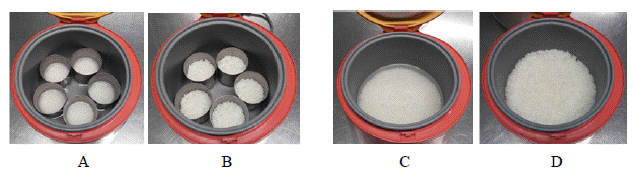
따라서 컵 배열 순위법에 적합한 취반조건 설정을 위해 취 반방법 및 취반가수 량 설정은 Fig.
1A,
1B) 및 Table
2와 같 다. 표준 취반방법은 재료 및 방법에서 제시한 바와 같이 밥 솥 1개에 1개의 시료를 취반한다(Fig.
1의 C 및 D). 소량으로 다수의 시료를 취반하기 위해 컵(직경 6.5 cm, 높이 5.5 cm)을 이용하여 6인용(직경 18 cm, 높이 12 cm, 부피 3,052 cm3) 전기밥솥(CUCKOO SR-0622)에 5개의 컵을 동시에 취반이 가능한 밥솥을 선정하였다. 컵이 놓인 전기밥솥 안에 물을 넣 지 않고 취반 시 컵밥의 아래 부분에 누룽지가 생겼으며, 밥 솥 내 물이 많았을 때는 밥이 질어져, 물을 130 ml로 붓는 대 신 컵밥의 가수 량은 표준 취반방법 보다 0.2배 줄인 1.0배를 적용하는 것이 표준 취반방법과 유사한 밥이 되어 이 조건을 컵밥용 취반조건으로 설정하였다(Table
2).
Fig. 1.Cooking method by Cup Arrangement Ranking Method (CARM) and Standard Sensory Evaluation Method (SSEM) with electric cooker. A: Before cooking by CARM, B: After cooking by CARM, C: Before cooking by SSEM, D: After cooking by SSEM.
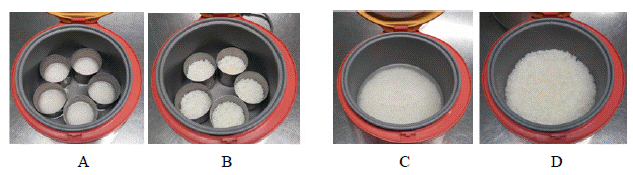
Table 2.Comparison of water to rice ratio on CARM.
Table 2.
|
Method |
Water to rice ratio (weight/weight) |
|
|
1 : 0.9 |
1 : 1.0 |
1 : 1.1 |
1 : 1.2 |
|
|
CARMz
|
○ |
◎ |
○ |
△ |
|
SSEMy
|
- |
- |
- |
◎ |
컵 배열 순위법의 관능평가 방법 설정
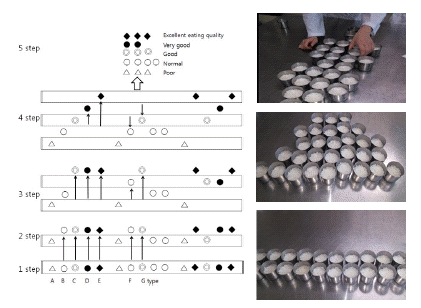
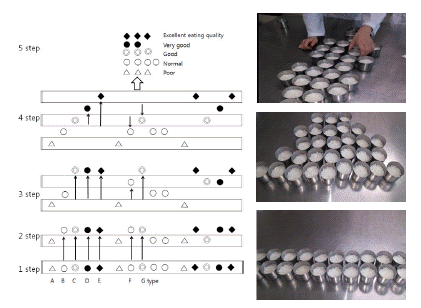
표준 관능평가 방법이란 평가하고자 하는 시료와 대비시료 를 비교하여 좋거나 나쁜 정도를 평가하는 방법이다. 반면 컵 배열 순위법이란 시료간의 상대평가 방법으로 시료의 수는 10~30개 수준인 것으로 관능평가에 참여한 패널들의 의견이 었다. 따라서 최대 시료 30개를 감안하여 모식도로 설명을 하 는 것이 적절할 것이다. 그러나 모식도가 복잡한 측면이 있어 그의 절반인 15개의 시료를 5단계로 평가하는 방법의 모식도 는 Fig.
2와 같다. 이는 각 단계별로 컵을 이용하여 탑을 쌓는 원리이다. 1단계는 1열로 15개의 시료를 횡으로 배열 한다. 2 단계는 5개씩(필요 시 2개씩 혹은 4개씩 등 가능) 3개 그룹으 로 구분하여 그룹 내에서 식미를 평가하여 좋은 것을 위로 올 리면 2층 컵 탑이 쌓이게 된다. 3단계는 2층의 시료를 5개씩 상호 비교하여 식미가 좋은 것을 위로 올리고 나쁜 것은 아래 로 내리면 3층 컵 탑을 쌓게 된다. 4단계는 2층과 3층의 시료 를 5개씩 상호 비교하여 식미가 좋은 것은 위로 올리고, 나쁜 것은 아래로 내린다. 다만 이때 식미의 좋고 나쁨의 정도에 따라 2단계까지 올리거나 내리게 되며 4~5층 컵 탑을 쌓는 다. 5단계는 1~5층으로 쌓인 컵 탑에 대해 5개 내외로 상하 및 좌우로 비교하여 1층은 제일 나쁜 것으로, 5층은 제일 좋 은 것으로 쌓게 되었다. 이와 같이 5단의 탑을 쌓아가면서 상 대비교 평가방법을 컵 배열 순위법의 관능평가 방법으로 설 정하였다.
Fig. 2.Scheme of sensory evaluation method of cooked rice by Cup Arrangement Ranking Method.
컵 배열 순위법과 표준 관능평가방법 간의 상관분석
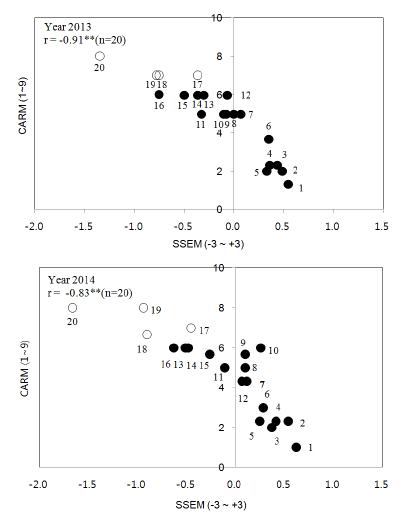
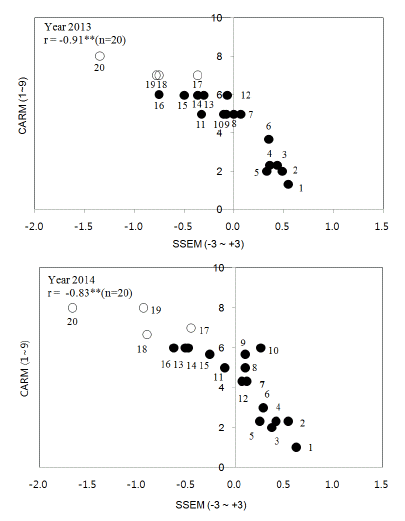
컵 배열 순위법과 표준 관능평가 방법 간의 상관분석 결과 고도의 유의한 상관(r=0.83**~0.91**, ‘13~’14)이 인정되었 다(Fig.
3). 컵 배열 순위법으로 공시한 품종간의 식미총평의 평가등급(DG : degree)을 1~9 (1 : 가장 좋은 것, 9 : 가장 나쁜 것)로 평가한 결과, 밥맛이 가장 좋은 DG 1~2은 고품, 하이아미, 삼광 등, DG 3~4는 풍미, 추청 등, DG 5~6은 대 야, 대청, 동안, 영남 등이었으며, 식미총평이 가장 나쁜 것으 로 평가된 DG 7~8은 한아름, 다산, 청청, 중원 등 통일형 품 종들이었다. 이러한 결과는 농촌진흥청에서 쌀 품질 중심의 벼 품종분류인 최고품질, 고품질, 다수성 등으로 품종을 분류 한 것과 유사한 결과 이었다.
Fig. 3.Correlation between overall score of standard sensory evaluation method (SSEM) and cup arrangement ranking method (CARM) and distribution of varieties on eating quality degree (1~9) by CARM in the year 2013 and 2014 (○=Tongil type, ●=Japonica, 1=Gopum, 2=Jungsaenggold, 3=Samkwang, 4=Ilpum, 5=Haiami, 6=Pungmi, 7=Chuchenog, 8=Dongan, 9=Tamjin, 10=Yeongnam, 11=Sujin, 12=Palgong, 13=Hwajin, 14=Daechung, 15=Haepyeong, 16=Daeya, 17=Jungweon, 18=Dasan, 19=Chungchung, 20=Hanareum).
컵 배열 순위법으로 식미 평가항목 7개와 표준 식미관능평 가의 총평과 2개년 간 20개 품종을 대상으로 분석한 결과는 Table
3과 같다. 표준 식미관능평가의 평가항목은 밥모양, 냄 새, 맛, 찰기 및 질감 5개 이다. 이 중에서 밥모양은 밥색깔, 윤기 2개 항목으로, 질감은 질감, 경도 2개 항목으로 분리하 였으며, 그 외 평가항목은 표준 관능평가 항목과 동일한 총 7 개 평가항목으로 세분화 하여 컵 배열 순위법으로 평가하였 다. 관능평가방법은 표준 관능평가에 참여자 중에서 5명을 선 발하여 개인별 평가가 아닌 1개의 시료에 대해 5명이 함께 의 견을 나누면서 평가하는 집단평가 방법으로 하였다(
Jellinek 1985,
Kim & Lee 2003).
Table 3.Correlation between overall score by SESM and items by CRAM with degree form 1 to 9.
Table 3.
|
Items |
Overall score by SESMY (-3~+3) |
|
|
Japonica + Tongil type (n=20) |
Japonica varieties (n=16) |
|
|
|
2013 |
2014 |
2013 |
2014 |
|
|
CRAMz (1~9) |
Color |
0.69**
|
0.53**
|
0.42ns
|
0.09ns
|
|
Glossiness |
-0.85**
|
-0.67**
|
-0.86**
|
-084.**
|
|
Flavor |
-0.32ns
|
-0.32ns
|
-0.35ns
|
-0.41ns
|
|
Taste |
-0.51*
|
-0.63*
|
-0.52*
|
-0.71**
|
|
Stickiness |
-0.87**
|
-0.77**
|
-0.81**
|
-0.82**
|
|
Texture |
-0.85**
|
-0.75**
|
-0.81**
|
-0.84**
|
|
Hardness |
-0.23ns
|
-0.03ns
|
-0.71**
|
-0.80**
|
|
Overall score |
-0.91**
|
-0.83**
|
-0.89**
|
-0.79**
|
컵 배열 순위법으로 식미 평가항목 7개와 표준 식미 관능 평가의 총평과 2개년 간 분석한 결과 상관성이 높은 항목은 윤기(r=0.67**~0.85**), 찰기(r=0.77**~0.87**), 질감(r=0.75** ~0.85**) 이었다.
밥의 색깔은 통일형 품종을 포함했을 때에는 상관의 유의 성이 인정되었으나, 자포니카 품종간에는 차이가 없었다. 이 러한 결과는 공시한 품종 중에서 통일형 품종은 밥의 색깔이 흰 반면, 자포니카 품종은 약간 누런색을 보였으며, 통일형과 자포니카 품종간에는 차이가 컸으나, 자포니카 품종 내에서 밥의 색깔은 유사한 것에 기인된 결과로 사료된다.
밥의 냄새는 연차간에 상관의 유의성이 없었다. 이는 1개 의 밥솥에 5개의 시료를 동시에 취반함으로 인해 밥의 냄새가 서로 섞여 품종간 차이를 구분하기 어려운 것에 기인된 것으 로 사료되었다.
맛은 2014년도 자포니카 품종 내에서만 1%의 유의성이 인 정되었으나, 그 외에서는 5%의 유의성이 인정되었다. 경도는 2013년도에는 상관의 유의성이 없었으나. 2014년도에는 상 관의 유의성이 인정되었다.
따라서 이는 컵 배열 순위법을 이용하여 식미 평가항목으 로 표준 관능평가 5개 항목 중에서 윤기, 찰기 및 질감 3개 항목을 평가하여 종합적인 식미 총평을 평가하는 방법이 좋 은 것으로 사료된다. 식미 평가항목 2개를 줄임으로써 시간과 노력도 절약할 수 있을 것이다.
컵 배열 순위법의 식미 관능평가 효율성
컵 배열 순위법과 표준 식미관능평가 방법 간의 1회 검정 시료 수, 시료 량, 취반밥솥 개수, 검정 시간 등을 비교한 결과 를 Table
4에 나타내었다. 컵 배열 순위법으로는 1회 10~30 개 시료에 대해 관능평가를 할 수 있으며, 시료 량은 30 g정도 로 표준 대비 시료 량은 1/10 수준이었으며, 전체 소요 시간은 많으나 시료 당 평가 시간은 2분 내외로 1/2로 단축되었다.
Table 4.Comparison of number of cooker, sample and time per sensory evaluation by expert panel.
Table 4.
|
Method |
Amounts of sample (g) |
Number of cooker per test |
Number of sample per test |
Time per test (Minutes) |
Time per sample (Minutes) |
|
|
CARMz
|
30 |
2~6 |
10~30 |
20~40 |
1.5~2.0 |
|
Standardy
|
300~400 |
4~7 |
4~7 |
15~20 |
2.9~3.8 |
따라서 컵 배열 순위법은 품종육성 단계에서 소량의 시료 로 신속하게 식미를 평가함으로써 밥맛이 우수한 계통 선발 의 효율을 높이는데 활용할 수 있을 것으로 기대된다.
적 요
벼 육종가나 식미 평가자는 소량의 시료로 신속하고 정확 한 식미평가 방법을 개발하기 위해 노력하고 있다. 본 연구는 소량의 시료로 신속하고 정확한 식미 관능평가를 위해 기존 에 간이 검정방법으로만 사용 해 오던 컵 취반 식미평가 방법 에 배열순위법의 개념을 도입하여 이에 적합한 취반조건 및 관능평가 방법을 개발하고자 수행 하였다.
취반조건은 1회 5개 시료를 동시에 취반하는 방법을 개발 하였다. 또한 관능평가 방법은 컵을 배열하여 탑을 쌓는 원리 와 같은 배열순위 방법을 개발하였다. 이를 컵 배열 순위법이 라 명명하였다. 컵 배열 순위법과 표준 식미 관능평가 방법 간의 상관분석 결과 고도의 유의한 상관(r=0.83**~0.91**, n=20, ‘13~’14)이 인정되었다. 더불어 컵 배열 순위법의 효 율성을 표준 관능평가 방법과 비교한 결과, 시료 량은 1회 30 g으로 1/10 수준이었으며, 소요시간은 시료 당 2분으로 1/2로 단축되었다. 따라서 컵 배열 순위법은 품종육성 단계에서 소 량의 시료로 신속하게 식미를 평가함으로써 밥맛이 우수한 계통의 초기세대에 평가하여 밥맛이 우수한 유망 계통을 선 발함으로써 육종효율을 높이는데 활용할 수 있을 것으로 기 대된다.
사 사
본 논문은 농촌진흥청 연구사업(세부과제명: 밥쌀용 쌀의 식미 평가방법 개선 연구, 세부과제번호: PJ00923901)에 의 해 이루어진 것임.
References
- 1. Cho YC, Suh JP, Yoon MR, Baek MK, Won YJ, Lee JH, Park HS, Baek SH, Lee JH. QTL mapping for paste viscosity characteristics related to eating quality and QTL-NIL development in japonica rice (Oryza sativa L.). Plant Breed. Biotech 2013. 1: 333-346.
- 2. Choi HC. Current status and perspectives in varietal improvement of rice cultivars for high-quality and valueadded products. Korean J. Crop Sci 2002. 47: 15-32.
- 3. Ebitani T, Umemoto T, Yano M. QTL analysis of “Mido” value, an inbreed selection index for eating quality of rice, using progenies from a cross between japonica and indica variety. Breed. Sci 2002. 52: -371.
- 4. Han GJ, park HJ, Lee HY, Park YH, Cho YS. The quality of cooked rice prepared by both an electric cooker and electric pressure cooker with different storage conditions. Korean J. Food Cookery Sci 2007. 23: 635-643.
- 5. Institute of Food Technologists(IFT). https://www.ift.org
- 6. Jellinek G. Sensory evaluation of food-theory and practice. 1985. Ellis Horwood, Chichester, UK.
- 7. Kim WJ, Chung NY, Kim Sk, Lee AR, Lee SK, Ha YC, Baik MY. Sensory characteristics of cooked rices differing in moisture contents. Korean J. Food Sci. Technol 1995. 27: 885-890.
- 8. Kim KO, Lee YC. Sensory evaluation of food. 2003. Hakyoun, 359.
- 9. Lee JS, Park NB, Lee JH, Cho JH, Won YJ, Park HM, Chun A, Jang JK, Hwa WG, Yi GH, Yeo US. Optimum milling degree for improving sensory quality of cooked rice. Korean J. Crop Sci 2012. 57: 359-364.
- 10. Okamoto M. Studies on effect of chemical components on stickiness of cooked rice and their selection methods for breeding. Chugoku Agri. Report 1994. 14: 1-68.
- 11. National Institute of Crop Science, Rural Development Administration. Evaluate the quality and taste of rice 2003. Suwon, Korea.
- 12. National Institute of Crop Science, Rural Development Administration. The 2nd workshop on analysis of rice quality, sensory evaluation and grain quality of rice 2013. Suwon, Korea.
- 13. Suh JP, Cho YC, Won YJ, Lee JH, Ann EK, Chun JB, Lee JS, Kim MK, Jeong EG, Kim BK. Comparison of marker-assisted selection and conventional breeding methods for selection of high palatability rice. Korean J. Breed. Sci 2014. 46: 250-259.
Citations
Citations to this article as recorded by

- Comparison of the Sensory Ability of Experts and Untrained Panelists to Evaluate Cooked Rince by using Five Sensory Methods
Mi-Ra Yoon, Jieun Kwak, Jeong-Heui Lee, Jaebuhm Chun, Hyang-Mee Park, Jung-Pil Suh, Jae-Ki Jang, Choon-Ki Lee, Jeom-Sig Lee
The Korean Journal of Crop Science.2016; 61(2): 92. CrossRef